Understanding a common barn phrase, when extra energy can be useful, and how temperament, forage, calories, protein, starch, and workload all fit together.
Spend enough time around a barn and sooner or later you will hear someone say, "My horse runs hot," or, "I feed alfalfa because my horse likes to run hot."
Nobody is reaching for a thermometer. They are not talking about a fever, a heavy winter coat, or a horse standing in the August sun. In barn language, a "hot" horse is usually one that feels forward, energetic, alert, reactive, or ready to go before the rider has finished asking.
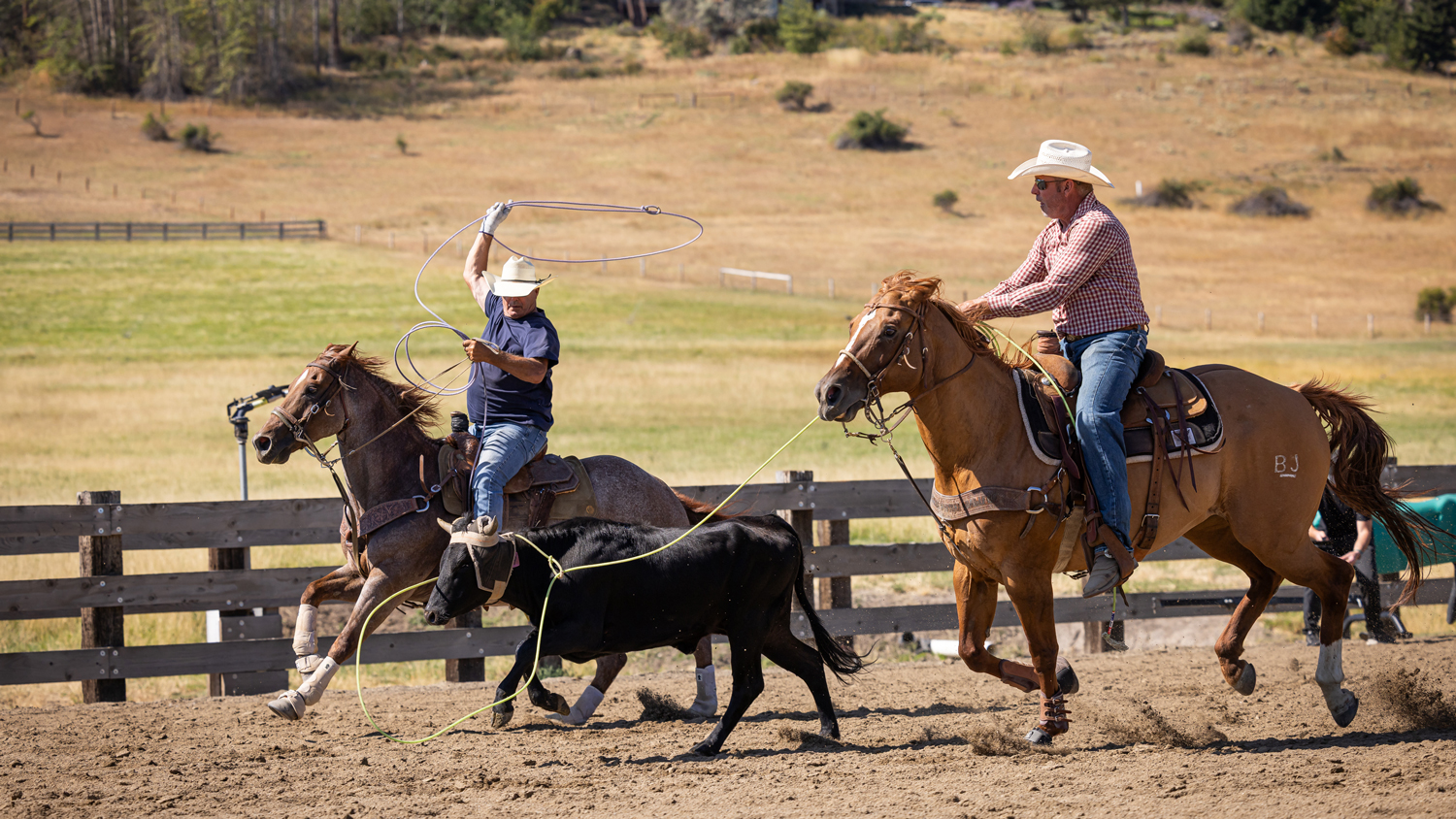
Depending on the horse and the job, that can be a wonderful quality. A barrel horse, racehorse, jumper, endurance horse, or working cow horse may need more energy and enthusiasm than a quiet trail horse or beginner lesson horse. Some riders intentionally include alfalfa or other higher energy feeds because they believe their horse performs best when it feels bright, powerful, and ready to work. Others avoid those same feeds because they are convinced they create more energy than they want to manage.
Both groups may be noticing something real, but "hot" is not a nutritional diagnosis. It is barn shorthand that can describe natural temperament, fitness, available dietary energy, nervous behavior, discomfort, or simply a horse that enjoys its work. Before giving one forage all the credit or all the blame, it helps to understand what horse people mean by the phrase and what the complete feeding program is actually providing.
What Does a "Hot" Horse Actually Look Like?
A naturally energetic horse is not necessarily unhealthy, uncomfortable, or poorly fed. Many horses are bred to be quick, responsive, and willing to move forward. A horse that feels eager and powerful under saddle may simply be well conditioned, properly fueled, and suited to the job it is being asked to perform.
A horse that suddenly becomes tense, unusually reactive, difficult to handle, easily distracted, or unable to settle may be telling us something different. Diet could be part of that picture, but so could pain, ulcers, training, turnout, fitness, environmental stress, a change in routine, or the horse's natural personality. Feed influences how much energy is available, but it rarely explains the whole horse by itself.
That distinction matters because two riders may use the word "hot" to describe very different situations. One may mean the horse feels strong, forward, and ready to compete. Another may mean the horse has become nervous or unpredictable. The first horse may be appropriately fueled. The second may need a closer look at nutrition, health, training, management, or several of those things together.
This use of "hot" is also different from a horse being physically overheated. Body temperature and post exercise cooling are separate issues, which we explore in The Ride Is Over. The Heat Isn't.
When a Little More "Go" Is the Goal
There are barns where a little extra energy is considered a good thing. A trainer may want a competition horse to feel sharp and ready. A rider may notice that a horse performs better when it maintains more body condition, recovers well, and receives enough calories to support a demanding schedule. In those situations, alfalfa may be intentionally included because it can provide more nutrition in each pound than many mature grass hays.
There is a good reason many performance programs use alfalfa when horses need additional calories, protein, calcium, and digestibility. University of Minnesota Extension explains that legumes such as alfalfa are generally higher in protein and calcium, less fibrous, and often more calorie dense than cool season grass hays. Those qualities can make alfalfa useful for growing horses, broodmares, performance horses, hard keepers, and other animals with elevated nutritional requirements.
If a horse was previously short on calories or quality protein, adding alfalfa may help it maintain weight, develop muscle, recover more effectively, and feel more willing to work. The rider may describe that horse as running hotter, but the horse may simply be better fueled.
That is an important difference. The goal should not be to manufacture nervous energy. It should be to provide enough usable nutrition for the horse to do its job while remaining healthy, manageable, and in appropriate body condition.
Why Alfalfa Gets the Credit and the Blame
Alfalfa is often described as a "hot" hay because it generally provides more digestible energy than mature grass forage. Kentucky Equine Research has used the terms "hot" and "cool" to describe feeds according to their energy characteristics. In that context, alfalfa falls on the hotter side because it is energy dense, while fibrous grass forage is commonly described as cooler. The term refers primarily to what the feed supplies, not a guaranteed change in personality.
If a horse begins receiving more energy without a corresponding increase in work, those additional calories may show up as weight gain, greater body condition, or more available energy. One owner may say the alfalfa made the horse hot, while another feeding the same forage to a thin performance horse may see improved stamina, muscle, and recovery.
Alfalfa is also not automatically a high sugar forage. University of Minnesota Extension notes that cool season grass hays can be higher in nonstructural carbohydrates than legumes, even though legumes such as alfalfa may provide more protein and total energy. That means a horse can receive more calories from alfalfa without necessarily receiving more sugar and starch.
Forage species gives us useful clues, but it does not replace testing. One grass hay may contain more sugar than one alfalfa hay, while two alfalfa cuttings may differ considerably in energy, protein, fiber, and maturity. We explored this same principle in Not All Hay Is Created Equal, where we looked at why appearance, forage name, and bale price never tell the whole nutritional story.
Does Protein Make a Horse Hot?
Protein often receives the blame because alfalfa usually contains more crude protein than grass hay. There is limited evidence, however, that normal dietary protein turns an otherwise calm horse into an excitable one.
In one crossover study, six mature Quarter Horse mares received diets containing approximately 12.9 percent or 18.5 percent crude protein before completing a standardized exercise test. Researchers found no difference in heart rate response between the diets. The study was designed to examine metabolic responses to exercise rather than behavior, so it does not answer every question about temperament. It does show that the simple idea that more protein automatically creates a hotter horse is not well supported.
Excess protein is more commonly associated with increased nitrogen excretion, water needs, urination, and ammonia in the barn. Those are valid reasons to balance protein appropriately, but they are different from saying protein acts like an on switch for excitability.
For growing horses, broodmares, performance horses, underweight horses, and animals rebuilding muscle, quality protein can be extremely useful. The better question is not whether protein is good or bad. It is whether the amount in the complete ration matches the horse's actual needs.
Could the Rest of the Ration Be the Bigger Factor?
When researchers have found a clearer connection between diet and behavioral reactivity, the conversation has generally centered more on high starch diets than on forage protein.
In one crossover study involving 10 ponies, the animals were more reactive and less settled while receiving a high starch diet than when they received a higher fiber ration. Researchers also found changes in the fecal microbial population. Another study involving six horses found associations between a high starch, lower fiber ration, changes in hindgut bacteria, and behavioral responses during stressful tests. These were relatively small studies, so they do not prove that every horse eating grain will become difficult, but they offer a more direct connection between high starch feeding and reactivity than the evidence available for alfalfa protein alone.
This creates an interesting possibility. Because alfalfa can provide more calories and protein per pound than mature grass hay, it may help some horses maintain condition while allowing the owner to reduce part of a cereal grain ration. University of Minnesota recommends maximizing forage intake for thin horses and suggests trying higher quality hay such as alfalfa or immature grass before simply adding larger amounts of grain. Its guidance also notes that using fat instead of large amounts of starch may help reduce temperament changes in some horses.
In that situation, adding alfalfa could support a feeding program based more heavily on forage and less heavily on starch. Sometimes the hay receives the credit or blame for a response that has more to do with the concentrate portion of the ration, the total calories being fed, or something unrelated to nutrition.
Our article Feeding Horses Right shows how weighing and mixing Timothy and Alfalfa can create a consistent forage base while allowing the ratio to be adjusted to the horse's needs.
When Alfalfa Can Be a Good Fit
Alfalfa can be useful when a horse needs more nutrition from every pound it eats. This may include growing horses, lactating mares, breeding stock, performance horses, hard keepers, and horses that need additional quality protein to support muscle and tissue maintenance.
For an underweight horse without an underlying medical problem, University of Minnesota Extension recommends increasing forage intake first and considering higher quality hay such as alfalfa or immature grass if additional hay alone is not enough. This keeps long stem forage at the center of the feeding program while providing more calories and protein.
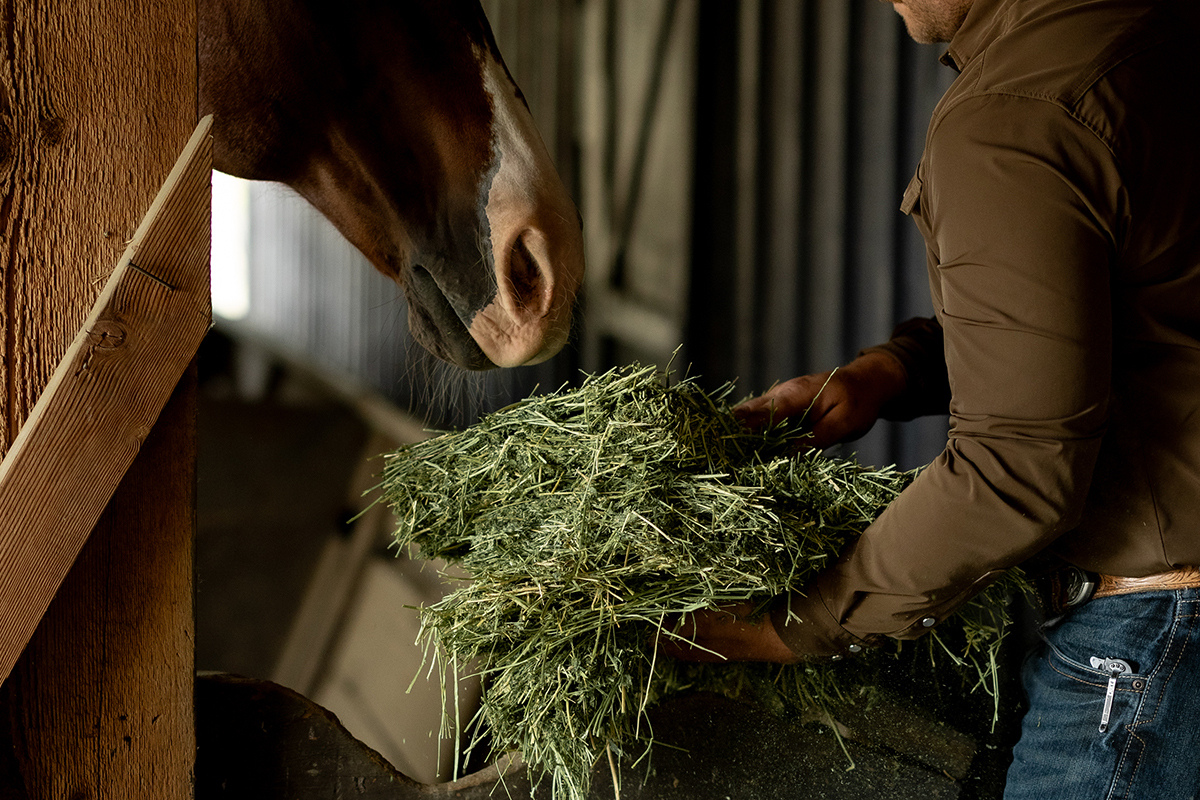
Many barns feed a combination of grass hay and alfalfa rather than choosing one or the other. A grass forage can provide steady fiber and chewing time, while alfalfa contributes additional protein, calories, and calcium. The ratio can then be adjusted as workload, age, body condition, and nutritional needs change.
Our guide to Different Types of Hay and What Animals They Are Best Suited For explains how Timothy, Orchard Grass, Alfalfa, Teff, and other forages may fit into different feeding programs.
When Alfalfa May Be More Than a Horse Needs
A richer forage is not automatically the right forage for every horse. An overweight horse, easy keeper, retired horse, or animal in light work may receive more calories than it needs from a heavily alfalfa based ration. In those cases, a mature grass hay with lower energy density may make it easier to provide adequate forage and chewing time without quietly oversupplying calories.
That does not make the alfalfa poor quality hay. It simply makes it a poor match for that horse and feeding program.
The same nuance applies to horses with metabolic concerns. Alfalfa may test lower in sugar and starch than some grass hays, but it can also provide more digestible energy. Feeding decisions for horses with insulin dysregulation, obesity, laminitis risk, or other metabolic challenges should be based on the analysis of the specific forage, body condition, and guidance from a veterinarian or equine nutritionist rather than forage species alone. University of Minnesota recommends testing the actual hay because appearance and forage type do not provide a dependable estimate of carbohydrate content.
We take a closer look at that subject in What to Feed Horses with Metabolic Issues: Why Hay Testing and Consistency Matter More Than Species Alone.
Feed the Horse, Not the Reputation
If a horse needs additional calories, quality protein, or digestible energy to maintain condition and perform its work, alfalfa may be an excellent way to provide them. If the horse already maintains weight easily and has more energy than the rider wants, adding richer forage simply to make the horse run hotter may not improve performance. It may only provide calories the horse does not need.
The goal of a good feeding program is not to create heat or remove every bit of enthusiasm from the horse. It is to provide enough quality nutrition to support health, body condition, muscle, stamina, recovery, and the work being performed. A properly fueled horse should have energy available when asked, but it does not need to be nervous, uncomfortable, or difficult to manage in order to perform well.
Start by looking at the complete ration. Consider the horse's age, workload, natural temperament, fitness, turnout, health, body condition, concentrate intake, and forage analysis. Weigh the hay rather than guessing by the flake, especially when changing the ratio of alfalfa to grass forage. As we explain in A Flake Is Not a Measurement, a dense alfalfa flake may provide considerably more forage than its visual size suggests.
"Hot" may remain useful barn language, but it should not replace a closer look at what is actually happening. Alfalfa is not a personality switch, protein is not automatically the problem, and grass hay is not automatically the calmer choice. The goal is to fuel the work being asked of the horse, maintain a healthy body condition, understand what the forage is providing, and continue watching the horse in front of you to decide whether the program is working.
Research and Further Reading
- Melatonin and Cool Diets for Hot Horses, Kentucky Equine Research
- Selecting and Storing Horse Hay, University of Minnesota Extension
- Managing Forage Carbohydrate Content, University of Minnesota Extension
- Caring for the Underweight Horse, University of Minnesota Extension
- The Effect of Dietary Protein Level on Exercising Horses, Journal of Animal Science
- High Starch Diets Alter Equine Fecal Microbiota and Increase Behavioral Reactivity
- Dietary Induced Modulation of the Hindgut Microbiota and Behavioral Responses
- Not All Hay Is Created Equal, Anderson Journal
- Feeding Horses Right, Anderson Journal
- Different Types of Hay and What Animals They Are Best Suited For, Anderson Journal
- Why Are Racehorses Fed Timothy Hay Instead of Alfalfa?, Anderson Journal
- What to Feed Horses with Metabolic Issues, Anderson Journal
- A Flake Is Not a Measurement, Anderson Journal
Frequently Asked Questions
What does it mean when someone says a horse is "hot"?
A "hot" horse is usually described as forward, energetic, sensitive, reactive, excitable, or eager to work. The term may refer to natural temperament, fitness, dietary energy, nervous behavior, discomfort, or a combination of factors. It does not necessarily mean the horse is physically overheated.
Is a "hot" horse the same as an overheated horse?
No. A hot horse in barn language is typically an energetic or reactive horse. An overheated horse has an elevated body temperature caused by exercise, weather, or impaired cooling and may require immediate cooling and veterinary attention.
Does alfalfa make horses hot?
Not automatically. Alfalfa is generally more energy dense than many mature grass hays, so it can provide additional calories and protein. A horse that was underfueled may feel stronger or more energetic after alfalfa is added. That does not mean alfalfa directly changes every horse's temperament.
Why do some owners intentionally feed alfalfa to a horse that runs hot?
Some owners want performance horses to feel forward, strong, and ready to work. Alfalfa can help provide the calories and quality protein needed to maintain muscle, condition, stamina, and recovery. The useful response comes from meeting the horse's nutritional requirements, not from intentionally creating nervous or difficult behavior.
Does the protein in alfalfa make horses excitable?
There is limited evidence that normal dietary protein directly causes excitability. Protein should be balanced to the horse's requirements, but research has not shown that a higher protein ration automatically turns a calm horse into a reactive one.
Can grain make a horse more reactive?
Some research has found greater behavioral reactivity in horses or ponies receiving high starch diets compared with higher fiber diets. This does not mean every horse eating grain will become excitable, but the amount of cereal grain and starch in the complete ration deserves consideration when behavior changes.
Is alfalfa high in sugar?
Not necessarily. Alfalfa is often lower in nonstructural carbohydrates than cool season grass hay, although it may provide more total calories and protein. The only dependable way to know the sugar and starch content of a specific hay is through laboratory testing.
Which horses may benefit from alfalfa?
Alfalfa may work well for growing horses, broodmares, performance horses, hard keepers, breeding stock, and horses needing additional calories or quality protein. It may also help reduce reliance on larger cereal grain meals in some feeding programs.
Which horses may not need as much alfalfa?
Easy keepers, overweight horses, retired horses, and animals in light work may receive more calories than they need from a heavily alfalfa based ration. A moderate energy grass hay may make it easier to provide adequate forage and chewing time without oversupplying calories.
Can horses with metabolic concerns eat alfalfa?
Some can, but the decision should be based on the analysis of the specific hay, total calorie intake, body condition, and veterinary or nutritional guidance. Alfalfa may be lower in sugar and starch than some grass hays, but it can also be more calorie dense.
Is an alfalfa and grass hay mix a good option?
It can be. Combining grass hay and alfalfa allows owners to provide steady fiber while adjusting energy, protein, calcium, and palatability to the horse's needs. The appropriate ratio depends on the horse and the analysis of both forages.
How can I tell if my horse's ration is providing too much energy?
Monitor body condition, weight, appetite, behavior, performance, and recovery. Unexpected weight gain may indicate more calories are being supplied than the horse is using. Sudden behavioral changes should also be discussed with a veterinarian because nutrition is only one possible cause.