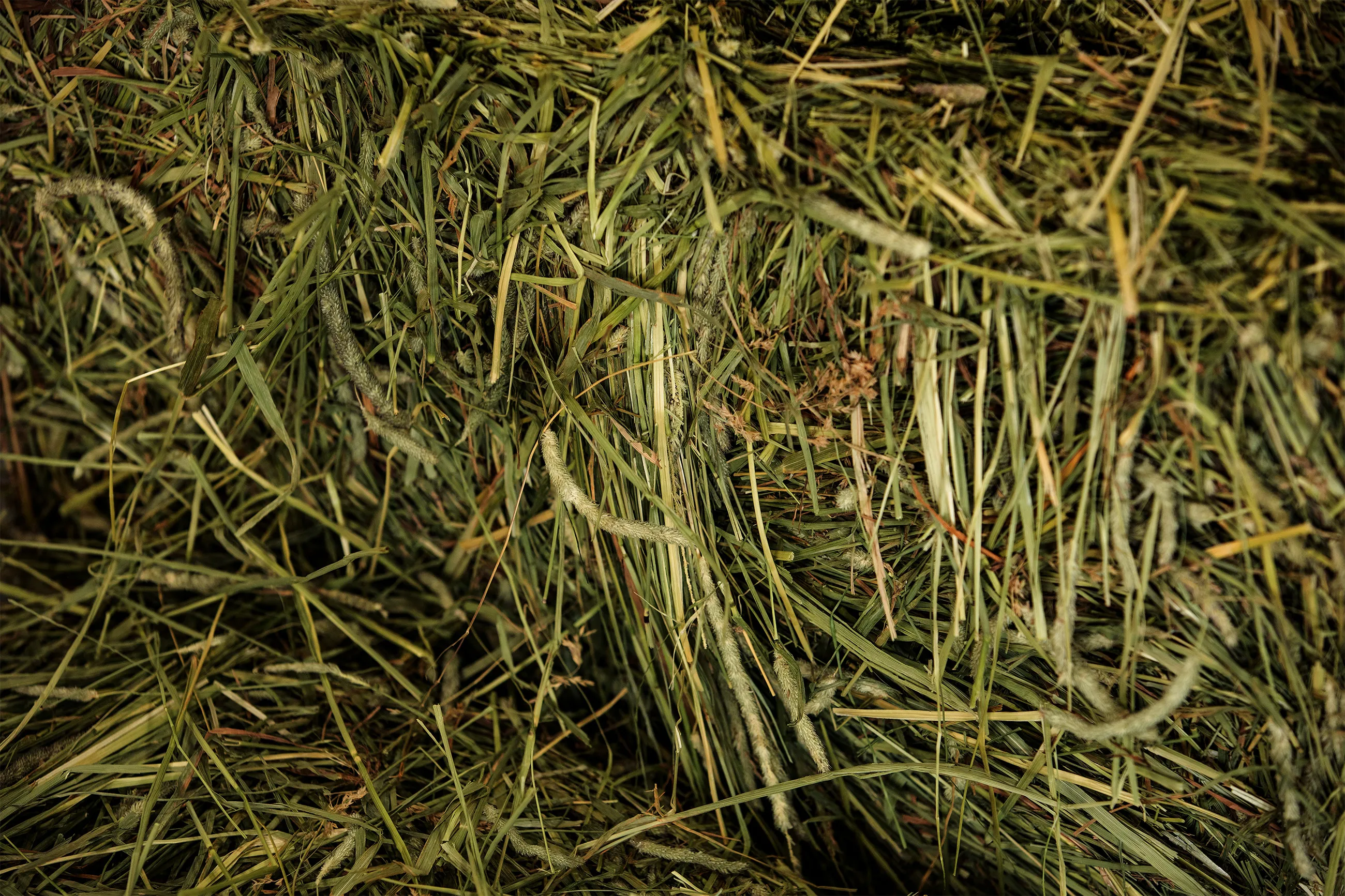
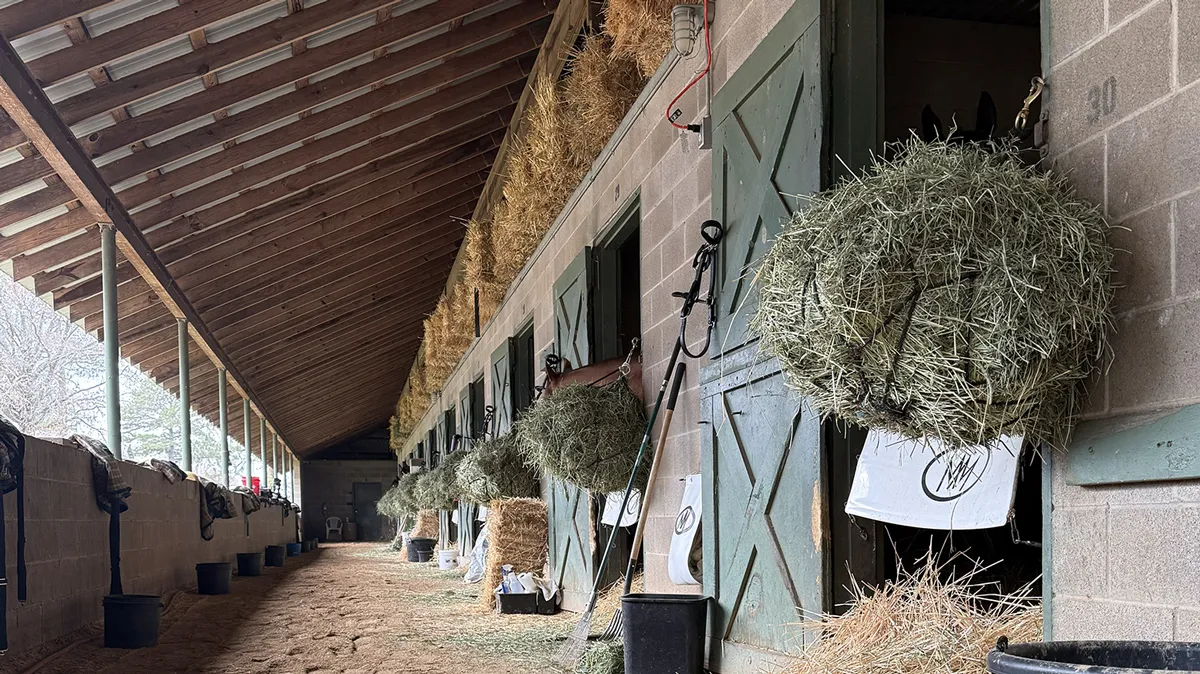
If you watched the Kentucky Derby this past weekend, you probably saw it without thinking much about it at first. Hay nets hanging outside stalls, horses quietly eating between training and race time. Then the question starts to come up once you notice it a little closer. Why are racehorses fed Timothy hay instead of alfalfa?
It’s something you see not only at Churchill Downs, but across racetracks around the world. From Santa Anita in California to Oaklawn in Arkansas, from Belmont Park in New York to major racing programs in Japan, Hong Kong, and even Dubai, the same pattern shows up again and again. Horses standing in their stalls with clean, consistent Timothy hay in front of them, not rich, leafy alfalfa. At many of these tracks, it’s not just any hay, it’s Premium Anderson Timothy hay!
Once you start noticing it, you realize it’s not random. It’s a reflection of how racehorses are fed and managed at the highest level.
It Starts with Consistency and Intake
When you're feeding a racehorse, everything is built around consistency. These horses are high level athletes, and small changes in diet show up quickly in how they eat, how they behave, and how they perform. Because of that, feeding programs are designed to remove as many variables as possible, and forage is where that process starts.
As Dr. Joe Pagan explains, the first priority in any horse diet is forage, then feed, then supplements. Horses are built to eat fiber throughout the day, and their digestive system depends on that steady intake. When forage changes or intake drops off, you start to see problems, which is why trainers go as far as traveling with their own hay and feed to avoid even short-term changes.
From conversations with Dr. Ashley Fowler and the team at Kentucky Equine Research, one of the biggest reasons Timothy is used in racehorse programs is simple. Horses will eat it, and they'll keep eating it, even when they're dealing with travel, new environments, and changes in routine.
That steady intake plays a direct role in digestive health. In their article "Providing Fiber in Racehorse Diets," KER explains how consistent fiber intake supports gastrointestinal health and helps maintain normal digestive function in performance horses.
Timothy also provides a steady source of fermentable fiber, which fuels the horse through digestion and supports a healthy microbiome. It builds a reliable base that keeps everything working the way it should. While many racehorses do receive some alfalfa as part of the ration, Timothy hay is often used as the primary forage source because of its consistency, palatability, and moderate nutritional profile.
How Energy and Grain Fit into the Program
For performance horses, forage is the foundation, but it’s not the whole diet. Racehorses require additional energy to perform, and that comes from the concentrate portion of the ration.
KER explains this well in their article “Think Energy When Feeding the Racehorse,” where they break down how performance diets are built to supply energy for work while still maintaining digestive health.
Dr. Pagan also talks about how forage feeds the microbes in the horse’s hindgut, and those microbes are responsible for breaking down fiber and supplying nutrients. Because of that, consistency matters from one feeding to the next.
Forage provides essential fiber to support the microbiome in the digestive system and can provide calories to the total ration. Some high performing horses have energy requirements that exceed what forage alone can provide, which is where grain and concentrates come into play.
That’s where long time friends at Hallway Feeds come into the picture. They’ve spent years developing feed programs specifically for racehorses, working alongside top trainers to deliver consistent nutrition on the grain side of the ration.
At the same time, many programs rely on targeted supplementation to support performance, recovery, and overall health. Kentucky Equine Research develops a range of research-backed supplements designed to support key areas like digestive health, electrolyte balance, and muscle recovery, including products like RiteTrac for gut support, Race Recovery for electrolyte replacement in horses receiving furosemide, and Nano-E for antioxidant support.
When you look at the full feeding program, it comes together like this. Clean, consistent Timothy hay as the base, a balanced grain program for energy, and targeted supplementation to support the finer details of performance.
Why Consistency Matters from Bale to Bale
Alfalfa still has a place in performance programs, it is just used differently. Because it is higher in protein, calcium, and overall nutrient density, it can be a useful tool when a horse needs more out of its diet.
KER covers this in their article "Is Alfalfa the Right Choice," where they explain when alfalfa can be beneficial and how it should be used within a balanced feeding program.
At the same time, its richness means it has to be managed carefully. Too much can push the diet beyond what is needed, which is why many racehorse diets rely primarily on a grass hay like Timothy, then adjust from there depending on the individual horse and performance demands.
One of the biggest challenges in feeding performance horses is not just finding good hay, it's knowing that it stays the same from one load to the next.
That's where traceability comes into play.
With Anderson Timothy hay, every stack is tested and tracked, so you know exactly what you're feeding. Instead of guessing, you have a clear understanding of the nutritional profile and consistency of that forage. For programs that demand precision, whether that's a research facility or a racetrack, that level of detail removes uncertainty and helps keep feeding programs stable.

What this Means for Your Horse
You don't have to be racing at Churchill Downs to take something away from this. The same principles apply whether you're feeding one horse at home or managing a larger program. Start with a clean, consistent forage that your horse will eat, keep intake steady, and build the rest of the diet from there.
It's easy to focus on grain or supplements, but what you see at the highest levels of the industry is a reminder that forage is still the foundation.
When you see Timothy hay outside those Derby stalls, you're not looking at a random choice. You're looking at a feeding program built around consistency, digestion, and performance.
If you're looking to bring that same level of consistency into your own feeding program, starting with a clean, dependable forage is a good place to start.
Find Anderson Timothy hay near you.
Frequently Asked Questions: Timothy Hay and Feeding Racehorses
What kind of hay do racehorses eat?
Most racehorses are fed a high quality forage as the foundation of their diet, and Timothy hay is one of the most common choices. Many racehorses receive Timothy as the primary forage source because it supports steady intake, digestive health, and consistent nutrition. Some feeding programs also include alfalfa as part of the ration depending on the horse's needs.
Why is Timothy hay commonly fed to racehorses?
Timothy hay is widely used in racehorse programs because it is highly palatable, consistent, and provides fermentable fiber that supports digestive health. It also offers a moderate nutritional profile that works well as a primary forage source in many performance feeding programs.
Do racehorses eat hay and grain?
Yes, racehorses are typically fed both forage and grain. Forage provides essential fiber to support digestive health and can also contribute calories to the total ration. Grain and concentrates help supply additional energy for performance, training, and recovery.
Is Timothy hay good for performance horses?
Yes, Timothy hay is widely used in performance horse programs because it supports digestive health, provides steady energy through fiber fermentation, and allows for a more controlled feeding program. It also helps maintain consistent intake, which is critical for horses in training and competition.
Do racehorses ever eat alfalfa?
Yes. Many racehorses receive some alfalfa as part of their feeding program. Because alfalfa is higher in protein and nutrient density, it is often used alongside Timothy hay rather than serving as the primary forage source.
Can Timothy hay be fed free choice?
In many cases, yes. Timothy hay is often suitable for free choice feeding because it provides fiber without excessive calories. This allows horses to eat more naturally throughout the day while maintaining a balanced diet.
Why is consistency important in hay for horses?
Horses have sensitive digestive systems, and changes in forage can lead to issues with intake and digestion. Consistent hay helps maintain a stable gut environment, which supports overall health, performance, and feeding consistency.
What is traceability in hay and why does it matter?
Traceability means knowing where your hay comes from and having data on its nutritional profile. With traceable hay, like Anderson Timothy, you can feed with confidence knowing the quality and consistency are maintained from one load to the next.
What is the best hay for horses in general?
The best hay depends on the horse's needs, workload, and overall feeding program. For many horses, a high quality grass hay like Timothy provides a strong nutritional foundation and supports digestion, body condition, and overall health.