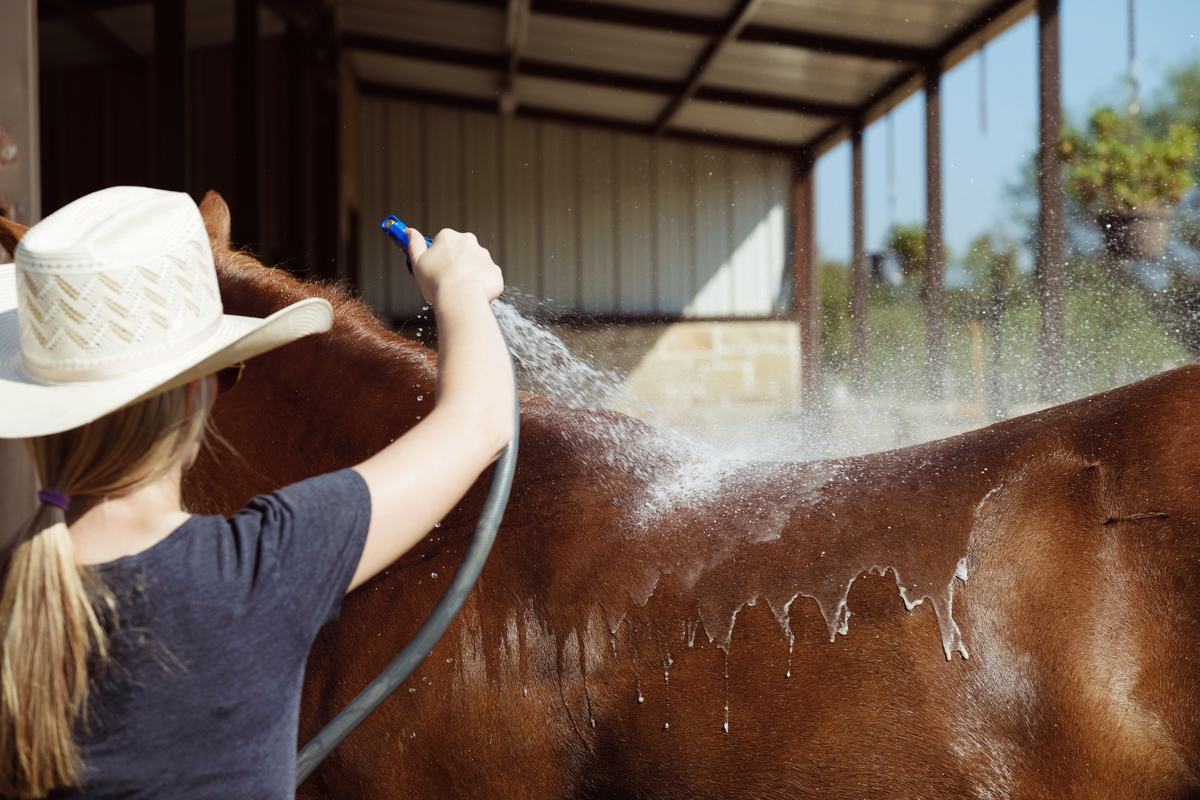
Summer doesn't slow horse owners down. Whether you're hauling to a weekend horse show, putting in conditioning rides before the next competition, working cattle on the ranch, or simply enjoying an evening trail ride after work, horses continue to perform through some of the hottest days of the year. By the time the ride is over, both horse and rider have usually worked up a good sweat, and what follows is a routine that has remained largely unchanged for generations. We loosen the girth, walk our horses until their breathing begins to settle, hose them off at the wash rack, and head back to the barn assuming the hard work is behind us. It's a process we've repeated countless times, and one that most of us rarely stop to question.
After all, the ride is over. The horse's heart rate is beginning to come down, they're standing quietly, and the sweat is washing away with the cool water running across their back. Everything about the moment suggests the horse is finally cooling down. It seems like a reasonable assumption, and for many years it was one that few people had much reason to challenge.
That changed during this year's Kentucky Equine Research Equine Health & Nutrition Conference.
Earlier this year, our Anderson Hay team had the opportunity to attend the conference alongside veterinarians, nutritionists, researchers, and equine professionals from around the world. Every year the conference offers an opportunity to learn about the latest advances in equine nutrition and management, but one presentation in particular sparked conversations long after the session had ended. In his presentation, "Beat the Heat: Nutrition and Heat Stress," Dr. Joe Pagan shared research that challenged one of the most common assumptions horse owners make after exercise. Using implanted temperature sensors within working muscles, researchers discovered that although the horse had stopped exercising, temperatures inside those muscles could continue rising for a short period during recovery as heat generated during work continued moving through the tissue before the body was finally able to carry it away.
It wasn't the kind of discovery that immediately changes everything we know about caring for horses, but it was one of those moments that makes you stop and rethink a routine you've followed for years. If the muscles are still managing heat after the ride has ended, then perhaps recovery begins differently than many of us have believed. As summer temperatures climb across much of the country, understanding what is happening inside the horse during those first few minutes after exercise may help us make better decisions about cooling, hydration, nutrition, and ultimately the long-term health and performance of the horses we care for.
Heat Is Part of Every Ride
When we think about a horse working hard, we usually notice the obvious signs first. Sweat darkens the shoulders, breathing becomes more pronounced, and a horse that only minutes earlier was full of energy now lowers its head as it begins to recover. Those visible signs tell us the horse has been working, but they don't tell the whole story. Beneath the skin, thousands of muscles have been converting stored energy into movement, and like any engine, they are far from perfectly efficient. While some of that energy becomes forward motion, a surprisingly large amount is released as heat.
Under normal conditions, horses are remarkably well equipped to manage that heat. Blood continually carries warmth away from working muscles, sweat evaporates from the skin, and cooler surrounding air helps draw excess heat away from the body. Together, these systems allow horses to perform extraordinary athletic feats while maintaining a body temperature within a relatively narrow range. Most of the time we never give this remarkable cooling system a second thought because it works so efficiently.

Summer, however, changes the equation. As temperatures climb and humidity rises, the environment becomes less effective at accepting the horse's excess heat. Sweat evaporates more slowly, warm air removes less heat from the body, and the horse must work harder simply to stay cool while continuing to generate heat with every stride. Researchers often describe this as an increased heat load-the combination of heat produced during exercise and the environmental conditions that make it more difficult for that heat to escape. Understanding that concept is important because it changes the way we think about recovery. Cooling a horse isn't simply about washing away sweat; it's about helping the body remove the tremendous amount of heat that accumulated during exercise before it begins affecting recovery and performance.
Looking Beneath the Surface
For years, researchers have relied on measurements such as rectal temperature, heart rate, respiration, and skin temperature to evaluate how horses recover after exercise. Those tools remain valuable today and continue to provide important insight into a horse's condition, but they don't always tell the entire story. What they can't show is exactly what is happening deep inside the muscles where the work-and the heat-is actually being generated.
To better understand that process, researchers at Kentucky Equine Research implanted tiny temperature-sensing microchips into the muscles of exercising horses. These sensors continuously recorded muscle temperature before, during, and after exercise, allowing researchers to observe changes that had never been measured this precisely before. Rather than relying on external indicators, they could watch how heat behaved inside the muscles themselves as horses recovered from work.
What they found challenged one of the assumptions many horse owners have held for years.
Most of us naturally assume that once a horse stops exercising, muscle temperature immediately begins to decline. After all, the work has ended, the heart rate begins slowing, and the horse appears to be recovering. Instead, researchers observed that temperatures within the muscles often continued rising for several minutes after exercise had stopped before gradually beginning to decline. The muscles weren't producing additional heat after the ride was over. Rather, heat that had accumulated deep within the tissue during exercise was continuing to move through the muscle before the body's cooling mechanisms could finally carry it away.
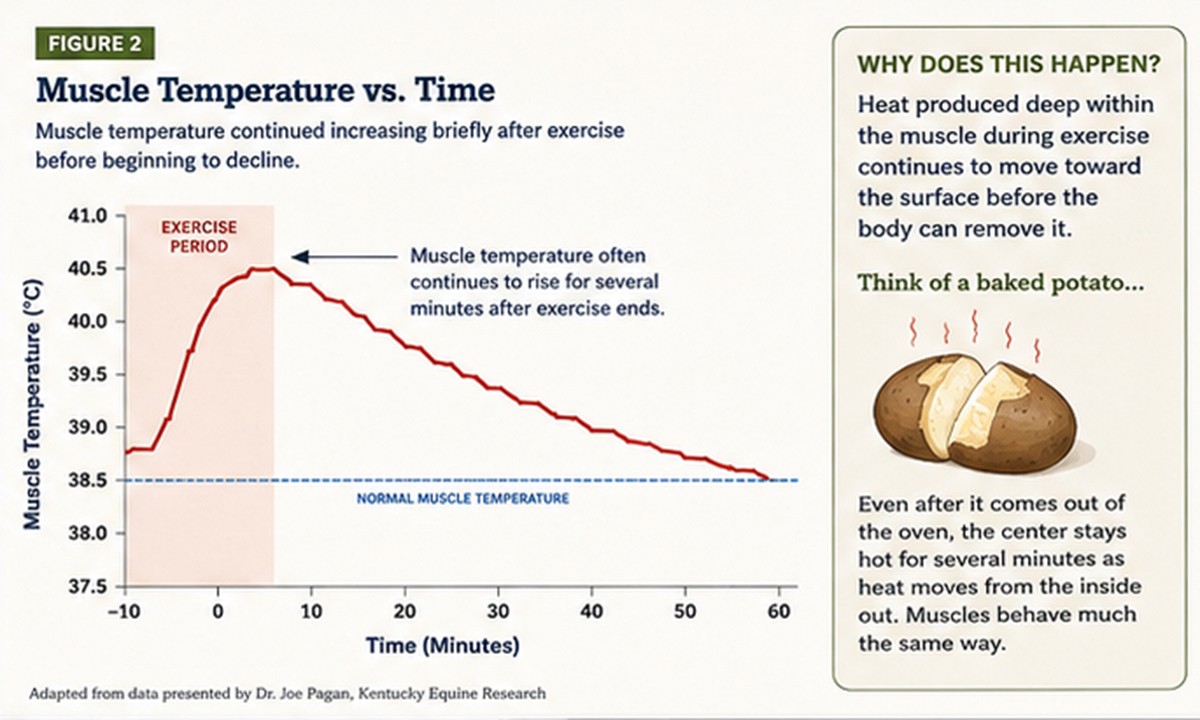
A simple comparison helps explain what is happening. Imagine removing a baked potato from the oven. The moment it comes out, it is no longer being heated, yet anyone who has cut into one too soon knows the center remains extremely hot. Heat continues moving from the middle of the potato toward the outside long after it has left the oven. The potato isn't creating more heat; it's simply redistributing the heat it already contains.
The same principle applies to a horse after exercise. The ride may be over, but the body is still working to move that stored heat away from the muscles before it can ultimately be released into the surrounding environment. That realization shifts the way we think about recovery. Those first few minutes after exercise aren't simply a cooldown period-they're an active phase where the horse is still carrying and redistributing a tremendous amount of heat.
That naturally raises the next question every horse owner wants answered.
If horses are still carrying that heat after the ride is over, what is the best way to help them cool down?
Rethinking the Wash Rack
Few topics have generated as much discussion around barns as the “right” way to cool a horse after exercise. Some people have always believed horses should be walked extensively before ever reaching for a hose. Others focus on cooling only the large blood vessels along the neck and legs. Many of us were taught to scrape every drop of water off the horse before applying more, believing that water left on the coat would trap heat and make cooling less effective.
Like many traditions in the horse industry, these practices have often been handed down from one generation to the next because they seemed to make sense. The research presented by Dr. Pagan, however, suggests that some of those long-standing assumptions deserve another look.
The studies presented during the conference consistently showed that applying cool water over the horse’s entire body was one of the most effective ways to remove heat following exercise. Water absorbs heat far more efficiently than air, making it an incredibly effective tool for helping the body transfer excess heat into the environment. In one comparison discussed during the presentation, horses cooled with water reached normal temperatures dramatically faster than horses that relied on walking alone for recovery. The difference wasn’t measured in seconds, it was measured in minutes, a meaningful advantage during periods of extreme heat.
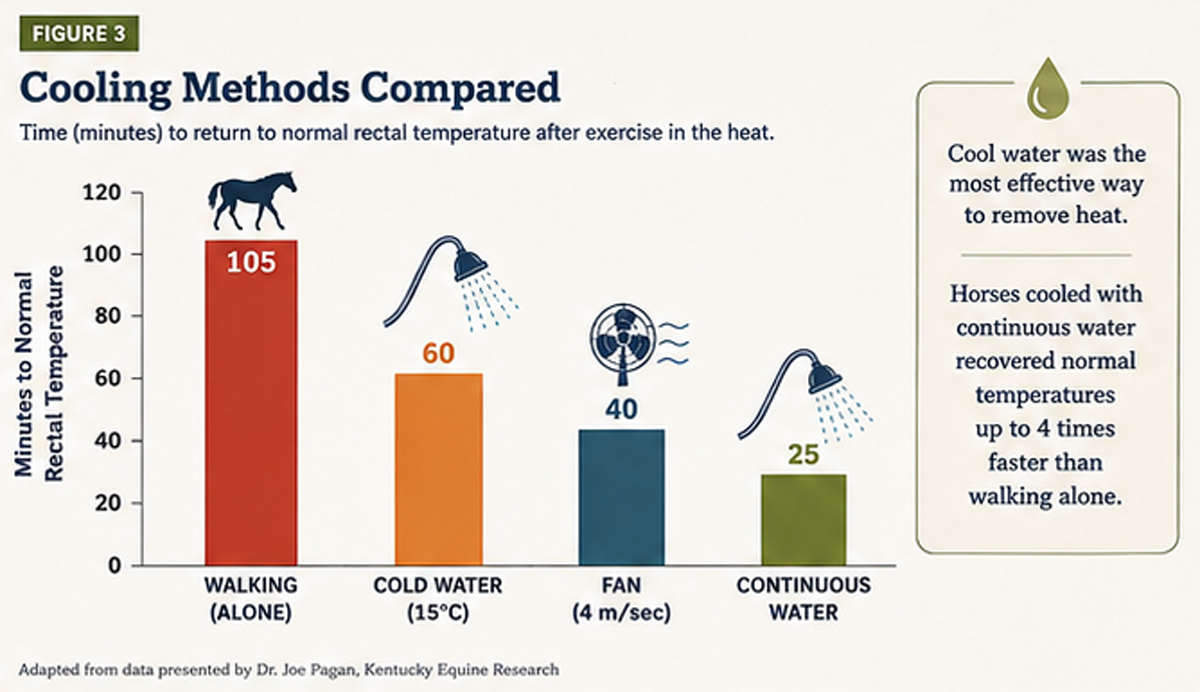
That doesn’t mean walking should be abandoned altogether. Walking continues to support circulation, encourages the horse to remain relaxed, and provides an opportunity to monitor breathing and overall recovery. Rather, the research suggests that walking and hosing work best together, with cool water playing the primary role in removing heat while walking supports the horse’s overall recovery.
One finding that drew considerable attention involved the use of the sweat scraper. For decades, many horse owners have been taught to scrape water away between each application so fresh water can be applied again. While scraping certainly makes sense before putting a horse back in a trailer or covering them with a cooler, the research suggests it may not be necessary during active cooling. In fact, continually applying cool water allows heat to keep transferring from the horse into the water without interrupting the process. Rather than spending valuable time scraping after every rinse, simply continuing to hose the horse may provide faster overall cooling.
Sometimes the simplest answer really is the correct one.

Recovery Continues Long After the Water Stops
Cooling the horse's body is only one piece of the recovery process. Every drop of sweat represents not only water leaving the body but also the loss of important electrolytes that play essential roles in muscle contraction, nerve function, and hydration. During prolonged work in hot weather, those losses can become significant, making fresh water and appropriate electrolyte replacement an important part of helping horses recover and prepare for their next ride.

Dr. Pagan also discussed an area of research that is still developing but may prove to be equally important in the future. Preliminary studies examining horses exercising in hot conditions found that animals experiencing greater heat stress also tended to have lower vitamin E status, and additional natural vitamin E appeared to improve post-exercise cooling in those horses. While additional research is still needed before broad recommendations can be made, the findings illustrate how nutrition continues to play an important role in helping horses manage environmental stress.
Perhaps the biggest takeaway from the conference wasn't a single management practice or nutritional recommendation. It was the reminder that recovery doesn't begin when the horse walks back into the barn. It begins the moment exercise ends, and every decision made during those first several minutes-from cooling methods to hydration and nutrition-helps determine how effectively the horse returns to normal.

The Foundation Is Built Every Day
One theme surfaced repeatedly throughout this year's Kentucky Equine Research Conference, regardless of the topic or presenter. The best recovery programs don't begin after exercise-they begin long before the horse is ever saddled.
Conditioning, hydration, balanced nutrition, and consistent forage all work together to prepare horses for the physical demands placed on them. No single supplement, electrolyte, or cooling strategy can replace a strong nutritional foundation that is built day after day through good management.
Forage sits at the center of that foundation. Horses are designed to consume fiber throughout the day, supporting digestive health, encouraging normal water intake, and providing the consistent nutrition that allows the rest of the diet to do its job effectively. While no bale of hay can eliminate the challenges of a ninety-degree afternoon, a consistent, high-quality forage program helps support the overall health and hydration that allow horses to perform, recover, and thrive.
That's one of the reasons Anderson Hay values its long-standing partnership with Kentucky Equine Research. Both organizations share a commitment to advancing equine nutrition through practical research, sound management, and education that helps horse owners make informed decisions backed by science.
Continue Your Learning
One of the things we appreciate most about Kentucky Equine Research is that their work doesn't end when the conference concludes. Every year, KER continues to advance our understanding of equine nutrition, exercise physiology, hydration, and horse health through ongoing research, peer-reviewed publications, conference proceedings, and one of the most comprehensive educational libraries available to horse owners. Their Equinews articles do an outstanding job of translating complex research into practical information that owners, trainers, and veterinarians can put to use every day.
If this article sparked your curiosity, we encourage you to continue exploring the resources available through Kentucky Equine Research. Whether you're interested in heat stress, electrolyte management, performance nutrition, forage, digestive health, or the latest advances in equine science, you'll find a wealth of information designed to help horse owners make informed decisions backed by research.
Learn More from Kentucky Equine Research
In this short video, you'll meet the Kentucky Equine Research team, learn more about the work they're doing to advance equine health around the world, and discover why Kentucky Equine Research chose Anderson Hay as its Official Research Forage, and how that partnership is helping advance equine nutrition through consistent, research-quality forage.
If you’d like to explore the complete conference proceedings—including Dr. Joe Pagan’s presentation on heat stress and cooling horses, along with dozens of other research summaries—you can download the full publication below.
2026 Equine Health and Nutrition Conference Proceedings
Download the Conference Proceedings (PDF)
Frequently Asked Questions
How should I cool my horse after exercise in hot weather?
The most effective way to cool a hot horse is by applying cool water over the entire body while allowing the horse to continue walking if appropriate. Research presented by Kentucky Equine Research has shown that cool water removes heat much more effectively than air alone, helping the horse recover faster after exercise.
Should I scrape the water off my horse after hosing?
If your goal is to remove heat as quickly as possible, current research suggests that continuously applying cool water is more effective than stopping to scrape between every rinse. A sweat scraper is still useful before trailering or blanketing a horse, but during active cooling, keeping cool water flowing helps remove heat more efficiently.
Is walking my horse enough to cool them down?
Walking is an important part of recovery because it supports circulation and allows you to monitor your horse's breathing and overall condition. However, walking alone removes heat much more slowly than applying cool water over the horse's body. The best approach is to combine walking with active cooling.
Why can a horse's muscles continue getting hotter after exercise?
The muscles are not producing additional heat after the ride has ended. Instead, heat generated during exercise continues moving through the muscle tissue before the body's cooling mechanisms can remove it. Research using implanted muscle temperature sensors has shown that muscle temperature can briefly continue rising during the early stages of recovery before it begins to decline.
What role do electrolytes play during hot weather?
Horses lose significant amounts of sodium, chloride, potassium, and other electrolytes through sweat. These minerals are essential for normal muscle function, hydration, and recovery. During periods of heavy sweating or prolonged exercise, replacing lost electrolytes can help support normal recovery and performance.
Does nutrition affect how horses handle heat?
Yes. Proper hydration, conditioning, balanced nutrition, and consistent access to high-quality forage all help prepare horses for exercise and environmental stress. Emerging research is also exploring the role nutrients such as vitamin E may play in helping performance horses recover from exercise in hot conditions.
Can good forage help horses recover from exercise?
Forage doesn't directly cool a horse after exercise, but it provides the nutritional foundation that supports hydration, digestive health, and overall performance. Horses receiving a consistent, high-quality forage program are better prepared to meet the physical demands of work throughout the summer months.
Where can I learn more about heat stress and equine nutrition?
Kentucky Equine Research offers one of the industry's most comprehensive collections of educational resources through its Equinews library, conference proceedings, and peer-reviewed publications. Horse owners can explore articles covering heat stress, hydration, electrolyte management, forage, digestive health, and the latest advances in equine nutrition.
How long does it take for a horse to cool down after exercise?
Recovery time depends on the intensity of exercise, environmental conditions, fitness level, and the cooling methods used. Horses exercised in hot, humid weather often require longer recovery periods than those worked in cooler conditions. Monitoring respiration, attitude, hydration, and overall recovery is more important than relying on a specific number of minutes.
Is it safe to hose a hot horse with cold water?
Yes. Modern research has shown that applying cool or cold water to a hot horse after exercise is both safe and highly effective for removing body heat. Concerns that cold water causes muscles to "cramp" or "trap heat" have not been supported by current research. In fact, cooling with water remains one of the best tools available for helping horses recover after strenuous exercise in warm weather.