What Is That "Cheaper" Bale Really Costing You?
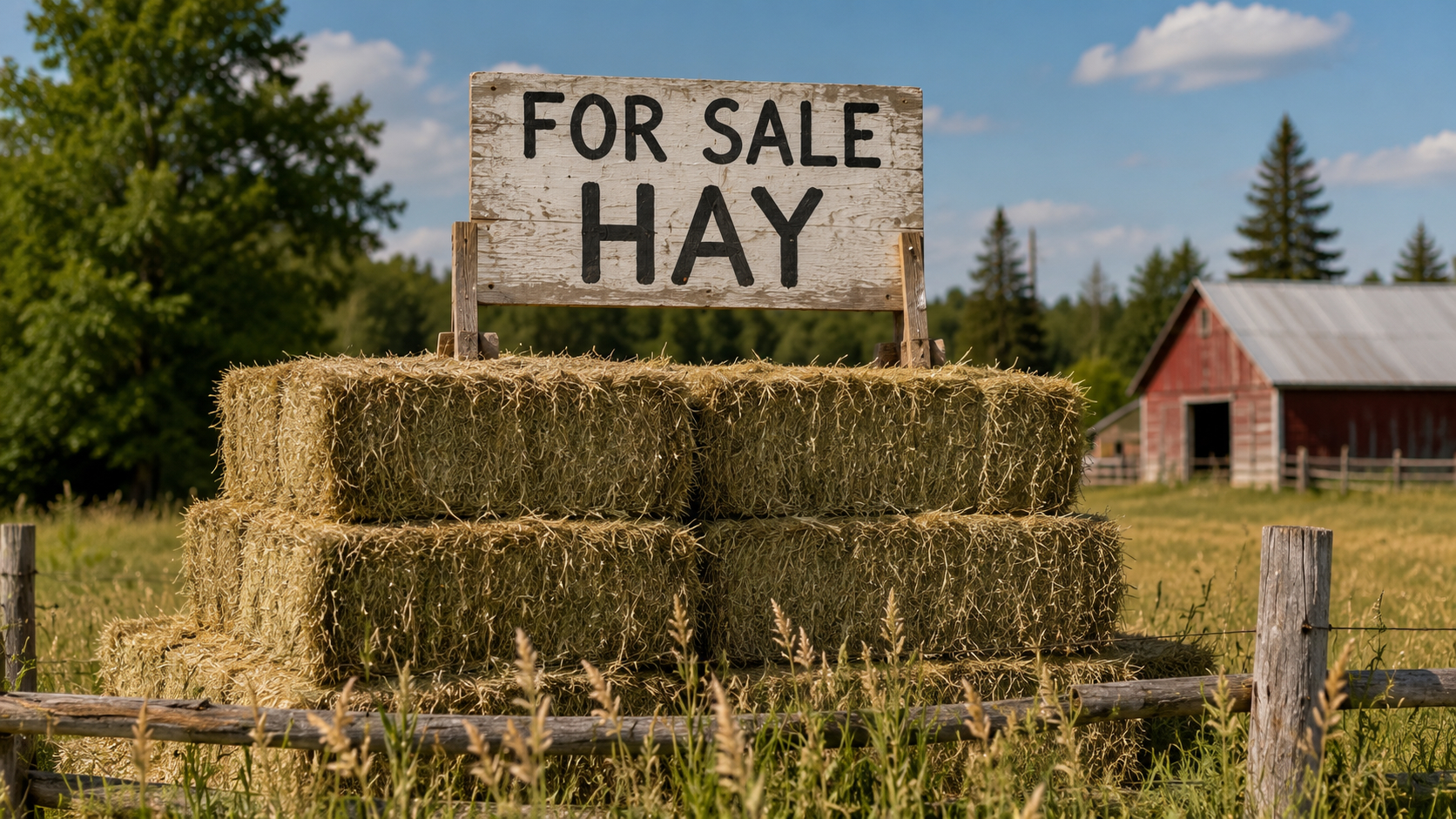
We've all driven past a freshly baled field with a handwritten sign advertising hay for sale. Maybe it says grass hay, pasture hay, or meadow hay for $8 a bale. At first glance, that can look like a much better deal than the 90-pound bale sitting at your local feed store for $20, and sometimes it truly is. There are many local farmers producing excellent hay, and buying directly from a neighbor can be a great option. The challenge isn't deciding whether local hay is "good" or "bad." The challenge is knowing whether two bales that look similar are actually comparable once you consider their weight, nutritional value, harvest timing, consistency, and ultimately how much you'll need to feed to meet your horse's nutritional needs.
Most of us naturally compare hay by the bale because that's how it's sold. An $8 bale looks dramatically less expensive than a $20 bale, so the decision can seem obvious before we've even loaded the first bale into the truck. The problem is that hay doesn't come in one standard size, and price alone rarely tells the whole story. Before comparing protein, digestible energy, or any other nutritional value, the first question should simply be, "How much hay am I actually buying?" Once you know the weight of each bale, you have the foundation for making a fair comparison.

Start With the Weight
One of the easiest mistakes to make when shopping for hay is assuming every bale represents roughly the same amount of forage. In reality, bale weights can vary tremendously depending on the baler, the operator, moisture, and even the type of hay being harvested. A $10 bale weighing 45 pounds costs almost exactly the same per pound as a $20 bale weighing 90 pounds. Until you know how much hay is actually in each bale, you don't really know what you're paying.
The math is surprisingly simple.
Price per bale ÷ actual bale weight = cost per pound
That single calculation immediately creates a much fairer comparison because it removes the guesswork. Instead of comparing two price tags, you're comparing the actual cost of the forage itself.
To put this into practice, we gathered information from local farmers advertising generic grass, pasture grass, and meadow grass hay throughout the Pacific Northwest using Craigslist, roadside signs, and other local listings. We focused only on grass hay and did not include alfalfa, clover, or other legumes. Those bales were then compared with Anderson Valley Grass, which averages approximately 90 pounds per three-tie bale and commonly retails for around $20 throughout the Pacific Northwest.
Looking only at those numbers, the local pasture hay is still the less expensive option, and that's important to acknowledge. A clean, well-made 60-pound bale for $8 may be an excellent value for the right horse and feeding program. The point isn't that the local bale is secretly more expensive than it appears. Rather, it's that comparing an $8 bale with a $20 bale doesn't provide enough information to determine which one offers the better value. One bale simply contains considerably more forage than the other, and until you're comparing similar amounts of hay, it's difficult to make a meaningful comparison.
Knowing the weight, however, only answers the first question. It tells you how much forage you've purchased, but it doesn't tell you what that forage is capable of providing nutritionally. That's where the conversation becomes much more interesting.
Then Look Inside the Bale
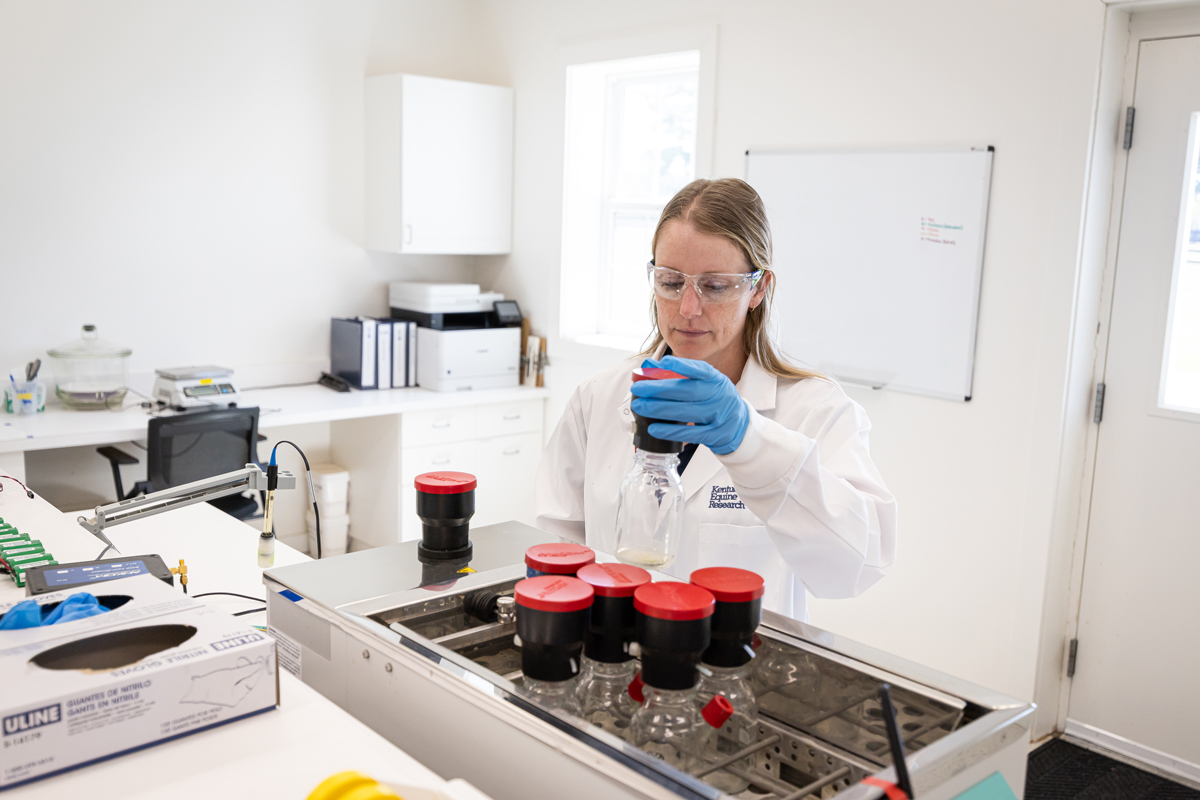
Two bales can weigh exactly the same and still feed very differently. Grass species, plant maturity, weather, fertility, irrigation, harvest timing, and storage conditions all influence the nutritional value of the finished forage. While appearance can tell you whether hay looks leafy, green, or free of weeds, it can't tell you how much protein, digestible energy, fiber, or sugar is actually inside the bale. That's why a forage analysis can be such a valuable tool when comparing hay.
A laboratory analysis provides an objective look at what's actually being fed. It measures nutrients such as crude protein, digestible energy, moisture, carbohydrates, and fiber, allowing horse owners to compare forage on much more than appearance alone. Measurements like Neutral Detergent Fiber (NDF) and Acid Detergent Fiber (ADF) don't necessarily tell you that one hay is "better" than another, but they do provide additional insight into forage maturity, digestibility, and potential intake. When combined with the rest of the analysis, they help paint a much more complete picture of how that forage may fit into a particular horse's diet.
To keep this comparison as fair as possible, both the local hay samples and Anderson Valley Grass were analyzed and reported on the same basis.
These results don't mean one hay is automatically better than another. In fact, that's one of the biggest misconceptions surrounding forage testing. A performance horse in heavy work, a broodmare, an easy keeper, and a horse with metabolic concerns may all benefit from very different nutritional profiles. The value of a forage analysis isn't that it tells you which hay to buy; it's that it gives you the information needed to determine which hay is the best fit for the horse standing in your barn.
What Does That Mean at Feeding Time?
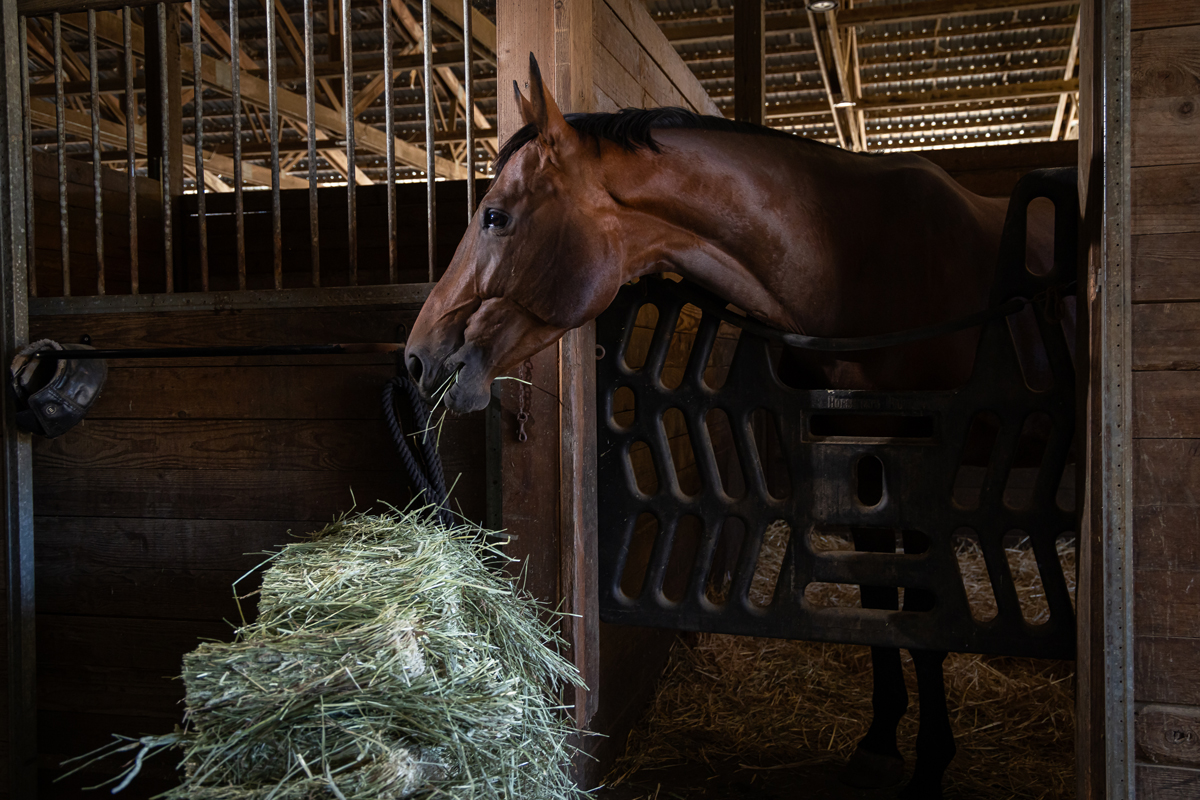
Once you've compared bale weight and nutrient composition, the next question almost every horse owner asks is, "What does it actually cost me to feed?" That's where looking beyond the price tag begins to make a real difference.
For a simple comparison, imagine a 1,000-pound horse consuming 15 pounds of Anderson Valley Grass each day. At an average retail price of $20 for a 90-pound bale, that works out to approximately $3.33 per day. Based on the digestible energy values in this comparison, it would take about 18 pounds of the local pasture hay to provide a similar amount of digestible energy, bringing the daily cost to approximately $2.40. If crude protein is used as the comparison instead, it would take about 20 pounds of the local hay, resulting in a daily feeding cost of approximately $2.66.
These calculations compare nutrient concentration only and are intended as an illustration, not a feeding recommendation. Horses should never be fed less forage simply because one hay contains more digestible energy or protein. Adequate long-stem forage remains essential for chewing time, digestive health, and normal gut function, and the amount fed should always be based on the individual horse and the complete ration.
What this comparison does show is that the difference between the "$8 bale" and the "$20 bale" becomes much smaller once bale weight and nutrient delivery are taken into account. Rather than comparing price tags, you're comparing what it actually costs to provide a similar amount of nutrition. For some horses, the lower-priced local hay may be the better fit. For others, especially those requiring more nutrient-dense forage, paying a little more per day may reduce the need for additional grain, oils, or supplements, many of which cost significantly more per pound than hay itself.
Beyond the Nutrition Tag
The numbers in a forage analysis provide valuable insight, but they don't tell the entire story. Hay isn't manufactured in a factory where every bale comes off the line exactly the same. It's a crop, and like any crop, its quality is influenced by weather, growing conditions, harvest timing, and the care taken from the field to the feeder. Two hay analyses may look nearly identical on paper, yet one may be far more consistent from bale to bale simply because of how it was harvested, stored, and managed throughout the season.
For horse owners feeding one or two horses, those differences may not always be noticeable. But for boarding barns, breeding operations, trainers, and performance horse owners who feed dozens or even hundreds of bales each year, consistency quickly becomes one of the most valuable qualities a forage program can offer. Knowing that today's bale will look, smell, and feed much like the last one reduces surprises and makes managing an entire feeding program much easier.
Why Harvest Timing Matters
One of the biggest factors affecting hay quality is when the crop is harvested. As grasses mature, they naturally produce more structural fiber to support the plant. While that fiber is essential for healthy digestive function, maturity also changes the nutritional profile of the forage. Protein and digestible energy gradually decline while fiber levels increase, reducing overall digestibility.
That's one reason you'll often hear experienced horse owners talk about "cutting at the right stage" rather than simply talking about the number of cuttings each year. First cutting isn't automatically better than second cutting, and second cutting isn't automatically better than third. Weather, irrigation, growing conditions, and the stage of plant maturity all play a much larger role than the calendar.
This is where forage testing becomes especially valuable. Instead of guessing based on color or softness, a forage analysis provides measurable information about the nutritional value of that specific crop. While appearance certainly matters, the laboratory report tells you what your horse is actually eating.
Consistency Isn't an Accident
Anyone who has purchased hay from different sources has probably experienced it. One bale feeds beautifully, while the next from the same stack looks completely different. One flakes apart easily, another is stemmier than expected, and another contains noticeably more weeds or coarse material. Even when all of the hay is perfectly safe to feed, those inconsistencies can make it difficult to maintain a balanced feeding program.
Producing consistent forage requires much more than simply growing hay. It involves selecting the right fields, harvesting at the appropriate maturity, monitoring moisture throughout the baling process, storing hay correctly, and maintaining quality during compression, packaging, and distribution. Every step affects what eventually reaches the horse owner's barn.
For operations feeding large numbers of horses, consistency often becomes just as valuable as the nutrient analysis itself. When every bale feeds similarly, ration adjustments become more predictable, horses experience fewer sudden changes in forage, and managers spend less time sorting through inconsistent loads.

Traceability Brings Confidence
Another consideration many horse owners never think about is traceability. If someone hands you a bale from the back of a pickup, how much do you really know about it? Where was it grown? When was it harvested? Was it tested? Has it been stored properly? If you have questions after feeding it, is there any way to trace it back to the field where it originated?
For many people, those questions may never come up. But for owners of valuable performance horses, breeding stock, horses with metabolic concerns, or simply anyone who wants to know exactly what they're feeding, having that information available provides an added level of confidence.
At Anderson Hay, every stack is identified throughout the production process and linked to its forage analysis. That traceability allows us to follow forage from the field where it was harvested through storage, processing, shipping, and ultimately to the retailer. It's the same system we've relied on for years while supplying forage to some of the most demanding equine operations around the world, and it's one of the reasons consistency has become such a defining part of our program.
More importantly, it allows us to answer questions when customers ask them. Rather than providing representative values, we're often able to provide the actual forage analysis associated with a specific stack or lot, giving horse owners greater confidence in what they're feeding.
Looking at the Bigger Picture
When most of us shop for hay, it's natural to focus on the price written on the bale. That's the easiest number to compare, and it's often the only information available. But as we've seen throughout this article, bale price is only one piece of the equation.
The actual amount of hay you're purchasing, the nutritional value contained within each pound, the consistency from bale to bale, the maturity of the forage, and the confidence that comes from knowing where that hay originated all contribute to its overall value. Depending on your horse and your goals, those factors may prove just as important as the purchase price itself.
That doesn't mean every horse needs premium forage. Many horses thrive on locally grown grass hay, and supporting local farmers is something we wholeheartedly encourage when quality forage is available. The goal isn't to convince every horse owner to buy the most expensive bale they can find. The goal is to encourage horse owners to compare hay using all of the information available rather than relying on price alone.
So...What Is the "Cheaper" Bale Really Costing You?
After everything we've covered, you may have been expecting a simple answer. The truth is, there isn't one.
Sometimes that $8 bale from the local farmer really is the best buy. If it's clean, harvested at the right stage of maturity, fits your horse's nutritional needs, and is priced fairly, it may provide tremendous value. Supporting local farmers is something we believe in, and there are many who produce outstanding forage year after year.
At the same time, a higher-priced bale isn't necessarily expensive just because it costs more. If it contains more usable nutrition, is more consistent from bale to bale, or helps reduce the amount of grain and supplements your horse requires, the overall cost of feeding may be much closer than the price tags suggest.
The point of this article was never to convince you that one bale is always better than another. It was simply to encourage you to look beyond the $ number written on the bale. Once you begin comparing bale weight, nutrient analysis, harvest timing, consistency, and traceability, you start seeing hay the way nutritionists, veterinarians, and experienced horse owners often do. Instead of asking, "Which bale is the cheapest?" the question becomes, "Which bale provides the best value for my horse?"
That's a much different question, and one that's worth asking every time you buy hay.
The next time you're standing in front of a stack of bales, take a moment to look beyond the price tag. Ask how much the bale weighs. Ask whether it's been tested. Ask when it was harvested and whether it's consistent from one bale to the next. The answers to those questions won't always lead you to the most expensive hay, and they won't always lead you to the least expensive hay either. More often than not, they'll lead you to the forage that's the best fit for your horse.
Because at the end of the day, the goal isn't to buy the cheapest bale.
It's to feed your horse the best forage you can for your budget.
And that's a decision you'll never regret!
Frequently Asked Questions
Is cheaper hay always the better value?
Not necessarily. While a lower-priced bale may cost less upfront, factors such as bale weight, nutrient content, digestible energy, consistency, and feeding rate all influence the overall cost of feeding.
Why should I compare hay by weight instead of by the bale?
Hay bales vary significantly in size and density. Comparing the cost per pound provides a much more accurate picture of what you're actually paying for.
What does a forage analysis tell me?
A forage analysis measures nutrients such as crude protein, digestible energy, moisture, fiber, and carbohydrates. These values help determine whether a hay is appropriate for your horse's nutritional needs.
Does higher protein always mean better hay?
No. Different horses have different nutritional requirements. Growing horses and performance horses often benefit from higher protein levels, while many mature horses maintain excellent condition on moderate protein forage.
What are NDF and ADF?
Neutral Detergent Fiber (NDF) and Acid Detergent Fiber (ADF) are measurements that help describe forage maturity, digestibility, and potential intake. They provide valuable information when evaluating hay quality.
Why is hay consistency important?
Consistent forage helps maintain a stable diet, reduces sudden changes between bales, and makes it easier to manage feeding programs, particularly for boarding barns and performance horses.
Should I always buy premium hay?
Not necessarily. The best hay is the hay that meets your horse's nutritional needs while fitting your budget. Many locally produced hays provide excellent value when they are harvested and stored properly.