If you are new to feeding hay, one of the first questions you probably ask is, what kind of hay should I be feeding? Walk into any feed store or talk to a few different farmers and you will hear names like timothy, orchard grass, alfalfa, meadow grass, or teff, and it can get confusing fast. The truth is, not all hay is the same, and different animals do better on different types of forage. In this article we are going to walk through the main hay varieties we grow at Anderson Hay, what makes each one different, and which animals they are best suited for.
Why Hay Variety Matters
All hay provides fiber, and fiber is the foundation of every forage based diet. Horses, cattle, goats, sheep, and many other animals depend on long stem forage to keep their digestive systems working the way they should. What changes between hay varieties is the amount of protein, energy, fiber, and sugar, along with how palatable the hay is and how easy it is for the animal to digest.
Grass hays are usually lower in energy and protein and work well for maintenance diets, while legume hays like alfalfa provide more protein and calories for animals that need more nutrition. Harvest timing, weather, and how the hay is handled also make a big difference, which is why two bales that look the same can feed very differently.

Timothy Hay
Timothy hay is one of the most widely used forages in the horse industry, but it is not just for horses. Timothy is also commonly fed to cattle, goats, sheep, and many other livestock because of its high fiber content, good digestibility, and balanced nutrition.
Much of the timothy hay we grow at Anderson comes from the Kittitas Valley and the Columbia River Basin in Washington State, areas known around the world for producing some of the best timothy hay available. The climate, soil, and irrigation in this region allow the crop to be harvested at the right maturity and handled carefully, which helps keep the quality consistent year after year.
Because of that consistency, timothy is often used as the foundation of many feeding programs. One of the reasons it is so widely used is that timothy is one of the few forages that can often be fed free choice without as much concern about overfeeding or unwanted weight gain when compared to higher energy hays. In fact, Kentucky Equine Research uses premium Anderson timothy hay as a base forage in feeding trials because it provides reliable fiber and digestibility when evaluating equine diets. You can read our article on "Why Kentucky Equine Research Trusts Anderson Premium Timothy Hay."
Best Suited For: Timothy hay works well for horses, cattle, goats, sheep, and small animals when a clean, moderate energy grass hay is needed for maintenance diets or balanced feeding programs.
Anderson Forage Tip: Timothy is often used as the base forage in many feeding programs because it feeds consistently, and higher energy feeds like alfalfa can be added depending on the animal's needs.

Orchard Grass
Orchard grass is another popular grass hay, especially for horse owners who want something soft, leafy, and easy for animals to eat. Orchard grass tends to be very palatable, which means animals usually eat it well, making it a good choice for picky eaters or animals that need encouragement to keep their intake up.
Compared to timothy, orchard grass can be slightly softer and sometimes a little higher in energy depending on when it is harvested. Like any forage, the stage of maturity at harvest makes a big difference in how the hay feeds. Early cut orchard grass is usually more digestible, while later cut hay will have more fiber and less energy.
Because of its palatability and slightly higher energy in many cases, orchard grass can also work well for animals that need to gain weight or increase intake without switching to a very rich hay. It is widely used for horses, but it can also work well for cattle, goats, and sheep when a moderate energy grass hay is needed.
Best suited for: Orchard grass works well for horses, goats, sheep, and cattle that need a soft, palatable grass hay for maintenance or moderate energy diets.

Alfalfa
Unlike the other grass hay varieties that we have mentioned so far, Alfalfa is a legume hay, which means it naturally contains more protein, more energy, and more calcium than most grass hays. Because of that, alfalfa is often fed to animals that need extra nutrition, such as growing livestock, lactating animals, working horses, and cattle that need additional weight or production.
Many feeding programs do not use alfalfa alone, but instead feed a combination of alfalfa and grass hay to balance the diet. Feeding timothy and alfalfa together is very common because it allows you to provide enough energy without feeding too rich of a ration.
Anderson Forage Tip: Many feeding programs use a mix of timothy and alfalfa so the diet can be adjusted based on the animal’s needs. Take a look at this video showing how we weigh and mix forage on our farm to feed horses and keep their diet consistent.
Best suited for: Alfalfa works well for growing animals, lactating cows, sheep and goats, performance horses, breeding stock, and other livestock that need higher protein and more energy in their diet.

Valley Grass
Valley grass is a mixed grass hay that provides a good balance between quality and value. Our valley grass is typically a blend of timothy and Kentucky bluegrass, which makes it a more economical feeding option while still giving you some of the performance and digestibility that timothy is known for.
Because it is a grass mix, valley grass usually has moderate energy and good fiber, which makes it a good choice for animals that need steady forage without too much protein.
Best suited for: Valley grass works well as a maintenance forage for cattle, horses, goats, sheep, and general livestock feeding where clean grass hay is needed at a more economical price.
Meadow Grass
Meadow grass is another mixed grass hay that often contains timothy, bluegrass, orchard grass, and sometimes native grasses depending on the field. Because of the mix, it provides good bulk forage and steady fiber, which makes it useful for many different types of livestock.
Mixed grass hays like meadow grass are often used when animals need consistent forage without excess energy.
Best suited for: Meadow grass works well for cattle, goats, sheep, and horses that need steady fiber and moderate nutrition.

Teff Grass
Teff hay has become more popular in recent years, especially for horses that need lower sugar forage. When grown and harvested correctly, teff can test lower in non structural carbohydrates (NSC), which is why it is sometimes used for special diets.
Teff can be difficult to grow correctly, and if the crop is stressed, fertilized improperly, or harvested at the wrong time, nitrate levels can increase. High nitrate forage can create health risks for livestock, which is why testing is important when feeding teff or any hay intended for special diets.
One way to think about teff is like diet soda. It may be lower in sugar and still does the job, but it is not always the first choice for every animal. In many cases, properly harvested timothy that tests in the right range can be a better option for horses needing lower NSC forage.
Anderson Forage Tip: If you are feeding a horse with metabolic issues, testing the hay matters more than the species. Click Here to read more about “What to Feed Horses with Metabolic Issues"
Best suited for: Teff hay is most often used for horses needing lower sugar forage and should be tested before feeding.

Certified Wheat Straw
Straw is not actually a hay, but it often gets mentioned in the same conversation because it is also a forage type product that comes from grass crops. Straw is the stem left over after grain crops like wheat, barley, or oats are harvested. Because of that, straw is very low in protein and energy and is not meant to be a primary feed source, but it is sometimes used in small amounts to add roughage to the diet, especially for animals that need extra fiber without extra calories.
Most of the time, straw is used for bedding, erosion control, and garden mulching rather than feeding. Clean, weed free straw is especially important for these uses, because low quality straw can contain weed seeds or chemical residue that may cause problems in pastures, landscaping, or gardens.
At Anderson Hay, our straw is part of a certified program that is tested to be weed free and clopyralid free, which means it is safe to use for bedding, livestock areas, and garden applications. This is especially important for customers using straw for mulching or compost, where herbicide residue can damage plants. You can read more about using certified straw for gardening and landscaping in our article on mulching with straw.
Same Hay, Different Package Types
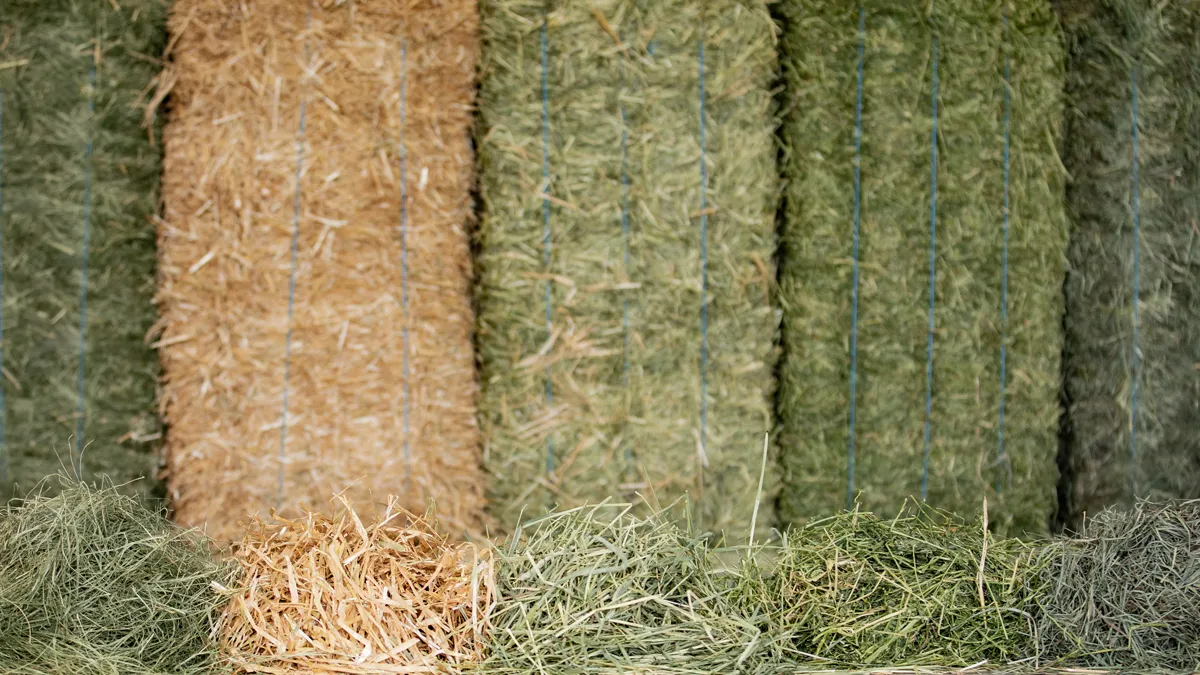
One question we hear often is whether the type of bale changes the quality of the hay. At Anderson Hay, the answer is no. The same forage varieties are available in 3-tie bales, compressed bales, MAG bales, and boxed hay for small animals.
The package type changes how the hay is handled and shipped and fed, but it does not change the nutritional value of the forage itself. When you start with good hay, you end up with good hay no matter how it is packaged.
How to Choose the Right Hay for your Animals
Choosing the right hay starts with knowing what your animals need at their current stage of life. Growing, working, and lactating animals need more energy, while animals at maintenance often do better on good quality grass hay. Consistency matters too, because sudden changes in forage can upset digestion even when the hay looks similar.
At Anderson Hay, every stack is tested and tracked as part of our traceability program, so you know exactly what you are feeding. If you are unsure which hay is best, talk with an Anderson forage specialist at your local feed store or reach out to our customer service team and we will be happy to help you choose the right forage for your animals. Use our dealer locator to find Anderson Hay near you.
Frequently Asked Questions
What Type of Hay is Best for Horses?
Timothy and orchard grass are two of the most commonly fed hays for horses because they provide good fiber and moderate energy. Horses that need more calories may also be fed alfalfa or a mix of grass hay and alfalfa. The best hay depends on the horse's age, workload, and body condition.
Is Alfalfa Better Than Grass Hay?
Alfalfa is not better or worse, it is just different. Alfalfa has more protein and energy, which makes it useful for growing animals, lactating animals, and performance horses. Grass hay like timothy or orchard grass is often better for maintenance diets.
What is the Difference Between Timothy and Orchard Grass?
Timothy is known for consistency and balanced nutrition, while orchard grass is softer and very palatable. Orchard grass may help increase intake for animals that need to gain weight, while timothy is often used as a steady base forage.
Is Teff Hay Safe for Horses?
Teff hay can be used for horses needing lower sugar forage, but it must be grown and harvested correctly. Testing is important because nitrate levels and sugar levels can vary depending on growing conditions.
Does Bale Type Change Hay Quality?
The bale type does not change the forage itself. The same hay can be packaged in three tie bales, compressed bales, MAG bales, or boxed hay. Quality depends on how the hay was grown, harvested, tested, and stored.
How Do I Know What Hay to Feed My Animals?
The best way to choose hay is to match the forage to the animal’s needs. Growing, working, and lactating animals need more energy, while animals at maintenance often do better on grass hay. You can also talk to your local feed store or contact Anderson Hay customer service for help choosing the right forage.
Can Straw Be Used as Feed?
Straw is not a hay and is very low in energy and protein. It is sometimes fed in small amounts to add roughage, but it is most often used for bedding or mulching. Certified weed free and clopyralid free straw is recommended for livestock and garden use.