How weighing forage, mixing hay types, and choosing quality compressed bales improve health and reduce waste
At Anderson Hay, we keep feeding simple, consistent, and measurable. Our horses thrive on a balanced daily ration that's weighed, mixed, and cleanly delivered. Every single day. The goal: excellent body condition, steady energy, and minimal waste.
A Simple, Consistent Feeding System
We feed a balanced mix of Timothy and Alfalfa and we weigh every ration. This approach gives the horses reliable nutrition day after day, supports gut health, and keeps easy-keepers from gaining too much while helping hard-keepers maintain condition.
Why Many Owners Mix a Grass Hay with Alfalfa
Many horse owners prefer a grass hay paired with some alfalfa because it blends complementary nutrition into one daily program. The challenge with "mixed in the field" bales is consistency – flake-to-flake ratios can vary. By weighing and mixing at feeding time, you can provide a consistent balance every day.
Precision Matters: Weigh 2% of Body Weight Per Day
We start with a simple target most nutritionists recognize: about 2% of the horse's body weight per day in forage. We split that into two feedings and use a scale to ensure accuracy. Weighing prevents over- or under-feeding and dramatically reduces waste compared to :eyeballing," slow-feeding without a plan, or constantly topping off hay.
Compressed Bales Done Right (Quality First)
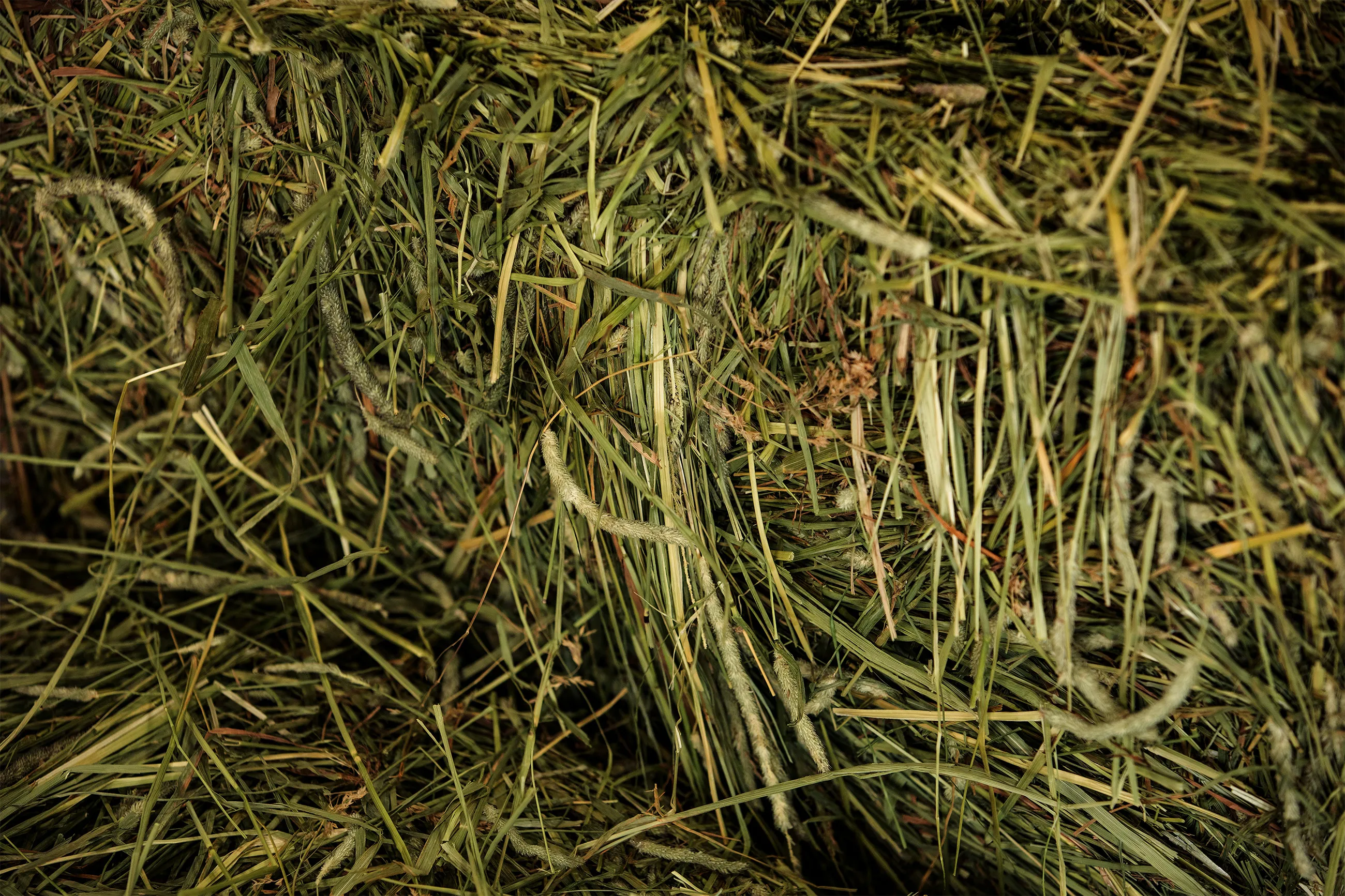
Nutrition comes from the forage, not the package. When you start with good hay, you end up with good hay – whether it's a traditional 3-tie bale or a compressed bale. That's why our focus is quality-first: field selection, harvest timing, testing, and careful handling from farm to store.
Anderson Premium Compressed Bales are made to preserve flakability and fiber length, so they handle much like classic 3-tie bales but in a smaller, easier-to-store format (about 50 lb vs. ~90 lb, and roughly one-third the storage space). Many of our compressed products are produced from 3-tie field bales, which supports longer stem length and clean flakes people love for weighing and feeding.
How to tell what you have: look for a live edge on one side and a cut edge on the other – an easy visual cue that the compressed bale originated from 3-tie field bales. Either way, the big idea is the same: start with premium forage, maintain cleanliness and fiber integrity, and you'll get reliable nutrition in a compact package.
Why compressed? They're easier to move, stack, and travel with; they flake cleanly for accurate weighing; and the compact size helps reduce mess around the barn.
Our Daily Workflow (Fast, Clean, Repeatable)
- Stage bales (Timothy on one side, Alfalfa on the other) for quick access.
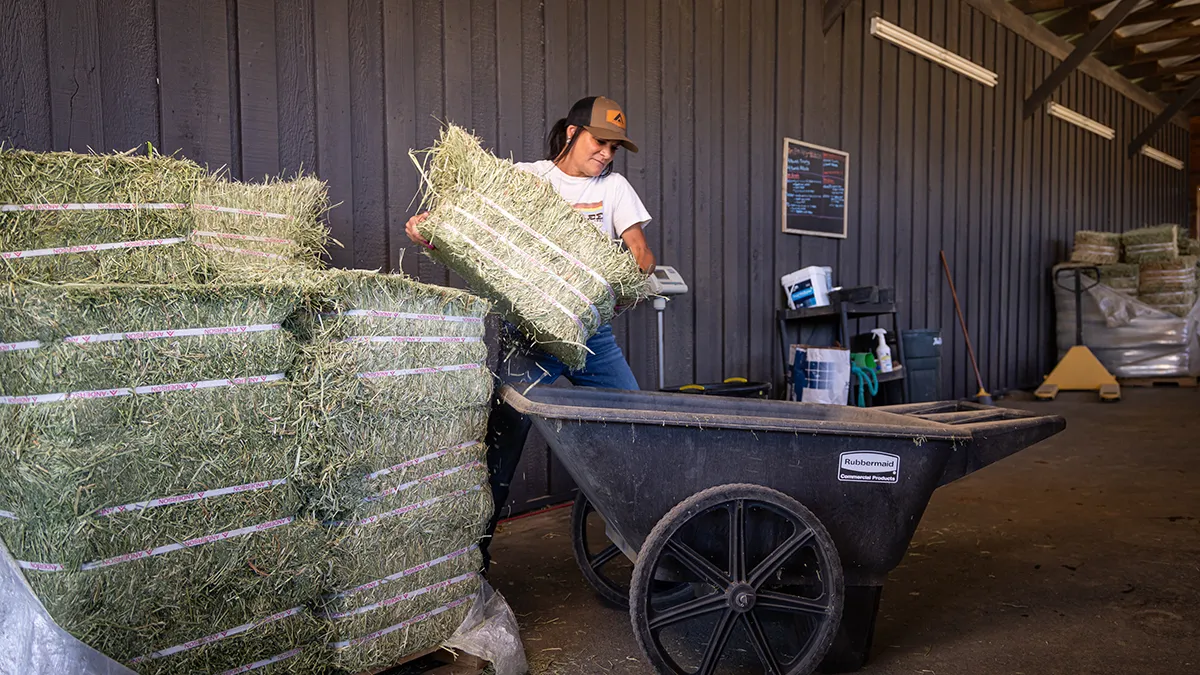
- Cut twine and flake into a bin placed on a scale.
- Weigh the total ration (about 2% of body weight per day, split into AM/PM).
- Mix the two hays to your desired ratio for each horse.
- Feed, then assess – body condition, appetite, and clean-up – so you can make small, informed adjustments.
Because rations are weighed and matched to need, horses clean up their forage without constant leftovers. Over time, barns report less waste, cleaner aisles, and more predictable conditioning.
Tips for New Feeders
- Weigh, don't guess. A simple hanging scale or platform scale pays for itself.
- Split feedings. AM/PM helps digestion and energy balance.
- Watch body condition. Adjust totals or ratios (more/less Alfalfa) based on the horse.
- Keep flakes intact for accuracy. Compressed flakes are small but dense – always go by weight, not appearance.
- Store smart. Compressed bales save space and keep the feed room tidy – great for travel and shows, too.
Find Anderson Hay Near You
Ready to try this system? Look for Anderson Hay at your local farm and ranch retailer and ask for our Premium Compressed Bales alongside classic 3-tie field bales. Consistent quality, clean flakes, and dependable nutrition – made simple.
Note: Kentucky Equine Research (KER) uses Anderson Timothy compressed bales in research settings. It's a helpful signal for riders and barn managers who value consistent quality when they build a forage-first program.