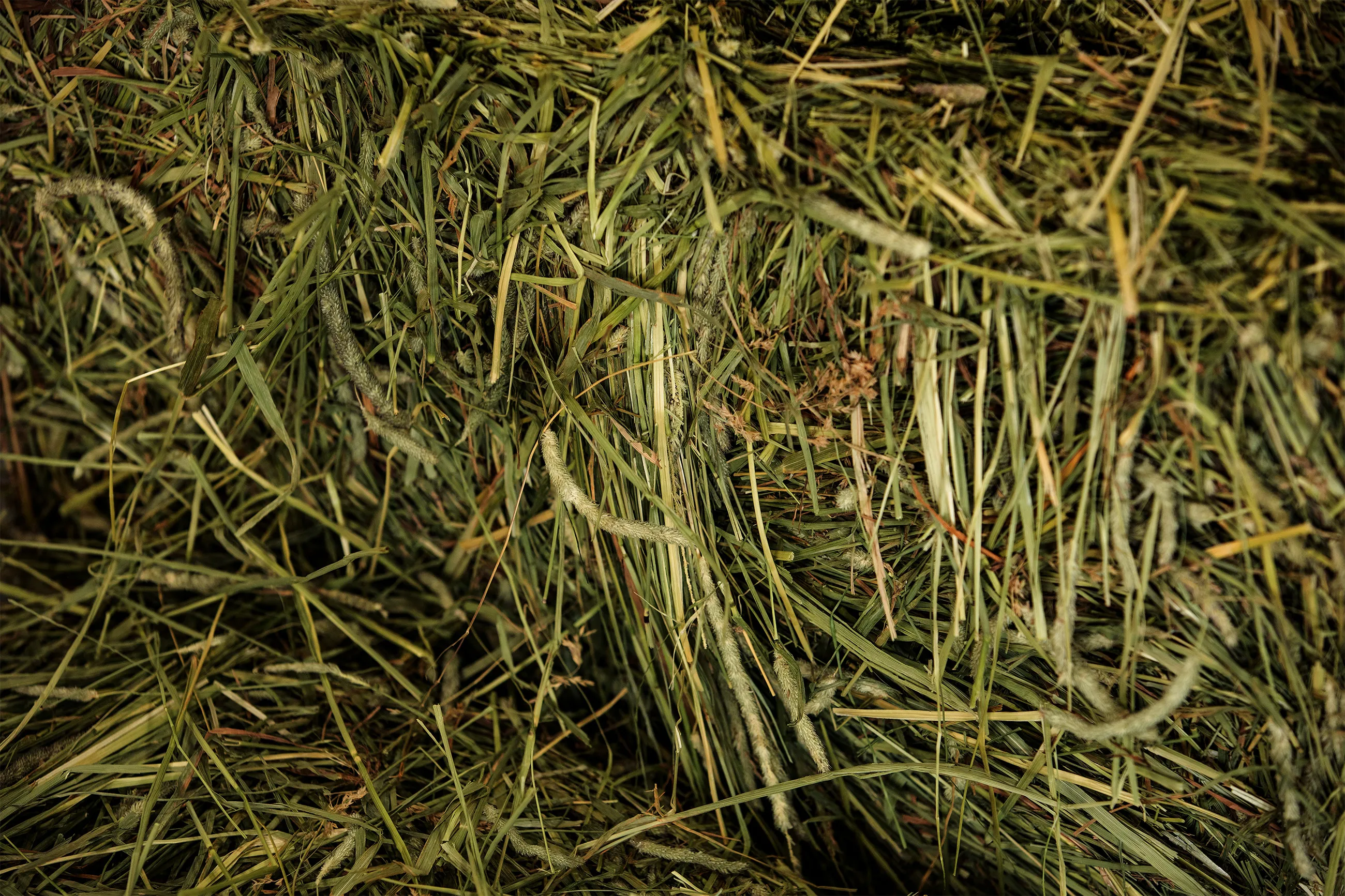
It takes a lot of work to put good hay in the barn. Someone had to grow it, watch the weather, choose the right time to cut it, allow it to cure, bale it at the proper moisture, move it out of the field, and eventually get it to your farm. If you have been filling the barn for winter, you have probably put plenty of your own time and money into that process too.
Learning how to store hay properly is the final step in protecting that investment. Good hay does not stop being good hay once it leaves the field, but the way it is handled after it reaches the barn can make a real difference in the quality you eventually put in front of your animals.
The good news is that proper hay storage does not have to be complicated. Once hay has been correctly cured and baled, the goal is fairly simple: keep it dry, protect it from outside moisture, provide appropriate airflow, keep it away from damp surfaces, and pay attention whenever something does not look, smell, or feel right. Do those things well and quality hay can remain remarkably stable in storage.
Moisture Is the Biggest Enemy
When it comes to storing hay, moisture causes more problems than almost anything else. Hay that is stored too wet can support microbial activity that leads to heating, mold growth, dust, dry matter loss, and in extreme situations, fire. Hay that was dry when it entered the barn can also develop problems later if it absorbs moisture from a leaking roof, damp wall, wet floor, condensation, or humid air.
University of Minnesota Extension recommends that horse quality hay generally be baled between 10 and 15 percent moisture. Its guidance notes that hay baled above 17 percent moisture faces greater mold risk, while hay above 25 percent moisture is at risk of severe heat damage and can become a potential fire hazard. Penn State similarly explains that mold and bacteria can grow in untreated hay when moisture rises above approximately 14 to 15 percent.
Those percentages are helpful guidelines, but they should not be treated as one universal number for every situation. Safe moisture can vary with bale size, bale density, forage type, preservatives, weather, and storage conditions. Larger and denser packages tend to hold heat and moisture differently than lighter small bales, which makes proper curing and moisture management especially important before the hay is stacked.
Once hay reaches your barn, the focus changes from removing moisture to keeping moisture from getting back in. Check the roof for leaks, watch areas where rain or snow may blow through doors, and pay particular attention to the bottom and outside edges of the stack. Those are often the first places where storage problems appear.
Why Hay Should Be Stored Off the Ground
A concrete barn floor may look perfectly dry, but that does not necessarily mean hay should be stacked directly on it. Moisture can migrate through concrete, dirt, gravel, and other surfaces before slowly moving into the bottom layer of bales. By the time the damage becomes visible, several bales may already be affected.
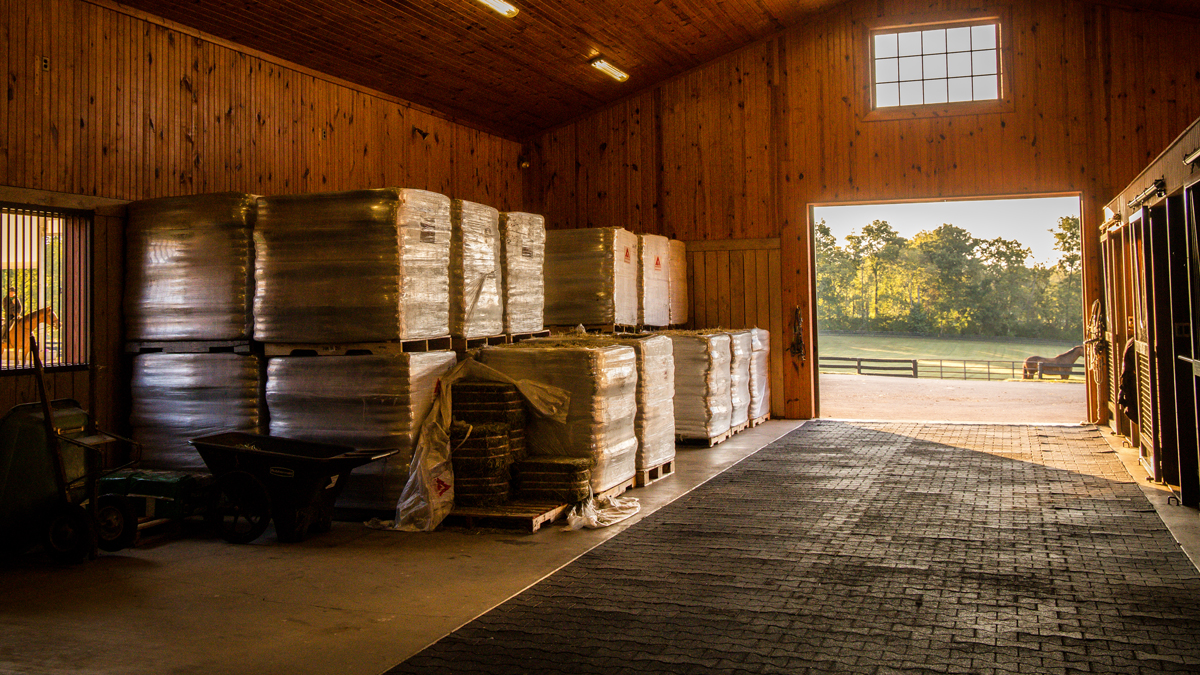
One of the simplest solutions is also one of the most effective. Store hay on pallets or another suitable barrier that keeps the bales elevated and allows some airflow underneath the stack. University of Minnesota Extension warns that hay stored on wet surfaces can experience spoilage losses of up to 50 percent, which makes a few inches of separation from the floor a small investment with a potentially large return.
The same thinking applies to exterior walls. Hay stacked tightly against a wall may be exposed to condensation or moisture that is difficult to see until the outer bales begin to change. Leaving some separation between the stack and potential moisture sources makes it easier to protect the hay and inspect it throughout the season.
How Much Airflow Does Stored Hay Need?
Airflow and moisture management go hand in hand, particularly when freshly baled hay first enters storage. The goal is not necessarily to leave large gaps around every individual bale forever. It is to avoid creating an environment where heat and moisture become trapped inside a large stack with nowhere to go.
Penn State recommends improving ventilation, creating air spaces between bales when necessary, reducing stack size, alternating bale direction, and leaving enough headspace above a stack for moisture to move upward and escape. Newly harvested hay deserves the most attention during its first several weeks in storage because that is when heating and moisture movement are most likely to become noticeable.
Once properly cured hay has stabilized, it can be stored efficiently. The important thing is that efficient stacking should not come at the expense of keeping the hay dry, allowing moisture to escape, or making the stack impossible to inspect.
How to Store Hay in Humid Southern Climates
Hay storage can be challenging anywhere, but high humidity across the South creates an additional concern. In a drier climate, moisture problems are often tied to rain, leaks, wet floors, or hay that was baled too soon. In humid regions, even hay that entered the barn dry can pull moisture back out of the surrounding air.
University of Georgia Extension has documented situations in which hay that began at a suitable 12 to 15 percent moisture developed an outer layer above 30 percent moisture after prolonged exposure to cool, humid conditions. The hay was not getting wet from a leaking roof. It was absorbing moisture from the air around it.
That means Southern storage requires more than simply putting a roof over the stack. Keep hay elevated, leave room between stacks and exterior walls, watch exposed surfaces, and make sure the building allows you to manage airflow. UGA recommends allowing moisture to escape during the first two to four weeks after storage while also having the ability to limit exposure during prolonged periods of cool, high humidity. An open barn may provide excellent ventilation one week and expose hay to moisture laden air the next, so flexibility matters.
Mississippi State University Extension also identifies relative humidity, air temperature, air movement, bale moisture, and storage method as major factors affecting hay losses. In warm, wet Southern conditions, poorly protected outdoor hay can lose a substantial portion of both dry matter and feeding value.
The difference in the South is that moisture does not always have to come through the roof. Sometimes it is already in the air. Regularly inspect the outside and bottom of the stack, especially after long stretches of humid weather, and do not assume hay is safe simply because the barn floor looks dry.
Some Heat Is Normal. Too Much Heat Is Not.
Freshly baled hay can naturally warm after it is placed into storage. Plant respiration and microbial activity continue for a period after baling, so a moderate rise in temperature does not automatically mean something is wrong. Mississippi State notes that hay baled between 15 and 20 percent moisture commonly experiences some heating during the first two or three weeks of storage.
Excessive heat is different. When hay is baled with too much moisture, microbial activity can generate enough heat to damage forage quality, encourage mold growth, and create a fire hazard. This risk is tied to moisture and microbial activity, not simply to whether the hay is packaged as a traditional bale, a compressed bale, or a larger bulk package.
If newly stored hay seems unusually hot, smells strange, or makes you concerned, use an appropriate hay temperature probe rather than judging only by the outside of the bale. Penn State warns that internal temperatures between 150 and 170 degrees Fahrenheit are dangerous and can quickly lead to combustion. If temperatures reach that range, leave the hay in place, move a safe distance away, and contact emergency services rather than attempting to pull the stack apart yourself.
Hay fires can begin inside a tightly packed bale where they are difficult to see and difficult to extinguish. Monitoring newly baled hay during its first several weeks in storage is far easier than responding after a serious problem has developed.
How to Identify Moldy or Dusty Hay
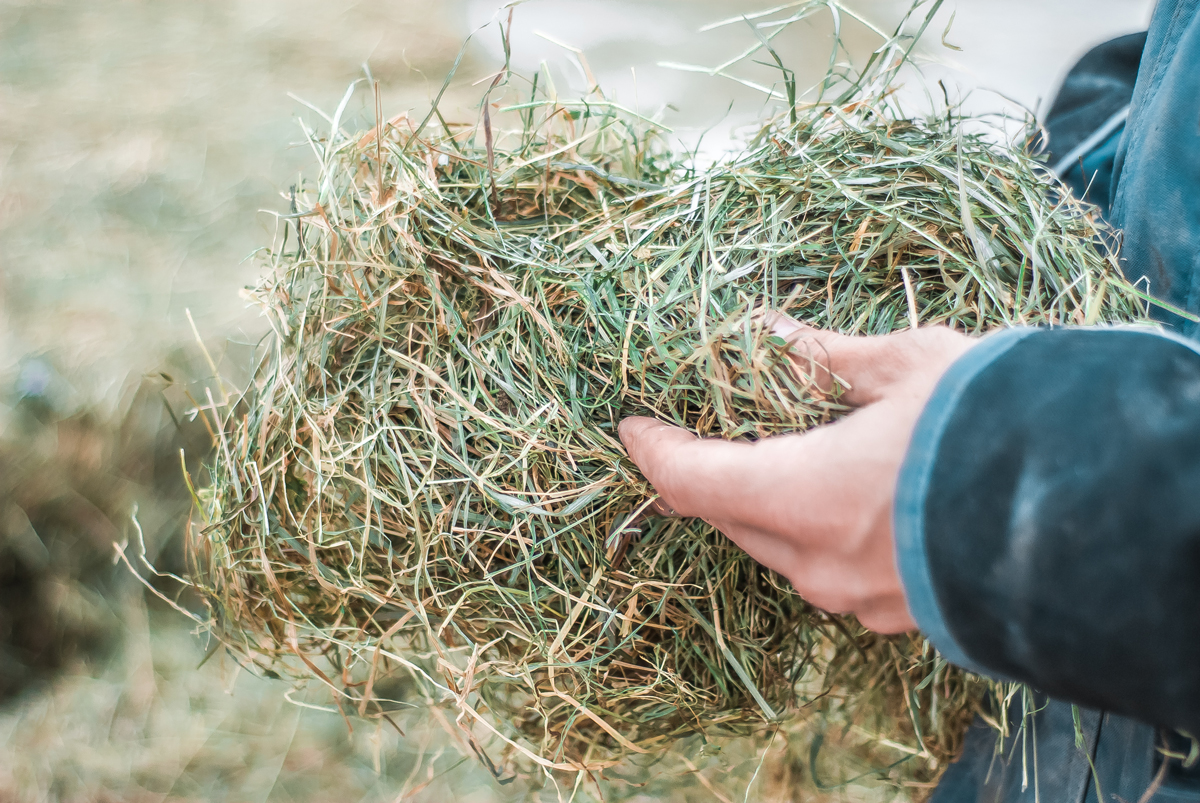
Most people who have handled hay for very long develop a good sense for when something is not right. You cut the strings, pull away a flake, and immediately notice an unusual amount of dust. Maybe there is a musty smell, visible mold, dampness, unusual texture, or a section that simply does not match the rest of the bale.
Pay attention to those clues. Color alone does not tell you whether hay is safe or nutritionally appropriate. Hay can lose some of its bright green appearance through normal exposure to light and still retain useful nutrients. At the same time, visible mold, excessive dust, musty odors, damp areas, or unusual heat deserve further investigation.
Penn State explains that mold growth produces additional heat, carbon dioxide, and moisture while also contributing to dry matter and nutrient loss. Mold spores can create respiratory problems, and horses are especially sensitive to the airborne dust associated with moldy forage.
If a bale makes you stop and wonder whether something is wrong, do not simply assume it is fine. Separate it from the rest of the hay, avoid feeding it until the concern has been evaluated, and contact your veterinarian, nutritionist, laboratory, or hay supplier when appropriate. Our article 7 Signs Your Hay May Not Be Meeting Your Horse's Needs takes a closer look at some of the signals horses may give when their forage deserves more attention.
Does Hay Lose Nutrition During Storage?
One common assumption is that hay simply becomes less nutritious every month it sits in the barn. Research from Kentucky Equine Research gives us a much better understanding of what actually happens.
Ashley Fowler, Ph.D., and Joe Pagan, Ph.D., followed Timothy hay through the entire haymaking process. Four fields were sampled before harvest, during drying in the windrow, immediately before baling, at baling, and then monthly while the finished hay was stored under cover for three months.
Most of the measurable nutrient losses occurred while the forage was drying in the field. Crude protein, starch, and fat were highest before harvest and declined during windrow drying. Once the Timothy was properly baled and stored under cover, those nutrients remained essentially unchanged throughout the three month storage period. The study found that field drying reduced crude protein to approximately 83 percent of its preharvest concentration and fat to about 77 percent, while baled hay retained about 54 percent of its preharvest omega 3 fatty acids.
That does not mean hay remains nutritionally identical forever. Certain vitamins and other components can decline during longer storage, and moisture, mold, excessive heating, and weather exposure can certainly damage forage. The KER research does reinforce an important point, however: properly cured hay does not suddenly lose its feeding value simply because it has been sitting safely in a dry barn.
In many cases, what happened between cutting and baling had a greater nutritional impact than several months of proper covered storage afterward. Good storage protects the quality that survived the harvest and curing process rather than allowing moisture, mold, or heat to undo that work.
How Long Can Hay Be Stored?
Hay does not have an expiration date stamped on the bale. Its condition often tells you more than the year it was harvested.
University of Minnesota Extension notes that hay can keep indefinitely when it was dry going into storage and moisture cannot enter the bale from any direction. Because high humidity can increase moisture content and shorten storage life, the university recommends feeding purchased hay within approximately two years and using older hay first.
That is also why finishing winter with some hay still in the barn is not necessarily a problem. In How Much Hay Will You Need This Winter?, we recommend planning a safety margin and carrying enough forage through the transition back to spring pasture. Proper storage is what allows that strategy to work.
If last year's hay was properly cured, kept dry, protected from weather, and still looks and smells good, its age alone does not automatically make it unusable. Good inventory management simply means inspecting it carefully and feeding older forage before opening the newest crop.
Use Older Hay First
This may be one of the easiest storage habits to overlook when a truck arrives and everyone is focused on getting hay unloaded. If you still have good forage from a previous load or crop year, think about how the new hay is stacked around it.
Whenever possible, organize the barn so older hay remains accessible and can be fed first. This first in, first out approach keeps inventory moving in a logical order and makes it easier to notice whether anything has changed during storage.
It also helps to keep different hay types and production lots identifiable rather than removing every tag and mixing everything together. Knowing what is stored where becomes especially valuable if you ever have a nutritional question or find something in a bale that you want to investigate.
How to Store 3 Tie, Compressed and MAG Bales
The basic storage rules are the same regardless of bale format. Anderson 3 Tie Bales, Compressed Bales, and MAG Bales should all be kept dry, protected from weather, elevated from damp surfaces, and stored where moisture cannot collect around the package.
Compression changes the size and density of the package, but it does not eliminate the need for proper storage. Compressed Bales require less space and can make inventory easier to organize in smaller barns or feed rooms. MAG Bales require more room and suitable equipment for handling, while traditional 3 Tie Bales provide a familiar format for many barns. Whatever package fits your operation, the goal remains the same: protect the forage inside it.
We explain the differences among bale formats in Compressed vs. Traditional 3 Tie Hay: What's the Real Difference?. Nutritional value begins with the forage in the field. The package changes how the hay is handled, shipped, and stored, not what the plant provided at harvest.
What to Do When a Bale Does Not Look Right
Even with good management, questions can happen. Maybe you open a bale and find something that looks different. Maybe an animal suddenly refuses it. Maybe you notice dust, an unusual smell, dampness, or simply want to know more about the forage you are feeding.
Start by separating the questionable bale and keeping its tag or lot information. Take clear photos, note where and when it was purchased, and contact the retailer or supplier. Those simple steps can make it much easier to investigate what happened.
At Anderson Hay, every production stack is identified, sampled, tested, and tracked through our system. The lot number follows the hay through storage, processing, and delivery, giving our team a place to begin when a customer has a question. Customers can also use the lot information from their hay to access available forage analysis through our Traceability Program.
Traceability does not prevent every possible problem, and testing does not make poor hay good. What they provide is information and accountability. Instead of looking at an unidentified bale and guessing, there is a history connected to the forage in front of you. You can learn more in Traceability at Anderson Hay: From the Field to Your Barn.
Hay Storage Checklist
Before stacking your winter supply, take a few minutes to check the basics:
- Make sure the hay was properly cured and dry before storage.
- Use a dry, weather protected building whenever possible
- Check the roof, doors, windows, and walls for moisture entry.
- Elevate bales from the floor with pallets or another suitable barrier.
- Leave separation between hay and damp exterior walls.
- Provide appropriate airflow and headspace above the stack.
- Monitor newly stored hay for unusual heat during the first several weeks.
- Inspect the outside and bottom of stacks during humid weather.
- Keep older hay accessible so it can be fed first.
- Keep lot tags and different production lots identifiable.
- Investigate unusual dust, odors, dampness, mold, or heat before feeding.
Protect the Hay You Worked Hard to Put Away
Proper hay storage is not complicated, but it matters. Keep hay dry. Get it off damp floors and away from moisture sources. Provide appropriate airflow. Pay attention to freshly stored hay as it stabilizes. Rotate older inventory first, and take a closer look whenever something does not seem right.
A tremendous amount of work happens before a bale ever reaches your barn. The crop has been grown, harvested, cured, baled, moved, tested, transported, purchased, and stacked. Research tells us that when those first steps are done correctly, properly cured hay can remain remarkably stable once it is safely stored under cover.
Good hay deserves good storage. Protect what you put in the barn, and it can continue doing exactly what you bought it to do: provide clean, consistent forage for the animals depending on you.
Sources and Further Reading
- Kentucky Equine Research: Changes in Chemical and Fatty Acid Composition of Timothy Hay from Field to Bale and During Storage
- University of Minnesota Extension: Selecting and Storing Horse Hay
- Penn State Extension: Mold and Mycotoxins in Horse Hay
- Penn State Extension: Fire Prevention Measures for Equine Facilities
- University of Georgia Extension: Reduce Your Risk of Moldy Hay
- Mississippi State University Extension: Hay Storage, Dry Matter Losses and Quality Changes
Frequently Asked Questions
What is the best way to store hay in a barn?
Store hay in a dry, weather protected, well ventilated area where it is kept away from roof leaks, damp exterior walls, wet floors, and other moisture sources. Elevate the bales from the floor, leave enough space for moisture and heat to escape, and organize the stack so older hay can be fed first.
Should hay be stored on pallets?
Yes. Pallets or another suitable moisture barrier help keep hay from absorbing moisture through concrete, dirt, or gravel floors while also allowing some airflow beneath the stack. University of Minnesota Extension reports that hay stored directly on wet surfaces can experience spoilage losses of up to 50 percent.
What moisture level is safe for storing hay?
Horse quality hay should generally be baled at approximately 10 to 15 percent moisture. Mold and bacterial growth become more likely as moisture rises above about 14 to 15 percent, and the risk of heating and combustion increases further as moisture climbs. Bale size, density, forage type, preservatives, weather, and storage conditions can all affect the safe moisture threshold.
How much airflow does stored hay need?
Stored hay needs enough ventilation to prevent moisture and heat from becoming trapped within the stack. Pallets beneath the hay, separation from exterior walls, adequate headspace above the stack, and good barn ventilation can all help. Newly harvested hay deserves extra attention during its first several weeks in storage while heat and moisture are still stabilizing.
Can hay develop mold in a barn even if it was dry when stored?
Yes. Dry hay can absorb moisture from humid air, especially along the outside surfaces of a stack. University of Georgia Extension has documented exposed layers of previously dry hay rising above 30 percent moisture during prolonged periods of cool, humid weather. This is why barns in the South need both good ventilation and the ability to limit exposure during extended periods of high humidity.
Is it normal for hay to heat after baling?
Some warming is normal because plant respiration and microbial activity continue for a short period after baling. Excessive heat is not normal and may indicate that the hay was baled with too much moisture. Newly baled hay should be monitored carefully during the first several weeks of storage, when the risk of heat buildup is greatest.
How hot is too hot for stored hay?
Internal hay temperatures between approximately 150 and 170 degrees Fahrenheit are considered dangerous and can rise quickly toward combustion. If a stack reaches this range, leave the hay in place, move a safe distance away, and contact emergency services rather than attempting to pull the stack apart yourself.
How can I tell if hay is moldy or dusty?
Warning signs can include a musty or sour odor, visible mold, unusual dust, damp areas, excessive heat, abnormal texture, or animals suddenly refusing the forage. Color alone does not provide enough information to determine whether hay is safe, so evaluate the bale as a whole and investigate anything that looks, smells, or feels unusual.
Can moldy or dusty hay be fed to horses?
Moldy or excessively dusty hay should not be fed to horses. Horses are particularly sensitive to airborne mold spores and dust, which can contribute to respiratory irritation and other health concerns. If a bale appears questionable, separate it from the rest of the hay and consult your veterinarian, forage laboratory, retailer, or supplier before feeding it.
Does hay lose nutrition while sitting in the barn?
Properly cured hay stored under cover can remain much more nutritionally stable than many people realize. Kentucky Equine Research followed Timothy hay from the standing crop through field drying, baling, and three months of covered storage. Most measurable losses occurred while the forage was drying in the windrow, while crude protein, starch, and fat remained essentially unchanged during the covered storage period.
How long can properly stored hay last?
Hay can remain usable for years when it was dry before storage and moisture cannot enter the bale. University of Minnesota Extension notes that hay may keep indefinitely under ideal conditions, although it recommends feeding purchased hay within about two years, particularly where high humidity may shorten storage life. Hay should always be inspected before feeding, and older inventory should be used first.
Do Compressed Bales, 3 Tie Bales, and MAG Bales require different storage?
The basic storage requirements are the same for every bale format. Keep the hay dry, protected from weather, elevated from damp surfaces, and stored where heat and moisture cannot collect. The package size and density may change handling, equipment, and the amount of storage space required, but they do not replace the need for proper moisture management.
What should I do if an Anderson Hay bale does not look right?
Set the questionable bale aside and avoid feeding it until the concern has been evaluated. Keep the product tag and lot number, take clear photographs, note when and where the hay was purchased, and contact the retailer or Anderson Hay. The lot information gives our team a starting point for tracing the forage and reviewing the information connected to that production stack.