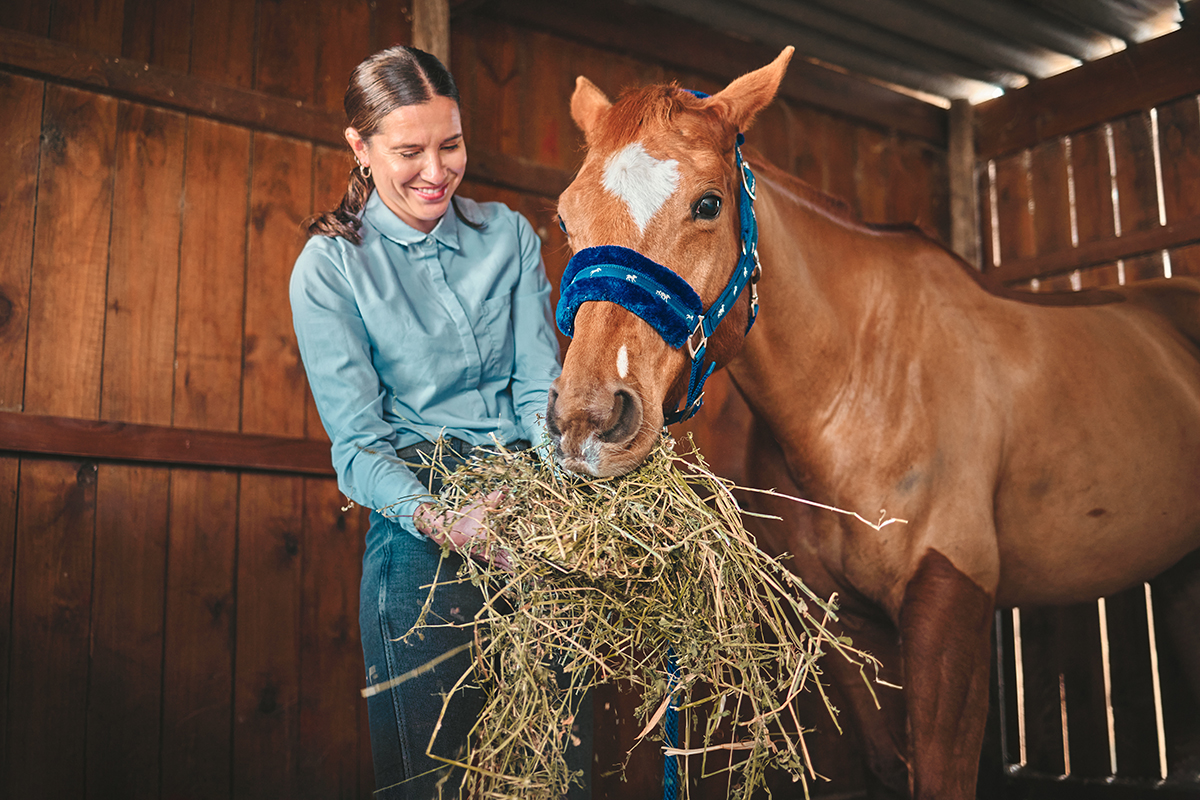
Sometimes your horse is trying to tell you something.
Have you ever walked out to feed your horse and thought, "Something just doesn't seem right?"
Maybe they're leaving hay behind that they used to clean up every day. Maybe they've lost a little weight, aren't carrying the same topline they once had, or simply don't seem to have the same energy under saddle. Sometimes those changes happen so gradually that they're easy to dismiss. We blame the weather, the changing seasons, age, or a busy competition schedule. While those things certainly play a role, there's another possibility that's often overlooked.
It could be the hay.
That doesn't necessarily mean the hay is poor quality. In fact, it may be excellent forage. But just like every horse has different nutritional needs, every hay has different nutritional characteristics. The right hay for one horse may not be the right choice for another.
Because forage makes up the majority of a horse's diet, it has an incredible influence on their overall health, body condition, and performance. Horses also have a remarkable way of telling us when something isn't quite right. The challenge is learning to recognize those signals and understanding what they may be trying to tell us.
Here are seven signs that it may be time to take a closer look at the forage you're feeding.
1. Your Horse Is Leaving Hay Behind
Most horse owners have experienced it. A horse that normally cleans up every flake suddenly begins sorting through the feeder, leaving behind coarse stems or refusing certain parts of the bale altogether. It's tempting to label them as a picky eater, but horses are naturally selective grazers. Their sense of smell is far more sensitive than ours, allowing them to notice changes in forage that most people would never detect.
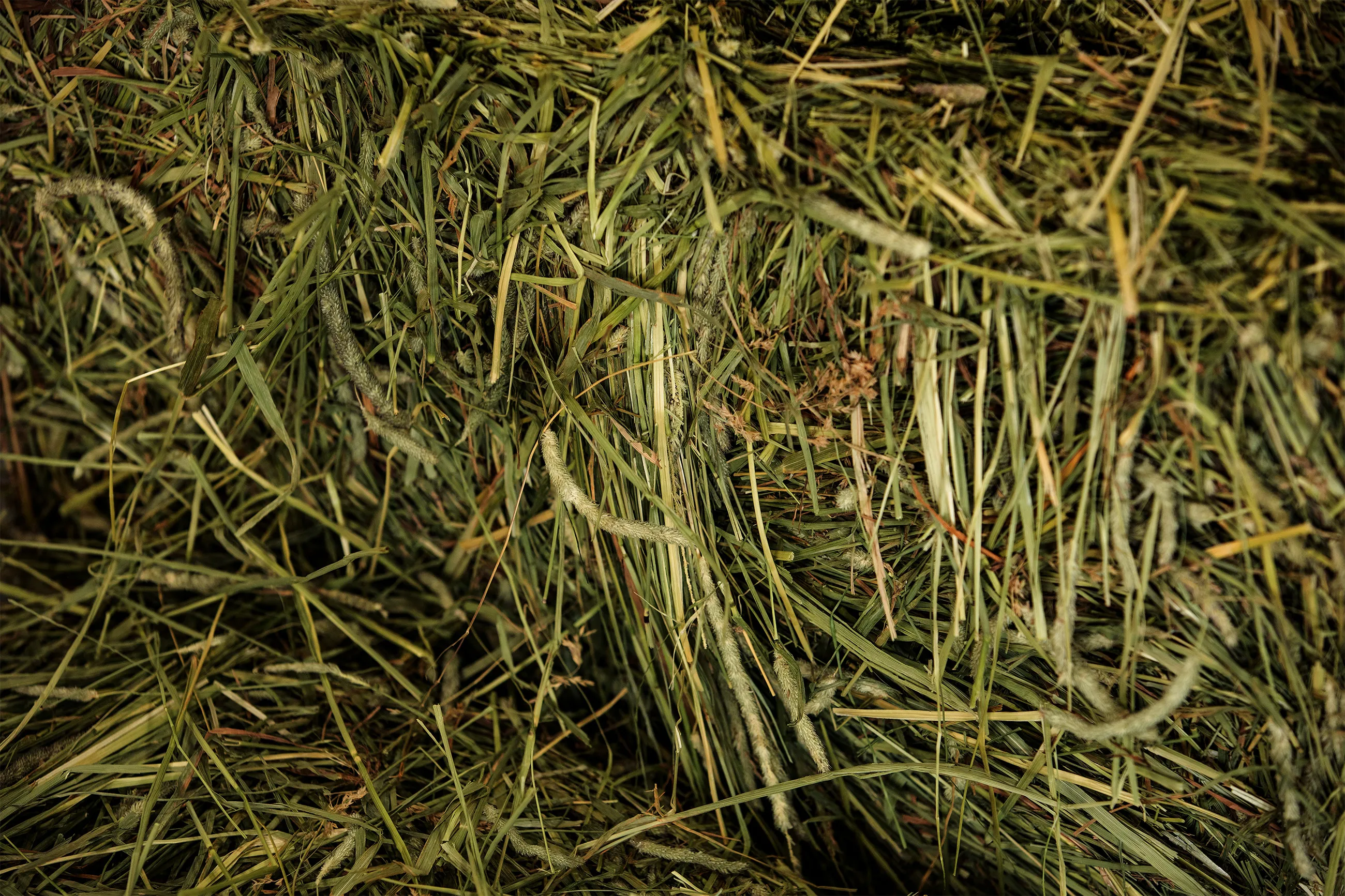
Hay that's overly mature, dusty, weathered, or inconsistent from bale to bale may simply be less appealing. Horses also tend to prefer soft, leafy forage over coarse stems because it's often easier to chew and digest. Before assuming your horse is simply being difficult, take a closer look at the hay itself. Small changes in harvest timing, storage conditions, or consistency can make a noticeable difference in how willingly a horse eats. We explored the importance of consistency in more detail in our article, Feeding Horses Right: Why Mixing Your Own Forage Creates Better Consistency, where we discuss why feeding a consistent forage program is one of the simplest ways to support long term health.
2. Maintaining Weight Has Become a Challenge
If your horse is becoming harder to keep in good condition, it's natural to focus on grain or supplements first. After all, those are the feeds we measure, adjust, and purchase with specific nutritional information on every bag. Yet hay typically makes up the largest portion of a horse's diet, which means it often has the greatest influence on whether a horse maintains, gains, or loses weight.
Two bales may look almost identical while providing very different levels of digestible energy, protein, and fiber. Factors such as forage species, stage of maturity, growing conditions, and weather during harvest all influence the nutritional value of hay. Before making major changes elsewhere in your feeding program, it's worth understanding exactly what your forage is contributing. Sometimes the biggest improvement comes from changing the hay rather than adding more feed.
3. Your Horse Doesn't Look or Feel Like Themselves
Not every nutritional concern shows up on a scale. Sometimes it's a dull hair coat, a horse that tires more quickly than usual, slower recovery after exercise, or a gradual loss of muscle over the topline. None of these signs automatically point to forage, but because hay provides the nutritional foundation of the diet, it's one of the first places worth evaluating.
Quality forage does much more than satisfy a horse's appetite. The digestible fiber found in hay supports the beneficial microbes in the hindgut, which produce a significant portion of the horse's daily energy through fermentation. When forage doesn't meet a horse's nutritional needs, those small changes in body condition, attitude, and performance often develop gradually over time. As we discussed in The Ride Is Over. The Heat Isn't., recovery doesn't begin after the ride. It begins with the nutrition your horse receives every single day.
4. Digestive or Respiratory Issues Keep Coming Back
Horses evolved to spend much of their day grazing, and their digestive system depends on a steady supply of clean, quality forage. Changes in hay, inconsistent forage, excessive dust, or mold can all influence how comfortably a horse eats and digests their feed. Likewise, dust and mold spores may also irritate the respiratory system, particularly in horses that spend more time indoors or already have sensitive airways.
Of course, not every digestive upset or occasional cough is related to hay. Many different factors can contribute to these issues, and it's always important to work with your veterinarian when concerns arise. Because forage makes up such a large percentage of the diet, however, it's one of the first areas worth evaluating. Clean, consistent hay introduced gradually helps support both digestive health and respiratory comfort.
5. Your Horse Has Special Nutritional Needs
No two horses have exactly the same nutritional requirements. A growing horse needs nutrients to support healthy development. A performance horse has different energy demands than a retired pasture companion. Senior horses often benefit from highly digestible forage, while horses with Equine Metabolic Syndrome, PPID, or insulin resistance frequently require hay with lower sugar levels.
This is why there isn't one "perfect" hay for every horse. The goal isn't to find the best hay. It's to find the hay that's best suited for your individual horse. If you're caring for a horse with metabolic concerns, we've written more about selecting appropriate forage in our article on Feeding Horses with Metabolic Conditions, where we discuss why understanding forage sugars can play such an important role in managing these horses successfully.
6. You Don't Really Know What You're Feeding
Most of us know exactly what's listed on the tag of the grain or supplements we feed our horses. We can compare protein levels, vitamins, minerals, and feeding directions with just a quick glance at the bag. Hay is different. While experienced horse owners can learn a great deal by looking at forage, it's impossible to determine protein, digestible energy, sugar, or mineral content simply by appearance.
That's why laboratory hay analysis has become such an important management tool. Rather than relying on assumptions, it provides real nutritional information that helps horse owners make better feeding decisions. You don't have to become an equine nutritionist to benefit from a hay analysis. Simply knowing what's in your forage can remove much of the uncertainty from building a balanced feeding program.
7. Every Bale Feels Different
Have you ever opened a new bale and wondered if it even came from the same field? One bale is soft and leafy while the next feels coarse and stemmy. One has a rich green color while another looks noticeably different. Agriculture will always have some natural variation, but significant differences from bale to bale can make it difficult to feed consistently.
Consistency is one of the most valuable qualities of premium forage because horses thrive on consistency. When the hay changes dramatically, the nutrients your horse receives may change as well. That's one of the reasons Anderson Hay invests in testing every production stack and providing those results through our Traceability Program. Knowing where your hay came from and understanding what's in it allows you to feed with greater confidence and make decisions based on information instead of guesswork.
Feed the Horse in Front of You
Every horse is an individual, and the forage that helps one horse thrive may not be the best choice for another. Paying attention to the small changes your horse shows you, asking good questions, and learning more about the hay you're feeding can make a meaningful difference in their long term health and well being.
At Anderson Hay, we've always believed horse owners deserve more than educated guesses. They deserve reliable information that helps them make confident feeding decisions. That's why we've invested in hay testing, traceability, and educational resources like the Anderson Journal. Our goal has never been to simply grow and sell premium forage. It's to help horse owners better understand the forage that fuels the animals they care about most.
Frequently Asked Questions
How do I know if my hay is good quality?
Good quality hay should have a fresh, clean smell, be free of mold and excessive dust, and contain a high percentage of leaves with minimal weeds or foreign material. While visual inspection is important, appearance alone can't tell you everything. A laboratory hay analysis is the best way to understand the nutritional value of your forage, including protein, fiber, digestible energy, and sugar content.
Can hay cause my horse to lose weight?
Yes, it can. If hay doesn't provide enough digestible energy or your horse isn't eating enough of it because of poor palatability, weight loss may occur over time. Before making major changes to grain or supplements, it's often worth evaluating the forage since it typically makes up the largest portion of a horse's diet.
Why is my horse leaving hay behind?
Horses may leave hay behind for many reasons, including coarse stems, dust, mold, weeds, weather damage, or changes in forage quality. Some horses are also more selective than others. If your horse suddenly begins refusing hay they previously enjoyed, it's worth taking a closer look at the forage before assuming they're simply being picky.
Does every horse need the same type of hay?
No. Every horse has unique nutritional requirements based on age, workload, health, and metabolism. A growing horse, a senior horse, and a horse with metabolic concerns may all benefit from different types of forage. Choosing hay should always begin with the needs of the individual horse.
What is a hay analysis?
A hay analysis is a laboratory test that measures the nutritional content of forage. It provides valuable information such as protein, digestible energy, fiber, sugar, starch, and mineral levels. This information helps horse owners make more informed feeding decisions rather than relying on appearance alone.
Why does forage consistency matter?
Consistent forage helps provide a more predictable nutritional program for your horse. Significant differences from bale to bale can lead to changes in energy intake, fiber levels, and overall nutrition. Feeding hay with consistent quality and known nutritional values helps reduce guesswork and supports long-term health.
Should I have my hay tested?
If your horse has special nutritional requirements, struggles to maintain weight, has metabolic concerns, or you're simply looking to optimize your feeding program, a hay analysis is a valuable investment. Testing provides objective information about your forage and can help you work with your veterinarian or equine nutritionist to build a feeding program that meets your horse's individual needs.
Is greener hay always better?
Not necessarily. While bright green hay often indicates good harvest and storage conditions, color alone doesn't determine nutritional value. Different forage species naturally vary in color, and factors such as maturity, digestibility, sugar content, and overall nutrient levels cannot be determined simply by looking at a bale. A hay analysis provides a much more complete picture of forage quality.
How much hay should my horse eat each day?
As a general guideline, most horses consume between 1.5% and 2.5% of their body weight in forage each day, depending on their age, activity level, metabolism, and overall health. For a 1,000-pound horse, that typically equals 15 to 25 pounds of hay per day. Your veterinarian or equine nutritionist can help determine the appropriate amount for your individual horse.
Why does Anderson Hay test every production stack?
Every field, cutting, and harvest can produce forage with slightly different nutritional characteristics. By testing every production stack and making those results available through our Traceability Program, we help horse owners understand exactly what they're feeding. That information allows for more informed feeding decisions and greater confidence in developing a consistent nutrition program for their horses.