Understanding the Benefits of Each Cutting and How to Choose the Right Hay for Your Animals
One of the questions we hear all the time from customers buying hay through our retail partners is, "What cutting of hay is this?" Usually that question is followed by another one: "What's the difference between 1st and 2nd cutting?" If you've spent much time around horses, cattle, goats, or hay producers, you've probably heard people talk about different cuttings as if one is automatically better than another.
The truth is that each cutting has its own characteristics, strengths, and situations where it may be a good fit. Understanding those differences can help you make better feeding decisions, but the best cutting for your animals isn't always the same as the best cutting for someone else's. Just like there isn't one perfect forage species for every animal, there isn't one perfect cutting either. The goal isn't finding the "best" cutting. The goal is finding the forage that best fits your animals, your feeding program, and your management style.
What Is a Hay Cutting?
At its simplest, a cutting is exactly what it sounds like. It's how many times a field has been harvested during the growing season. The first time the field is harvested becomes 1st cutting. Once the field grows back and is harvested again, that's your 2nd cutting. If growing conditions allow for another harvest, that becomes 3rd cutting, and in some regions there may be additional cuttings beyond that.
The number of cuttings a field produces depends on several factors including climate, rainfall, irrigation, fertility, and the forage species being grown. A Timothy field in one part of the country may be harvested very differently than an Alfalfa field somewhere else, which is one reason comparing cuttings without considering the forage species can become confusing.
Another factor that often gets overlooked is geography. A 2nd cutting grown in one region may look and feed very differently than a 2nd cutting grown somewhere else. Climate, irrigation availability, rainfall patterns, growing season length, and harvest conditions all influence how forage develops throughout the year. In some regions producers may only harvest one or two cuttings annually, while in others favorable growing conditions allow for additional harvests. That's one reason cutting number alone rarely tells the whole story.
While cutting number tells you where that forage came from within the growing season, it doesn't automatically tell you whether the hay is good, bad, or right for your animals.
Why Do People Care So Much About Cutting Number?
The reason hay cuttings get talked about so much is because the characteristics of the forage often change throughout the season. As plants grow, mature, are harvested, and regrow, the hay produced from each cutting tends to look and feed a little differently. That's where many of the opinions around 1st, 2nd, and 3rd cutting hay come from.
The challenge is that those opinions sometimes turn into hard rules. One person says 2nd cutting is the best. Another says they only feed 3rd cutting. Before long, people start shopping for a cutting number instead of shopping for the forage that best fits their animals. Understanding the differences is helpful, but cutting number is only one piece of the puzzle.
1st Cutting Hay
First cutting hay is the first harvest taken from a field during the growing season, and because the plants have had the longest period of time to grow before harvest, you'll often see more stem development and slightly higher fiber levels than later cuttings. For some buyers, those characteristics immediately raise concerns, but quality 1st cutting hay serves an important purpose in many feeding programs and is often an excellent fit for the right animals.
Benefits: One of the biggest benefits of 1st cutting hay is the additional fiber that often comes with a more mature plant. Many easy keeper horses, mature horses, beef cattle, goats, sheep, and maintenance animals do very well on quality 1st cutting forage because the nutritional profile tends to be more moderate than later cuttings. Horse owners managing easy keepers often appreciate the extra fiber, while cattle producers frequently use quality 1st cutting forage as part of a balanced feeding program.
Things to Consider: Because 1st cutting hay has had a longer growing period, it may contain more stem development than later cuttings. Some animals prefer softer, leafier forage, and nutritional values can vary significantly depending on harvest timing. A properly harvested 1st cutting can be excellent forage, while a poorly harvested later cutting may not perform nearly as well.
2nd Cutting Hay
Second cutting hay comes from the regrowth after the first harvest and is often the cutting many horse owners specifically ask for. Since the plants are growing back from an established root system, the forage is frequently leafier, softer, and highly palatable. Depending on the species and growing conditions, 2nd cutting hay may also test higher in digestibility and protein than the first harvest from the same field.
Benefits: The softer texture and higher leaf content often make 2nd cutting hay very appealing to horses and other livestock. Many owners appreciate its palatability, and animals with increased nutritional requirements may benefit from the characteristics commonly associated with quality 2nd cutting forage. As Dr. Ashley Fowler of Kentucky Equine Research noted while reviewing this article, easy keeper and metabolic horses often do very well on quality 1st cutting forage, while horses with greater calorie demands, such as performance horses, growing horses, and broodmares, often benefit from the additional calories and palatability commonly found in quality 2nd and 3rd cuttings.
One example of this is Kentucky Equine Research (KER), which has utilized Anderson Premium Timothy Hay in many of its feeding and research programs over the years because of its consistency, palatability, and quality. As Dr. Fowler shared, "We like to use your second-cutting Timothy hay because our horses eat it so well, and there is very little waste. It helps keep weight on our exercising horses when paired with an appropriate feed."
If you'd like to learn more, be sure to read our article, "Why Kentucky Equine Research Trusts Anderson Premium Timothy Hay."
Things to Consider: The popularity of 2nd cutting sometimes leads people to assume it is automatically the best hay available, but that isn't always the case. Richer forage is not necessary for every animal, and some easy keepers may do better on a more moderate forage. As with any hay, harvest timing, weather conditions, storage practices, and forage species still play a major role in determining overall quality.
3rd Cutting Hay
Third cutting hay comes from another cycle of regrowth later in the growing season and is often associated with premium forage. Depending on the species and growing conditions, it is frequently very leafy, soft, and highly palatable.
Benefits: Many people seek out 3rd cutting because of its softness, leaf retention, and overall palatability. Growing animals, lactating animals, and some performance horses may benefit from the nutrient density often associated with later cuttings. For animals needing additional calories or highly palatable forage, 3rd cutting can be an excellent option.
Things to Consider: More nutrient-dense forage is not always better. Animals with lower calorie requirements may not need the richness often associated with 3rd cutting hay, and feeding a richer forage than necessary may create management challenges for some owners.
See the Difference
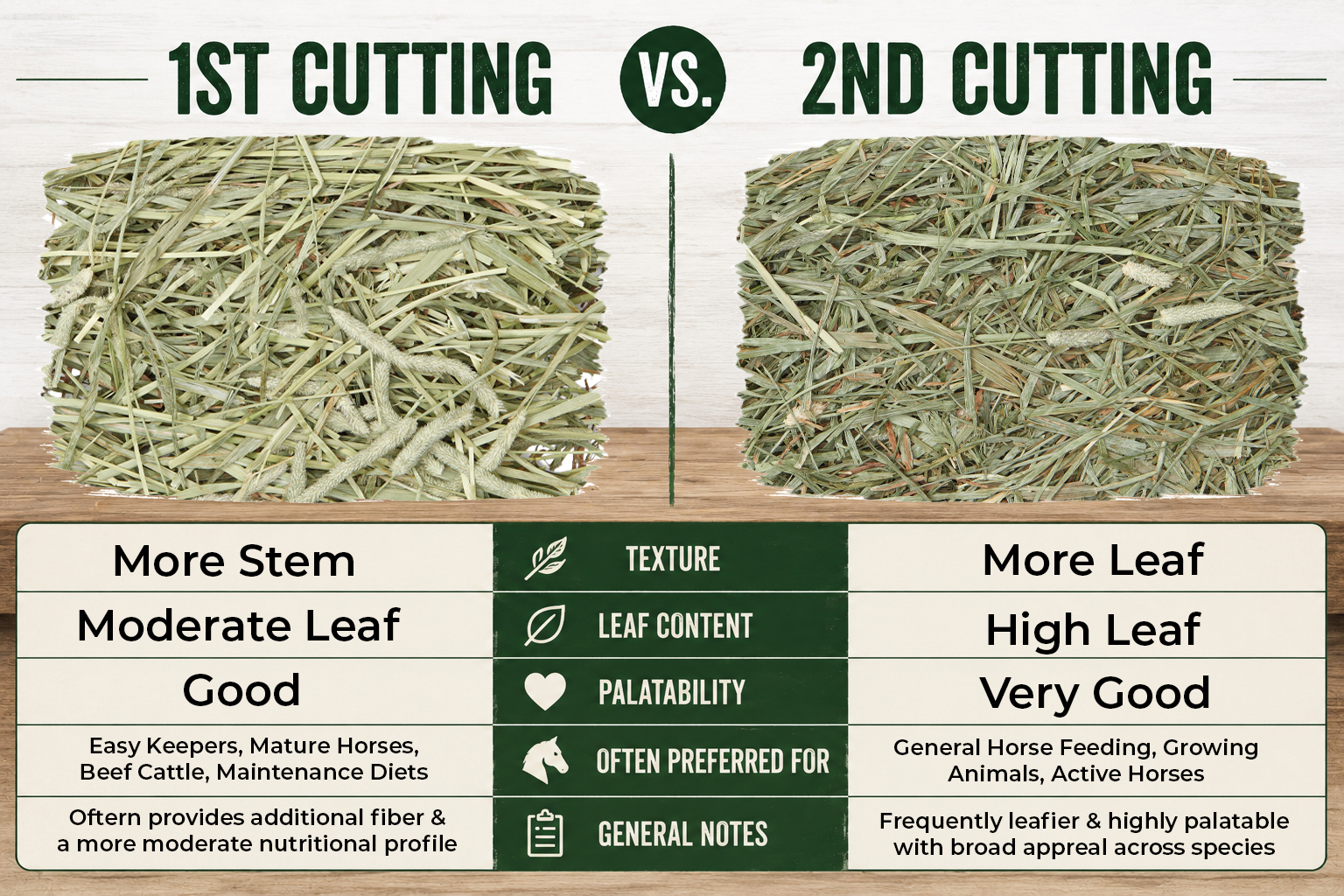
The differences between cuttings often become easier to understand when you can see them side by side. While weather, harvest timing, and forage species all influence the final product, later cuttings are often leafier and softer than earlier cuttings.
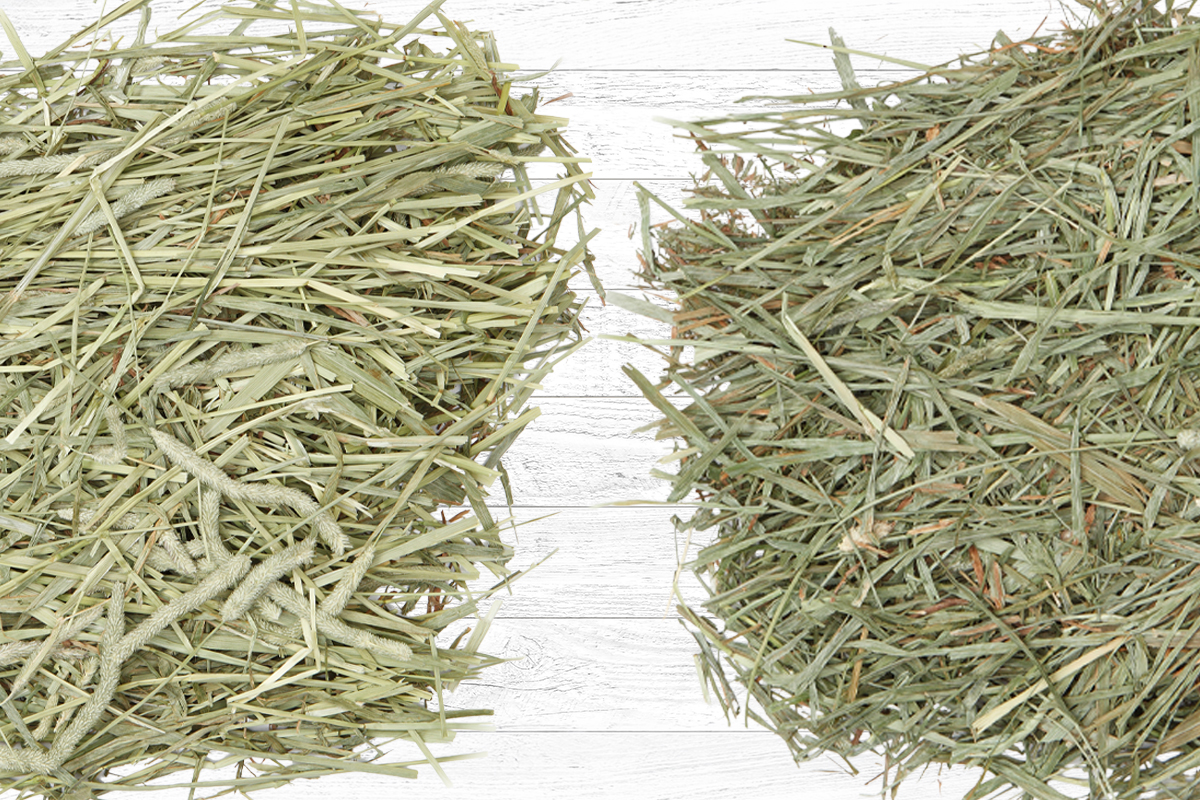
Example of 1st cutting Timothy hay (left) compared to 2nd cutting Timothy hay (right). Notice the difference in stem development, leaf content, and overall texture. While every harvest is unique, these visual differences are some of the characteristics people are often referring to when discussing hay cuttings.
What About 4th Cutting and Beyond?
In some parts of the country, fields may produce a 4th cutting or even additional harvests beyond that. This is most common in crops like Alfalfa, where multiple harvests throughout the growing season are normal, or in situations where an early first harvest creates additional growing time later in the season.
By the time a field reaches a 4th cutting, the forage is often softer, leafier, and highly palatable. However, most retail hay buyers don't encounter 4th cutting hay as often, especially in grass hay programs where the conversation typically centers around 1st, 2nd, and 3rd cuttings.
Just like every other cutting we've discussed, the cutting number alone doesn't determine quality. Harvest timing, forage species, weather conditions, and storage practices all play a role in how that forage ultimately feeds.
Why Forage Species Matter Just as Much
One of the biggest mistakes people make when comparing hay cuttings is overlooking the forage species itself. A 2nd cutting Timothy hay is not the same as a 2nd cutting Alfalfa, and a 1st cutting Orchard Grass is not the same as a 1st cutting Timothy. Each forage species grows differently, matures differently, and responds differently to harvest timing, which means cutting number alone rarely tells the whole story.
That's why we encourage people to think about the complete forage package rather than focusing on a single characteristic. The species, maturity, harvest timing, nutritional profile, and intended use all work together to determine how that forage will perform in a feeding program.
If you'd like to learn more about the differences between Timothy, Orchard Grass, Alfalfa, Teff, and other forage types, be sure to read our article, "Different Types of Hay and What Animals They Are Best Suited For."
What Should You Look for When Buying Hay?
When you're shopping for hay, don't stop at asking what cutting it is. Take a look at the overall quality of the forage. Pay attention to the smell, texture, leaf retention, cleanliness, and consistency from bale to bale. Ask how the hay was harvested and stored. Most importantly, think about the animals you're feeding and what they need from that forage.
Many university forage specialists point out that plant maturity at harvest often has a greater impact on forage quality than cutting number alone. Two different 2nd cuttings may feed very differently depending on when they were harvested, how they were grown, and how they were stored. That's one reason why a quality 1st cutting can easily outperform another hay with a higher cutting number.
Why Testing Matters
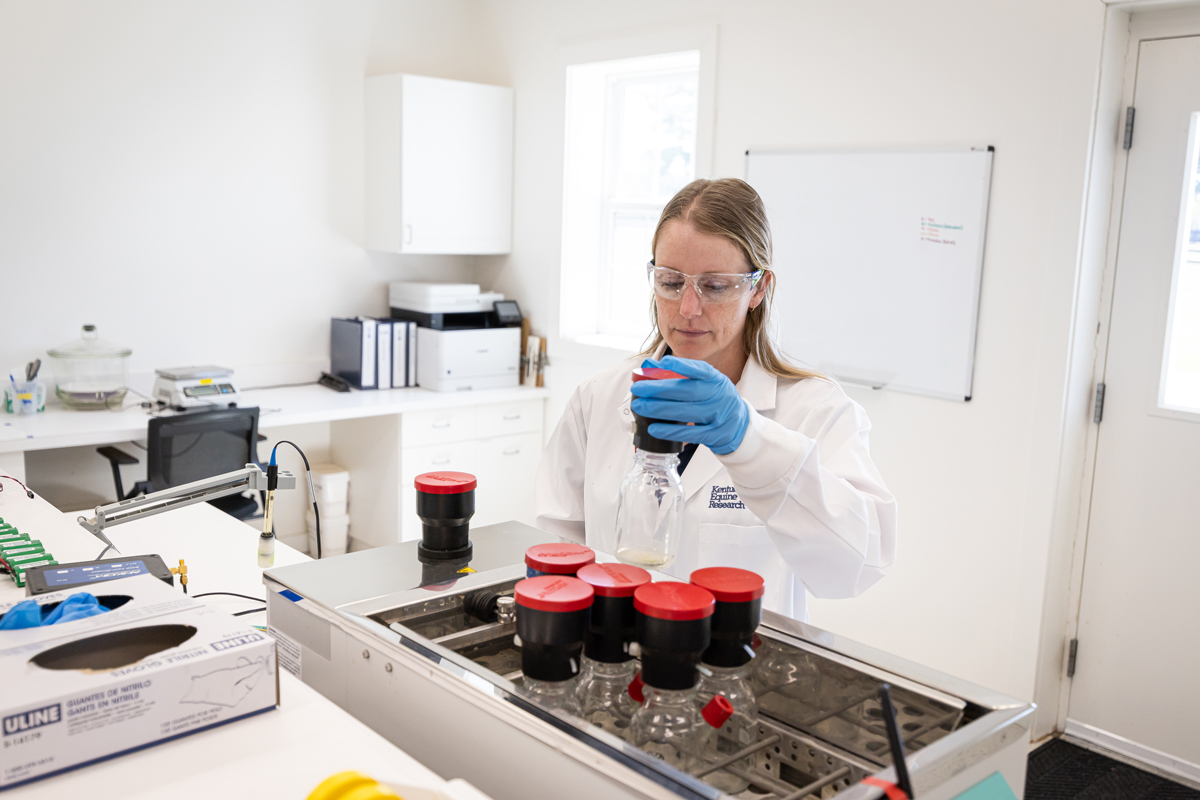
Even the most experienced hay producer can only learn so much by looking at a bale. A forage analysis helps remove much of the guesswork by providing information about protein levels, fiber content, digestibility, mineral levels, moisture, and other nutritional components. When you combine forage testing with visual evaluation, you gain a much more complete picture of what you're feeding.
Interestingly, a survey highlighted by Kentucky Equine Research found that nearly two-thirds of horse owners never have their hay analyzed for nutrient content. Yet forage is often the largest component of a horse's diet, which is one reason testing can be such a valuable management tool.
At Anderson Hay, every stack is lot tagged, tested, and tracked through our traceability program. We utilize forage testing services associated with Dairy One and Equi-Analytical, helping provide customers with reliable nutritional information and confidence in the forage they're feeding. As Dr. Fowler pointed out, maturity, weather conditions, and growing conditions can all influence the nutritional profile of hay, which is one reason forage analysis often provides a more complete picture than cutting number alone.
If you'd like to learn more about forage testing and what those numbers mean, take a look at our article, "Hay Quality Is More Than One Number: Understanding RFV, RFQ, and What Really Matters."
Good Hay Is About Finding the Right Fit
It's easy to get caught up in searching for a specific cutting because someone at the barn, feed store, or coffee shop told you that's what they feed. The truth is that what works well for your neighbor's horse may not be the best choice for yours. The same holds true for cattle, goats, sheep, alpacas, rabbits, and nearly every other animal that relies on forage as part of its diet.
Just as there isn't one perfect forage species for every animal, there isn't one perfect cutting either. Each cutting brings different characteristics to the table, and each has situations where it may be a better fit than another. Even within the same field, forage can vary depending on harvest timing, growing conditions, and plant maturity.
The best feeding programs aren't built around chasing a cutting number. They're built around understanding your animals, knowing your goals, and selecting forage that fits those needs. The next time you're shopping for hay, don't stop at asking what cutting it is. Look at the whole package, including forage species, harvest quality, nutritional analysis, consistency, and how well the forage matches the needs of your animals.
If you're looking for quality forage backed by testing, traceability, and consistency, use our Dealer Locator to find Anderson Hay products at a retailer near you.
Frequently Asked Questions About Hay Cuttings
Is 2nd cutting hay better than 1st cutting hay?
Not necessarily. Each cutting has its own characteristics and may be a better fit depending on the animals being fed. First cutting hay often contains more fiber and may work well for easy keepers and maintenance animals, while second cutting hay is often softer, leafier, and highly palatable. The best choice depends on your feeding goals and the nutritional needs of your animals.
What is the difference between 1st, 2nd, and 3rd cutting hay?
The main difference is when the hay was harvested during the growing season. First cutting is the first harvest of the year, second cutting comes from regrowth after the first harvest, and third cutting comes from another cycle of regrowth later in the season. Each cutting often differs in texture, leaf content, palatability, and nutritional characteristics.
Is 3rd cutting hay always the highest quality?
No. While third cutting hay is often softer and leafier, quality is influenced by many factors including forage species, harvest timing, weather conditions, maturity, storage practices, and forage testing results. A well-harvested first cutting may outperform a poorly harvested third cutting.
Does cutting number affect hay nutrition?
Cutting number can influence nutritional characteristics, but it is only one factor. Plant maturity, growing conditions, irrigation, weather, forage species, and harvest timing all play important roles in determining the final nutritional profile of hay.
Why do hay cuttings vary between regions?
Climate, rainfall, irrigation availability, growing season length, and harvest conditions can all affect how forage grows and develops. Because of these differences, a second cutting hay grown in one region may look and feed very differently than a second cutting grown somewhere else.
What should I look for when buying hay?
Look at the overall quality of the forage, including smell, texture, leaf retention, cleanliness, consistency, and forage analysis results. Rather than focusing only on the cutting number, consider how well the hay fits the needs of the animals being fed.
Why is forage testing important?
Forage testing provides information about protein levels, fiber content, digestibility, minerals, moisture, and other nutritional characteristics. When combined with visual evaluation, forage testing helps provide a more complete understanding of hay quality and feeding value.
How many cuttings of hay can a field produce each year?
The number of cuttings depends on factors such as forage species, climate, irrigation, fertility, and growing conditions. Some fields may only produce one or two cuttings annually, while others may produce three, four, or more harvests during the growing season.