Hay season is starting back up across the country, and whether you're buying hay by the bale at a retail store, picking up a load from a local farmer, or putting up your own hay this year, one question always seems to come up eventually: "How do you know if hay is actually good quality?"
For a long time, most people judged hay the same way. You looked at the color, smelled it, felt the texture, and watched how the animals responded to it. More recently though, we've been seeing more conversations online around RFV and RFQ numbers when people compare hay quality. In a lot of videos and discussions, higher numbers are automatically treated as "better hay," but once you start digging into what those numbers actually mean, especially with grass hay, things get more complicated pretty quickly.
The truth is, hay quality is more than one number on a forage test. Those numbers absolutely matter, and forage analysis has become one of the most valuable tools we have when evaluating hay, but they are only part of the picture. Good hay combines nutritional testing, consistency, palatability, cleanliness, proper harvest timing, storage conditions, and most importantly, how well it fits the needs of the animal you're feeding.
What People Traditionally Look for in Good Hay
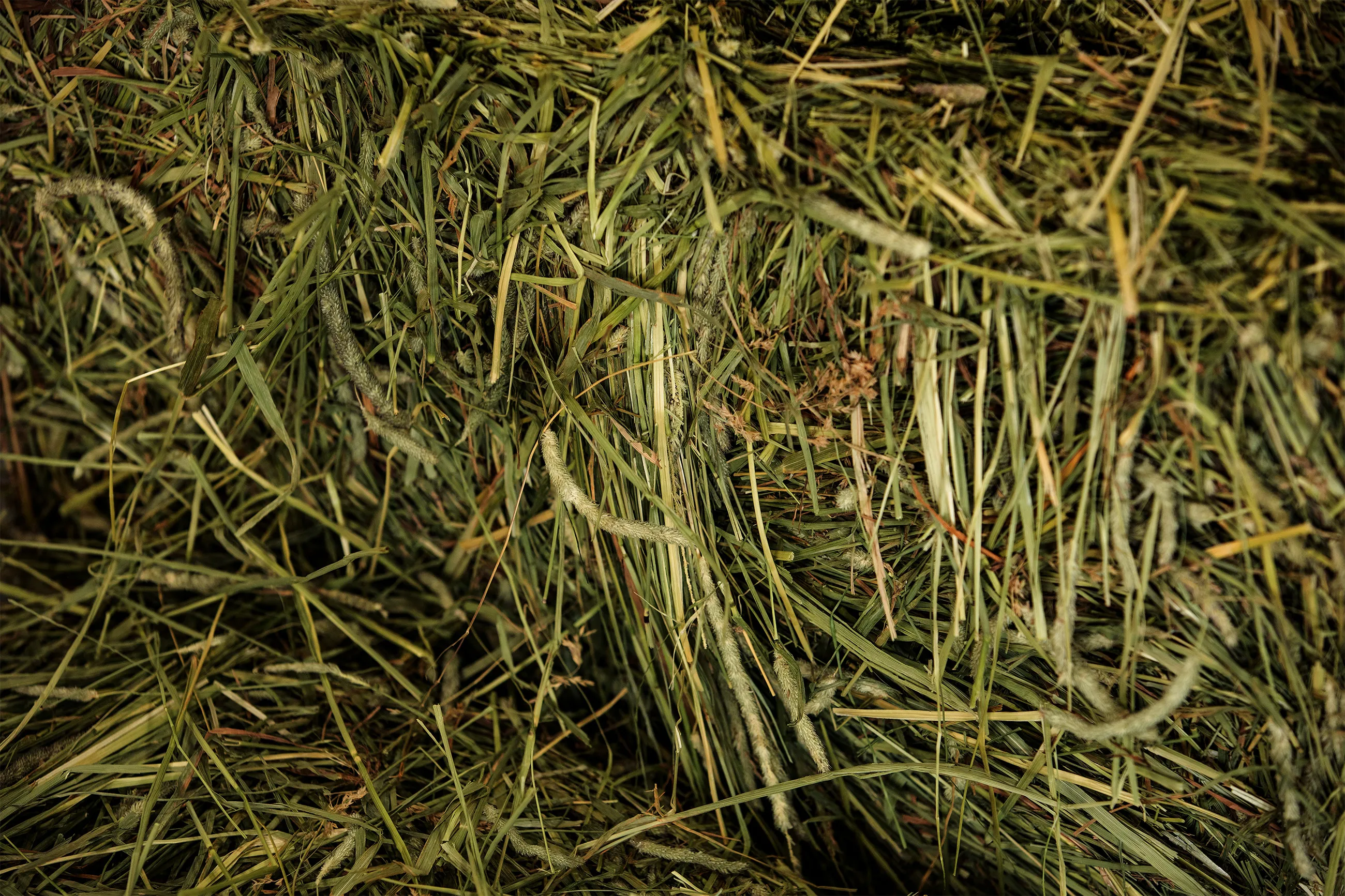
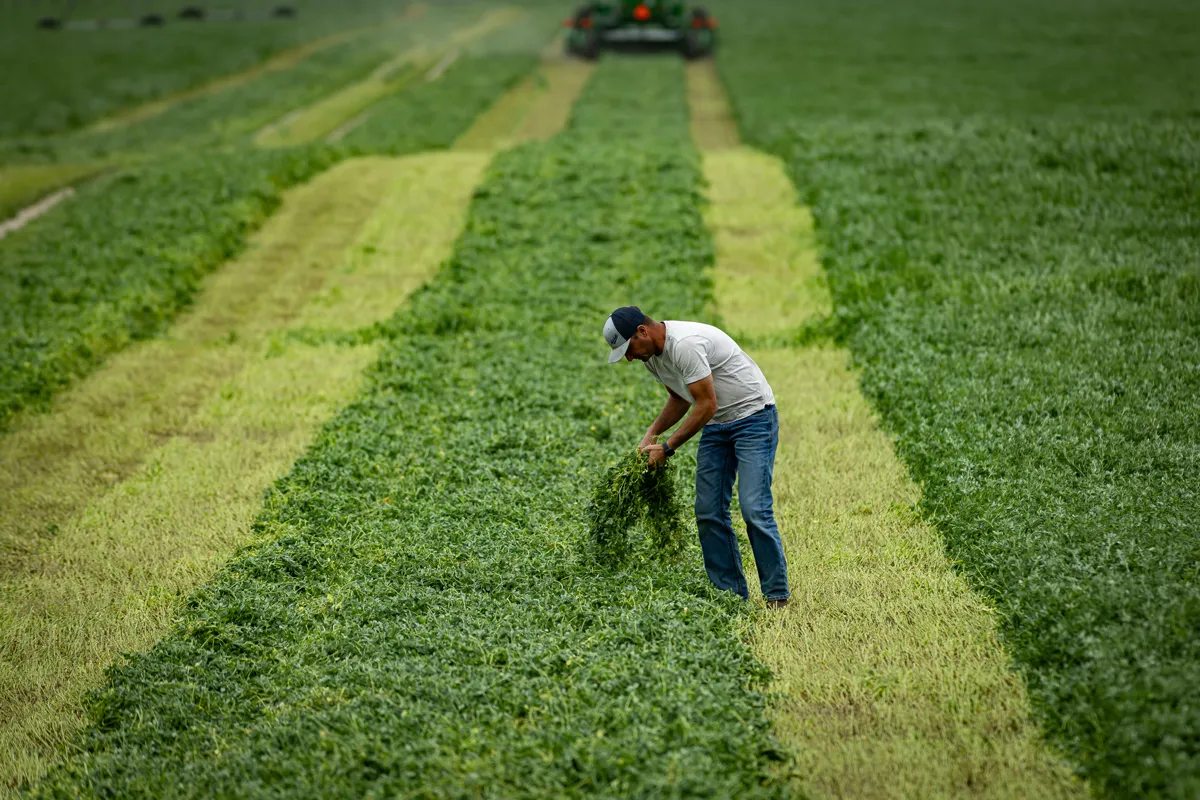
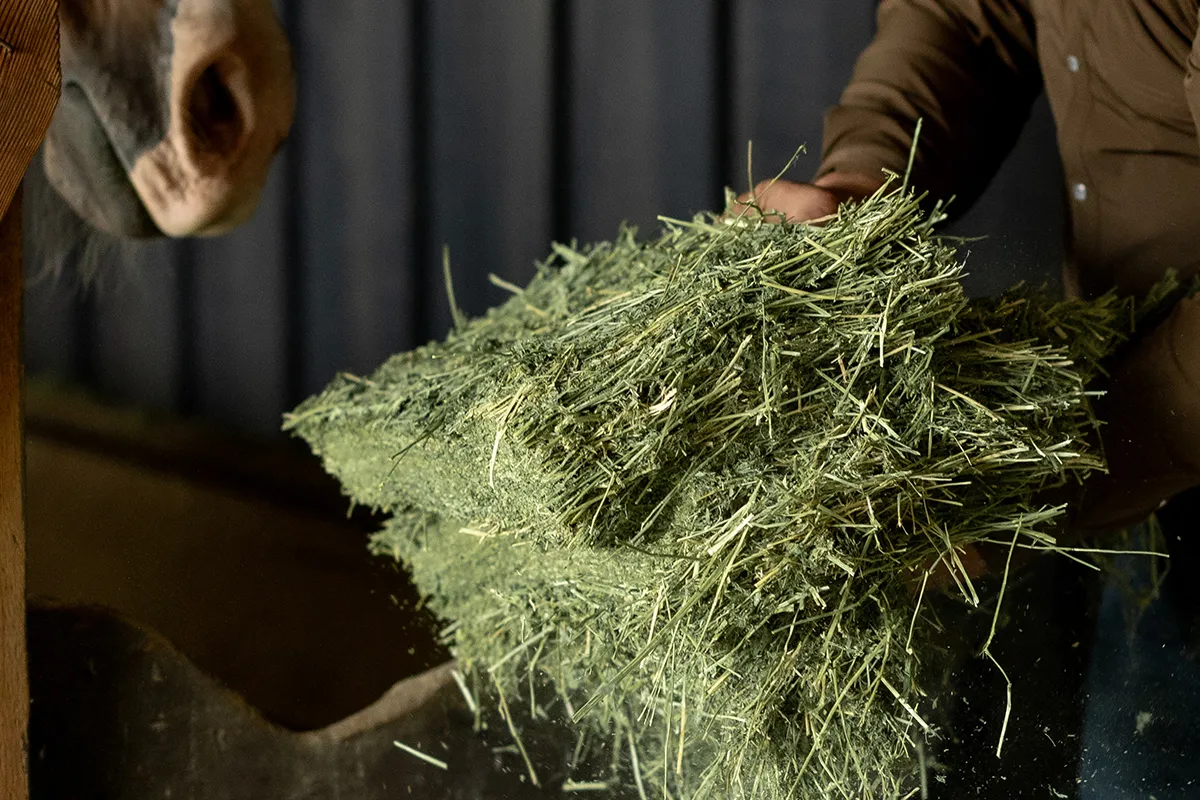
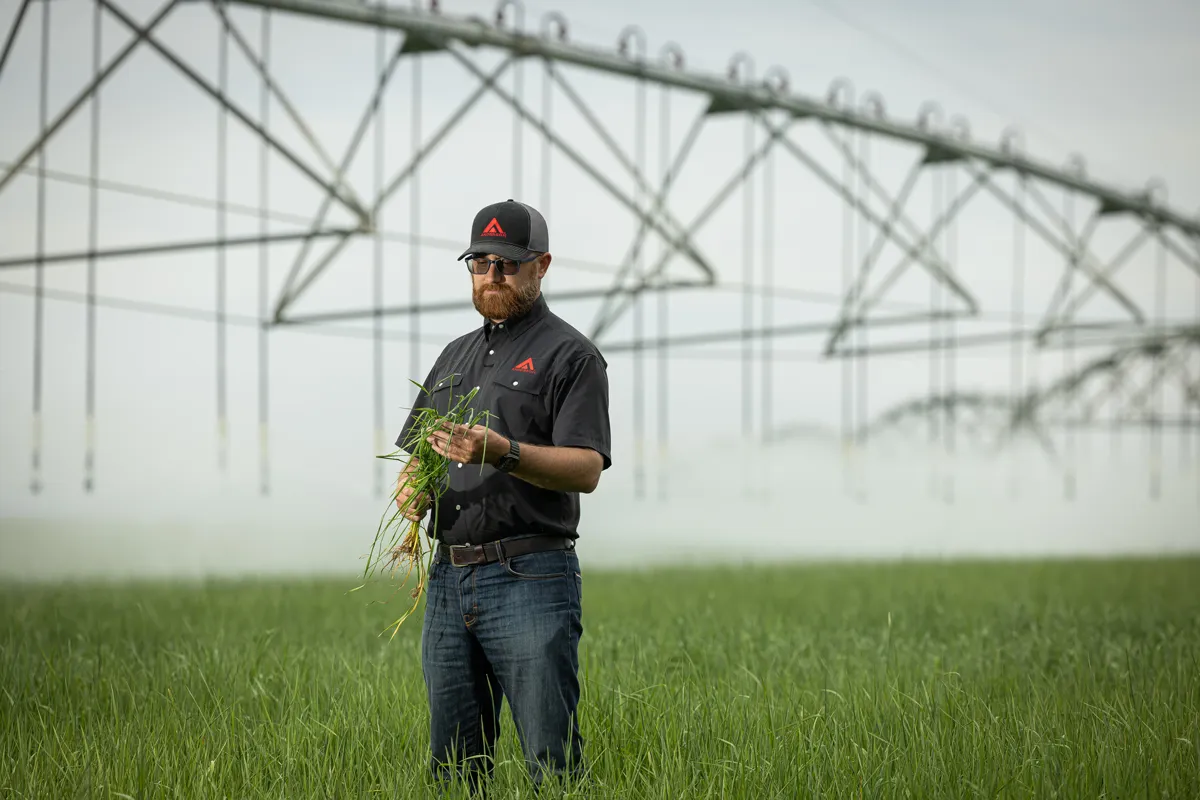
Back in the day, long before forage reports and lab testing became common, a good farmer could walk out into the field, grab a handful of hay, and tell you quite a bit about it before a bale was ever stacked in the barn. They'd twist it in their hands to check moisture, smell it for freshness, look at the color, feel the texture, and pay attention to how leafy or stemmy it was. A lot of those old instincts came from years of experience feeding animals and watching how different hay performed over time.
Honestly, many of those same habits still matter today. Most people naturally look for hay with good color retention, a fresh smell, soft texture, and plenty of leaf material. Dust, mold, weeds, excessive stems, or musty smells are usually signs that something may not be right. Oklahoma State University's article "Evaluating Hay Quality Based on Sight, Smell, and Feel" explains many of these same principles and why visual evaluation still plays an important role in selecting quality hay.
The difference today is that we also have the benefit of forage testing and nutritional analysis to help fill in the gaps. Hay that looks beautiful can still test poorly nutritionally, while hay that may not look perfect visually can still perform extremely well in a feeding program. A bright green bale doesn't automatically mean the hay is ideal for every horse or animal, which is why modern feeding programs often combine both traditional evaluation and detailed forage analysis to get the full picture.
What RFV Actually Measures
One of the most common numbers people see on forage tests is RFV, or Relative Feed Value. For years, RFV has been used throughout the forage industry as a way to estimate hay quality based on expected digestibility and intake potential.
In simple terms, RFV attempts to estimate how digestible the forage is and how much of it an animal is likely to consume. It became especially common in alfalfa and dairy hay markets because it gave buyers and sellers a relatively quick way to compare forage quality between lots of hay.
South Dakota State University and Ward Laboratories both explain that RFV was originally developed primarily around alfalfa and other legumes within the dairy and cattle industries, where it has historically worked fairly well as a comparison tool.
Generally speaking, higher RFV numbers are often associated with less mature, more digestible forage, while lower RFV values usually indicate more mature forage with higher fiber levels. But that does not automatically mean lower numbers equal "bad hay." Many excellent horse hays and retail forage products naturally test at more moderate RFV levels compared to high producing dairy hay. That's why RFV works best as a comparison tool, not a final grade on hay quality.
Why RFQ Was Developed
As forage testing continued to improve over the years, researchers realized RFV had some limitations, especially when comparing grass hays or mixed forages. That eventually led to the development of RFQ, or Relative Forage Quality.
RFQ includes fiber digestibility as part of the calculation, which helps provide a more complete picture of how the forage may actually perform nutritionally.
The University of Wisconsin and NRCS both discuss how RFQ was developed to improve forage evaluation across a wider range of forage types, especially grasses where digestibility can vary substantially.
Because RFQ accounts for digestible fiber, many people feel it gives a more accurate comparison when evaluating grass hay. That can be helpful, especially when comparing similar forage types, but these numbers still need to be viewed within the full feeding program. Some excellent horse hays may never reach the same RFQ values as elite dairy hay, and that's perfectly normal because different animals have very different nutritional goals.
That does not mean RFV is wrong or outdated. RFV is still widely used throughout the forage industry and continues to provide valuable information. RFQ simply adds another layer of context, especially when evaluating grass hay where fiber digestibility plays a larger role in overall forage quality.
Why Numbers Alone Don't Tell the Whole Story
This is where things often get misunderstood online. It's easy to look at a forage test and assume the hay with the highest number automatically wins, but feeding hay is rarely that simple in the real world.
One thing we've started seeing more online lately is what you might call "number chasing," where people focus so heavily on RFV or RFQ values that they stop evaluating the hay as a whole. The reality is, many excellent horse hays and retail forage products may not carry the same numbers you'd see in high producing dairy hay, and that doesn't automatically make them poor quality.
A good forage program should still look at the complete package. How does the hay smell? Is it clean? Is it soft and palatable? Is it consistent from bale to bale? What does the forage analysis actually say about protein, fiber, NSC, and mineral levels?
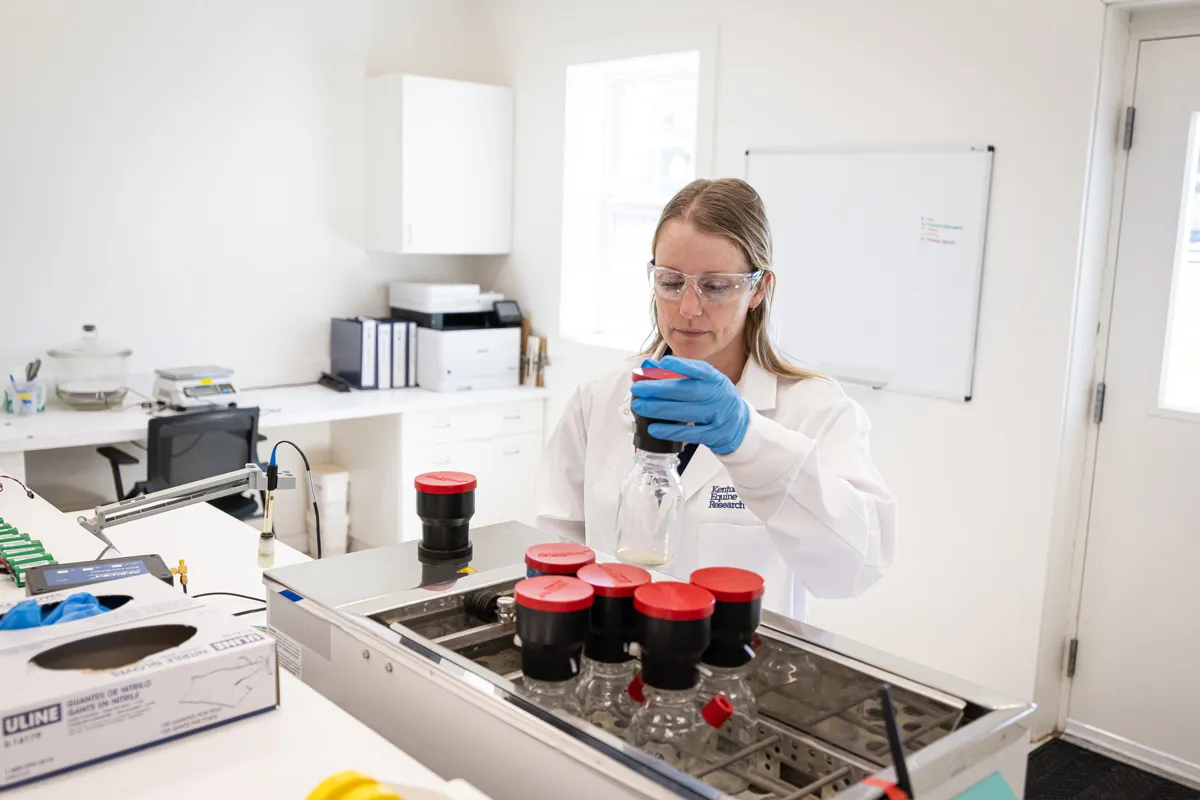
As Dr. Ashley Fowler from Kentucky Equine Research pointed out when discussing forage analysis with us, nutritionists don't balance rations using RFV or RFQ numbers alone. They use the actual nutrient values within the forage to determine whether a hay is a good fit for the animals being fed.
Why Testing and Traceability Matter
Forage testing gives you valuable information about what you're feeding, including protein levels, fiber content, digestibility, moisture, mineral levels, and NSC values. That information helps remove some of the guesswork and allows feeding programs to become much more consistent over time.
This becomes especially important for horses with metabolic issues, high performance horses, and programs trying to maintain steady nutrition from one load of hay to the next. We talked more about this in our recent article "What to Feed Horses with Metabolic Issues: Why Hay Testing and Consistency Matter More Than Species Alone" where we discussed why understanding the actual nutritional profile of hay matters more than simply choosing a forage species by name alone.
At Anderson Hay, every stack is tested and tracked through our traceability program so customers have confidence in what they're feeding. Our forage samples are analyzed through Dairy One Forage Laboratory and Equi Analytical Laboratories in Ithaca, New York, one of the most respected forage testing laboratories in the country and widely considered an industry standard within both the livestock and equine industries. Their laboratories work with everyone from dairy nutritionists and university researchers to horse owners, trainers, veterinarians, and large scale forage programs.
Equi Analytical explains that proper nutrition starts with understanding what is actually in the forage being fed, because hay that looks good visually can test very differently nutritionally. That's why the best feeding programs combine both traditional hay evaluation and reliable forage analysis.
Good Hay Is About Balance
So next time you're picking up hay, whether that's from a local farmer, a feed store, or right out of your own field, take a minute to slow down and really look at it. Grab a handful and feel the texture. Smell it for freshness. Look at the leaf retention, color, cleanliness, and overall consistency. Then go one step further and ask for the forage analysis too.
Good hay is more than one number on a test sheet. RFV, RFQ, forage analysis, smell, texture, cleanliness, consistency, and palatability all work together to help determine what forage is the best fit for your animals.
In a lot of ways, hay is no different than breeding livestock or evaluating horses and cattle. If you focus only on chasing performance numbers or EPDs while ignoring everything else, eventually you lose sight of the complete animal standing in front of you. The same thing can happen with forage. Numbers matter, but they were never meant to replace good judgment, experience, consistency, and evaluating the whole package together.
As hay season gets underway again, forage testing continues to become a more important part of the conversation, and that's a good thing. The goal simply shouldn't be becoming a "number chaser." The best feeding programs usually come from balancing good forage analysis with good old fashioned common sense and knowing what works best for your animals.
If you're looking for consistent, traceable forage backed by detailed hay analysis, find Anderson Hay products at a dealer near you.
Frequently Asked Questions About RFV, RFQ, and Hay Quality
What is RFV in hay?
RFV stands for Relative Feed Value. It is a forage quality calculation designed to estimate digestibility and expected intake, primarily within the dairy and cattle industries. Higher RFV values are generally associated with less mature and more digestible forage, but RFV should be used as a comparison tool rather than a final grade on hay quality.
What is RFQ in hay?
RFQ stands for Relative Forage Quality. It was developed as an improvement to RFV because it also accounts for digestible fiber within the forage. Many people feel RFQ gives a better comparison when evaluating grass hays, especially premium horse hay and other non-legume forages.
Is RFQ better than RFV?
RFQ is often considered more useful when comparing grass hays because it includes digestible fiber in the calculation. That said, both RFV and RFQ are tools that help compare forage quality, and neither number should be used alone to determine whether hay is "good" or "bad."
What is considered good hay quality?
Good hay quality depends on the animals being fed and their nutritional needs. Factors like smell, texture, cleanliness, leaf retention, palatability, forage analysis, consistency, and digestibility all play an important role. The best hay for a dairy cow may be very different than the best hay for an easy keeper horse or a backyard goat.
Why do some good horse hays have lower RFV or RFQ values?
Many premium horse hays naturally test at more moderate RFV or RFQ levels compared to high producing dairy hay. That does not mean the hay is poor quality. Horses, cattle, goats, and other animals all have different nutritional goals, which is why forage should be evaluated as a complete package rather than by one number alone.
What does forage analysis tell you?
A forage analysis helps show the nutritional makeup of hay, including protein levels, fiber content, digestibility, moisture, mineral levels, and NSC values. This information helps build more consistent feeding programs and allows owners to better match hay to their animals' nutritional needs.
Why is hay testing important?
Hay testing removes a lot of the guesswork from feeding. Two bales of hay may look very similar visually while testing very differently nutritionally. Reliable forage analysis helps horse owners, livestock producers, veterinarians, and nutritionists make more informed feeding decisions.
What is hay traceability?
Hay traceability means being able to track forage back to where and when it was harvested, tested, and processed. At Anderson Hay, every stack is tracked through our traceability program and tested through Dairy One Forage Laboratory and Equi Analytical Laboratories to help provide more consistency and confidence in the forage being fed.
What does "number chasing" mean in hay?
"Number chasing" refers to focusing only on RFV or RFQ values while ignoring the overall forage quality and feeding goals. A good feeding program should evaluate the complete package including smell, texture, cleanliness, palatability, consistency, and the full forage analysis rather than chasing the highest number possible.
How should you evaluate hay quality?
The best way to evaluate hay quality is by combining traditional hay evaluation with forage analysis. Look at the smell, color, texture, leaf retention, cleanliness, consistency, and nutritional analysis together to determine whether the hay is a good fit for your animals.