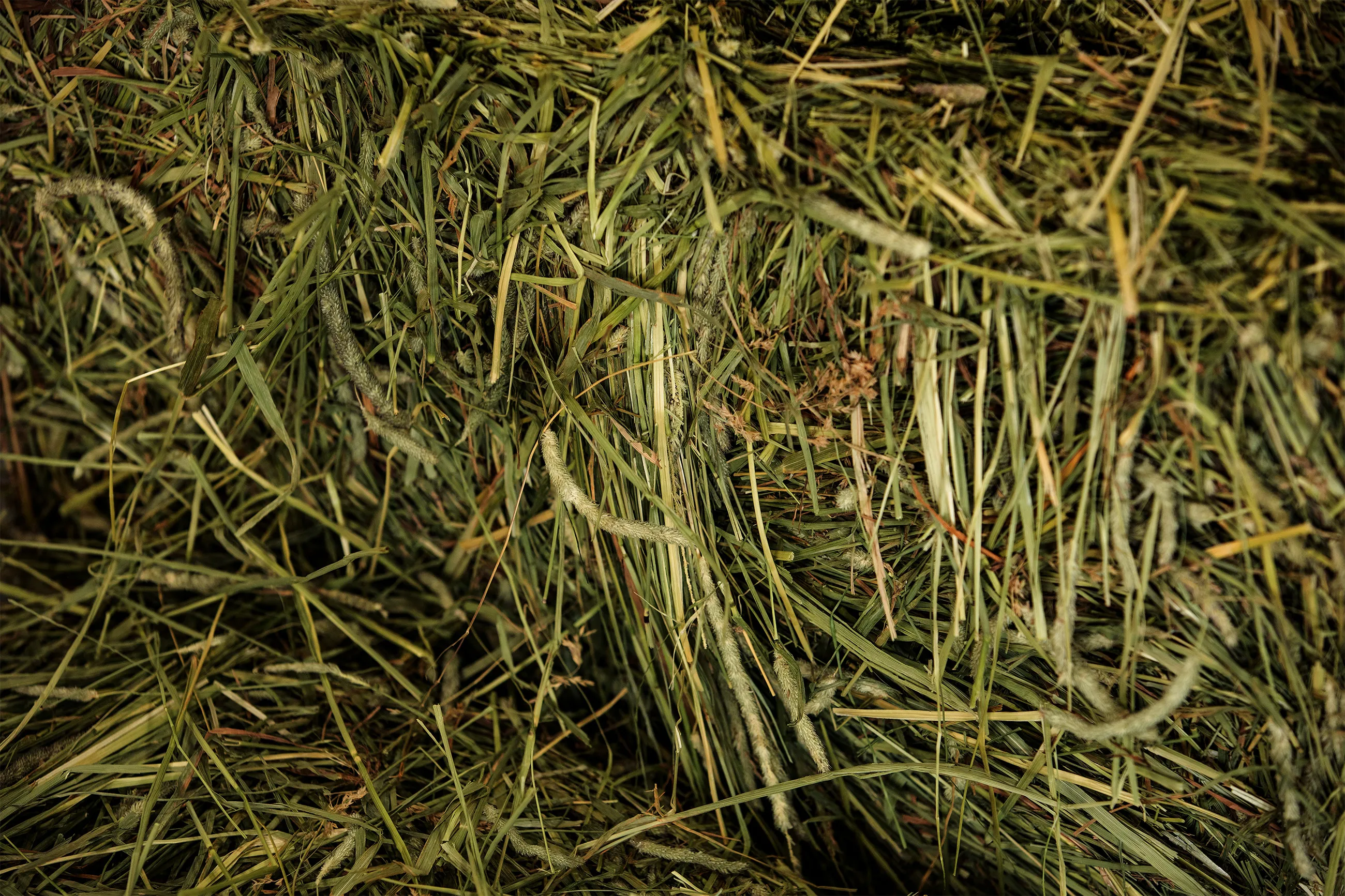
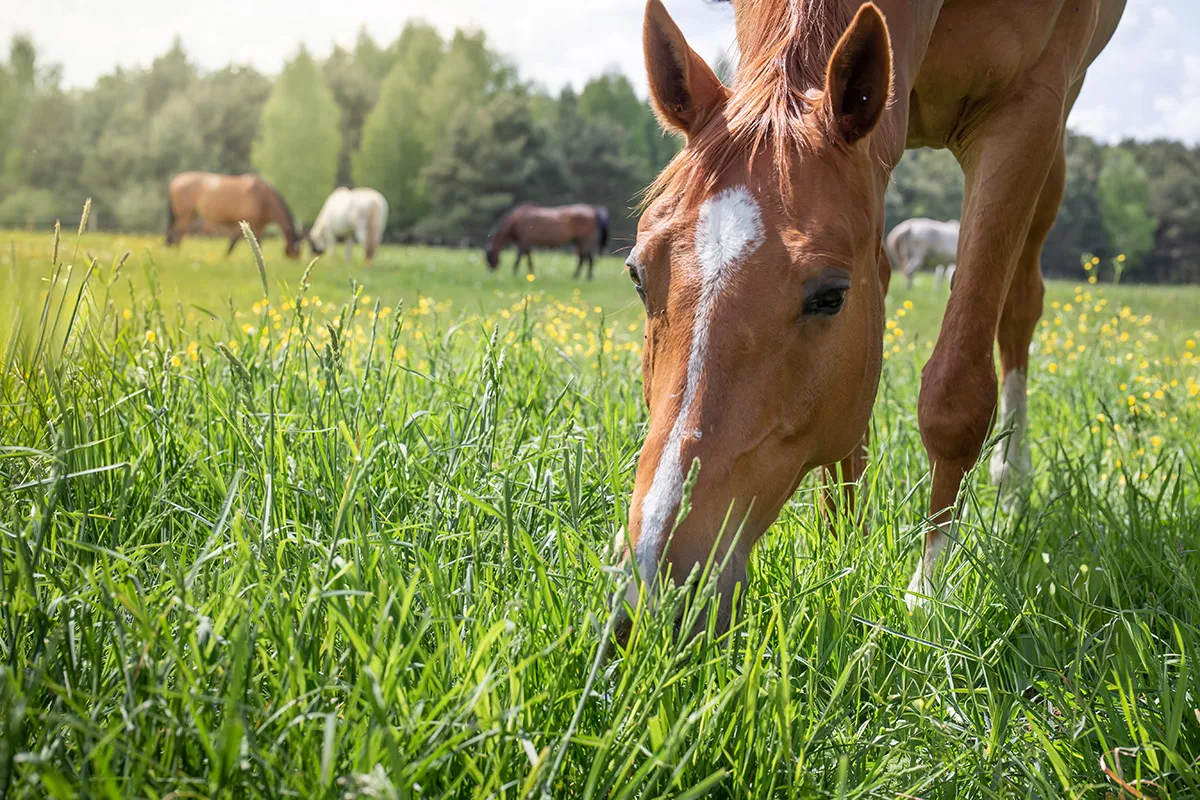
As spring starts to arrive across the country and pastures begin turning green, many horse owners look forward to opening the barn gate and letting the horses out to graze that fresh, lush grass. After feeding hay all winter, the thought of giving both you and your horses a break from hauling flakes feels pretty good. Fresh spring pasture offers great nutrition and plenty of natural grazing time, but a sudden switch from hay to lush grass can create problems for a horse’s digestive system. Transitioning slowly and continuing to keep hay in front of them helps protect the gut and keeps their nutrition steady. In this article, we’ll walk through why hay still matters in the spring, how pasture changes affect your horse, and how to make the transition safely.
Forage Should Always Be the Foundation of Your Horses Diet
One thing we remind horse owners of all the time is that horses are built to eat forage throughout most of the day. Their digestive system depends on a steady supply of fiber moving through the gut. When that steady flow changes suddenly, the digestive system feels it.
Most equine nutrition specialists recommend forage make up at least seventy five percent of a horse's diet. For a typical one thousand pound horse, that usually works out to around fifteen to nineteen pounds of forage each day. University extension programs also explain that mature horses generally eat about two to two and a half percent of their body weight per day in total feed.
What this really means in practical terms is simple. Horses do best when forage stays in front of them consistently. Even when pasture starts growing again in the spring, keeping hay in the feeding program helps maintain that steady intake of fiber their digestive system expects.
Spring Grass is Richer Than it Looks
When those first bright green blades start popping up in the pasture, it's easy to assume the grass is simply fresh forage. In reality, spring grass often contains a lot more energy than many horse owners realize.
During periods of rapid growth, grasses contain higher levels of non structural carbohydrates, including sugars and fructans. Those compounds help the plant grow quickly, but large amounts entering a horse's digestive system all at once can cause problems.
Kentucky Equine Research explains in their artilce Management Tips to Reduce the Risk of Springtime Laminitis, that lush spring pasture can contain elevated sugar levels and should be introduced gradually to reduce the risk of digestive upset and laminitis. As their nutrition team notes, "Management strategies such as gradual introduction to pasture and maintaining access to hay help reduce the risk associated with sudden dietary changes."
That's why experienced horse owners ease horses onto pasture slowly instead of turning them out full time right away.

Feed Hay Before Turnout to Slow Grazing
One of the easiest and most effective ways to manage spring pasture starts before your horse ever steps into the field. Feed hay before turnout.
When horses head to pasture hungry, they tend to dive into the grass and eat quickly. That fast intake delivers a large amount of sugar into the digestive system in a short period of time. Feeding hay beforehand takes the edge off their appetite and slows how quickly they graze.
In a paper by Michigan State University Extension, they recommend feeding horses hay before turnout during spring grazing transitions because it helps limit rapid intake of lush pasture and reduces digestive upset during diet changes.
Grass hays such as Timothy or Orchard Grass work well during pasture transitions because they provide steady fiber without excessive energy.
Every Horse Handles Spring Pasture a Little Differently
If you've been around horses for any length of time, you already know every horse is different. Some horses gain weight just looking at grass, while others burn through calories quickly.
Age, workload, metabolism, and body condition all influence how a horse responds to spring pasture. Easy keepers often put on weight quickly during the spring flush. Horses with metabolic concerns require careful management of sugar intake. Performance horses, growing horses, and lactating mares may require additional energy depending on their workload.
Because of these differences, many horse owners keep feeding hay alongside pasture even after turnout begins. That steady forage intake helps keep diets balanced and makes it easier to manage body condition.
Pasture Conditions Change All Season
Another thing worth remembering is that pasture quality rarely stays the same throughout the grazing season. Weather patterns, soil fertility, plant maturity, and grazing pressure all influence nutrient levels in grass.
One week a pasture may look lush and full of energy. A few weeks later those same plants might contain far fewer nutrients. Hay helps provide stability when pasture conditions shift.
By keeping a consistent source of hay available, you help maintain a predictable feeding program even when pasture growth changes throughout the season.
Understanding Different Types of Hay
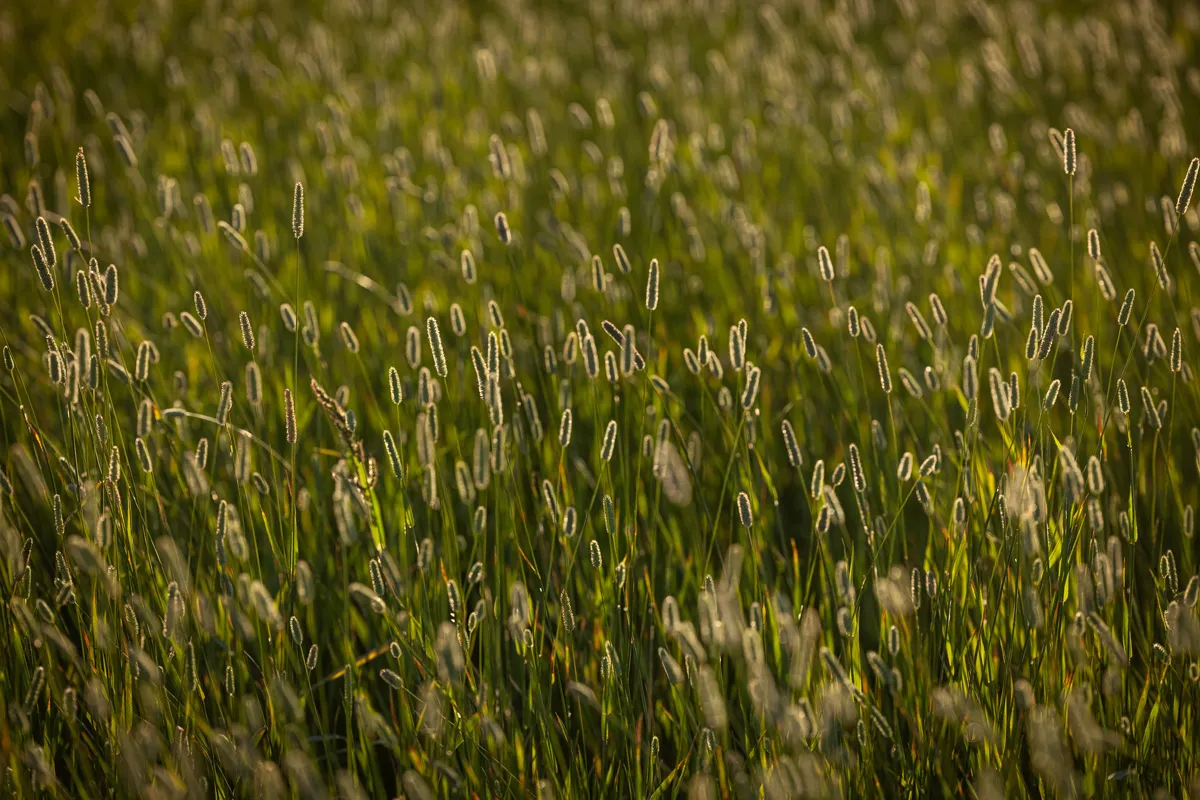
Not all hay feeds the same way. The type of plant and the stage of growth at harvest both influence nutrient levels and digestibility.
Grass hays such as Timothy and Orchard Grass provide balanced fiber and moderate energy levels, which makes them a good fit for many adult horses. Legume hays such as Alfalfa contain higher protein and energy levels and often support growing horses, lactating mares, or horses with higher energy needs.
Harvest timing also plays a big role in forage quality. Hay cut earlier in the plant's growth stage usually provides better digestibility and palatability compared with overly mature forage.
Choosing the right forage helps support both digestive health and balanced nutrition.
A Slow Transition Makes Spring Easier on Your Horse
Spring pasture is one of the best parts of the year for both horses and horse owners. Fresh grass, warm weather, and time outside all benefit the horse.
The key is introducing those changes gradually. Keeping hay in the feeding program during early pasture growth protects digestive health and keeps fiber intake steady. Gradual turnout allows the microbes in the digestive system time to adjust to richer grass.
A little patience during this transition helps horses enjoy spring pasture while staying healthy.
Find Quality Hay Near You
Quality forage forms the foundation of every healthy equine diet. Whether your horses rely on hay year round or are transitioning between pasture and hay through the seasons, consistent forage helps support digestive health and balanced nutrition.
At Anderson Hay, we work with growers across the western United States to produce consistent, high quality forage for horses across the country. Our product lineup includes Timothy hay, Orchard Grass, Alfalfa, and grass and alfalfa blends, available in both traditional three tie bales and compressed formats for easier handling and storage.
Whether you're feeding a couple horses at home or managing a larger barn, reliable forage helps keep feeding programs consistent through seasonal changes like the transition from winter hay to spring pasture.
If you're looking for Anderson Hay products near you, visit our dealer locator to find a retailer in your area.