
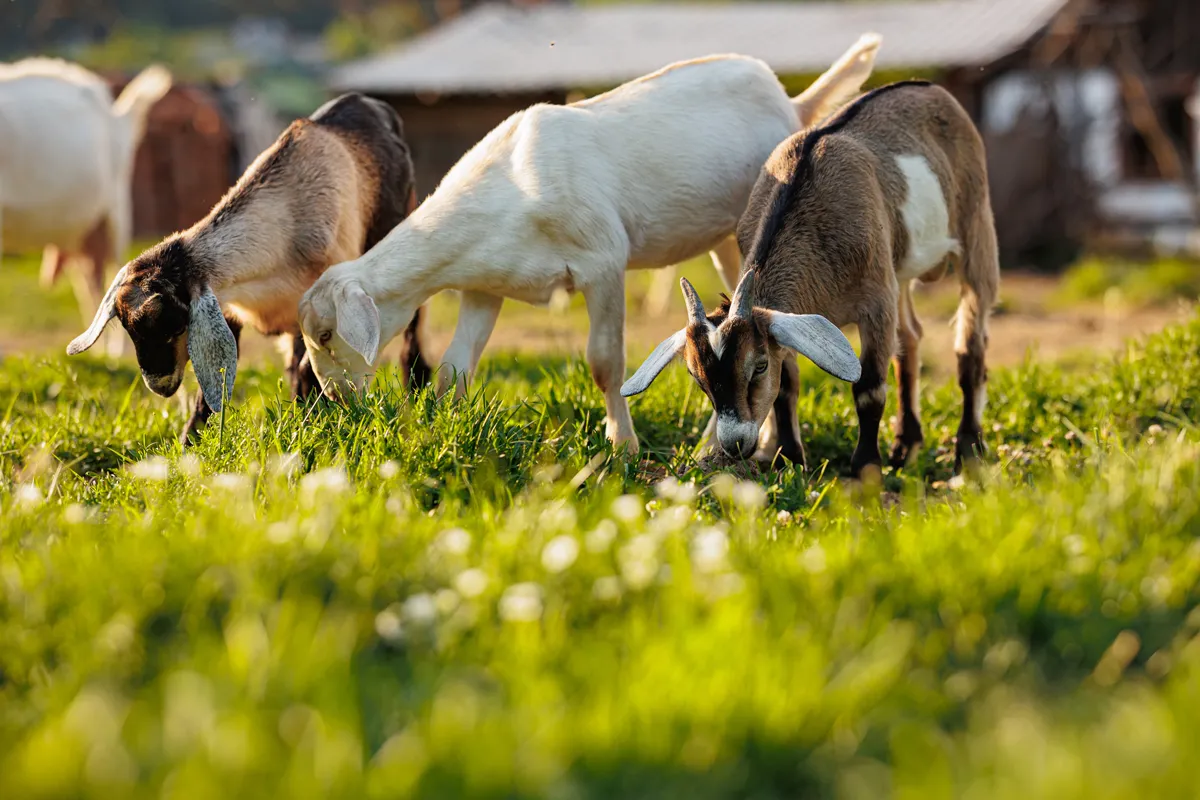
You've probably heard the joke that goats will eat anything... tin cans, cardboard, old boots. It makes for a good cartoon, but it's not actually how goats should be fed. The truth is, goats are selective eaters, and what you feed them plays a big role in their health, performance, and overall condition.
If you're new to raising goats, understanding what they really need to eat doesn't have to be complicated. Once you understand how goats are built to eat and how their digestive system works, it becomes much easier to put together a feeding program that keeps them healthy and productive.
The Foundation: Forage Comes First
At the core of every goat's diet is forage, which includes pasture, browse, and hay, and it should make up the majority of what goats eat every day. Goats are ruminants, meaning their digestive system is designed to process fiber continuously. That steady intake of fiber is what keeps the rumen functioning properly and digestion moving the way it should.
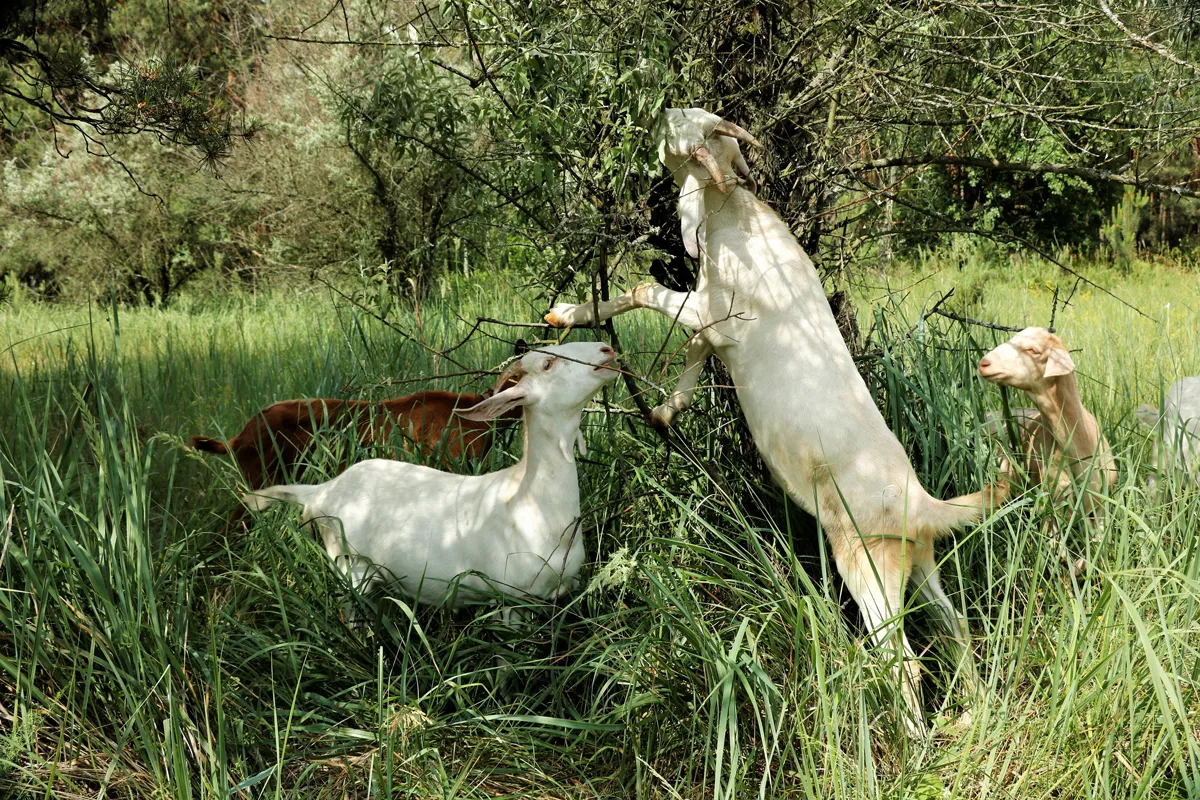
In a perfect setting, goats would spend most of their day browsing. Unlike cattle, goats naturally prefer leaves, shrubs, weeds, and woody plants over straight grass. This is why you often see them reaching up into brush or stripping leaves instead of grazing low to the ground. Browse provides a diverse range of nutrients and is what goats are naturally built to consume.
Pasture can also play a role, especially when it is actively growing and well managed, but pasture quality can change quickly depending on weather, season, and grazing pressure. During dry periods, winter months, or in areas with limited vegetation, pasture alone is usually not enough to meet a goat's nutritional needs.
That is where hay becomes one of the most important parts of a feeding program. High-quality hay provides a consistent and reliable source of fiber when pasture and browse are not available or not meeting demand. It helps maintain rumen health, supports body condition, and gives you more control over what your goats are actually consuming each day. An article from Oregon State University Extension Service on Basic Care for Goats, emphasize that forage should make up the largest portion of a goat's diet for proper digestive function and overall health.
Hay vs. Browse vs. Pasture
All three forage types have their place, but they are not equal when it comes to consistency. Browse is the most natural and often the most nutrient-diverse feed source, but it is also the hardest to maintain year-round. Pasture can provide good nutrition when conditions are right, but it can fluctuate quickly with weather and management.
Hay fills that gap by providing steady, dependable nutrition regardless of outside conditions. When you start with good hay, you are building a consistent foundation that does not change day to day. This becomes especially important for smaller operations or for anyone dealing with seasonal swings in forage availability.
For most goat owners, hay ends up being the most dependable part of the feeding program simply because it allows you to remove some of the guesswork and provide consistent nutrition no matter what is happening in the pasture.
Choosing the Right Hay for Goats
That is where hay becomes one of the most important parts of a goat's diet. High-quality hay provides a consistent and reliable source of fiber when pasture and browse are not available or not meeting demand. It helps maintain rumen health, supports body condition, and gives you more control over what your goats are actually consuming each day.
For most goats, a good grass hay like orchard grass or timothy works extremely well as a daily foundation. These hays provide moderate protein and energy levels that support maintenance without overloading the animal. Feeding programs and guidance from sources like Penn State Extension consistently show that goats do well on these types of forages as a base diet, with higher protein options like alfalfa introduced only when needed for growth, pregnancy, or milk production.
Alfalfa can be a great tool, especially for dairy goats or animals that need more nutrition, but it is also richer and should be fed with intention. In many cases, a mix of grass hay and alfalfa provides a more balanced ration without going too far in either direction.
This is where starting with quality really matters. Clean, consistent hay that is properly harvested and stored will always outperform forage that is overly mature, stemmy, or inconsistent. At Anderson Hay, we focus on producing high-quality timothy, orchard grass, and alfalfa that give livestock owners a dependable feeding option no matter the season. When pasture conditions change, having that level of consistency in your hay makes it much easier to keep your goats on a steady, healthy diet.
Do Goats Need Grain?
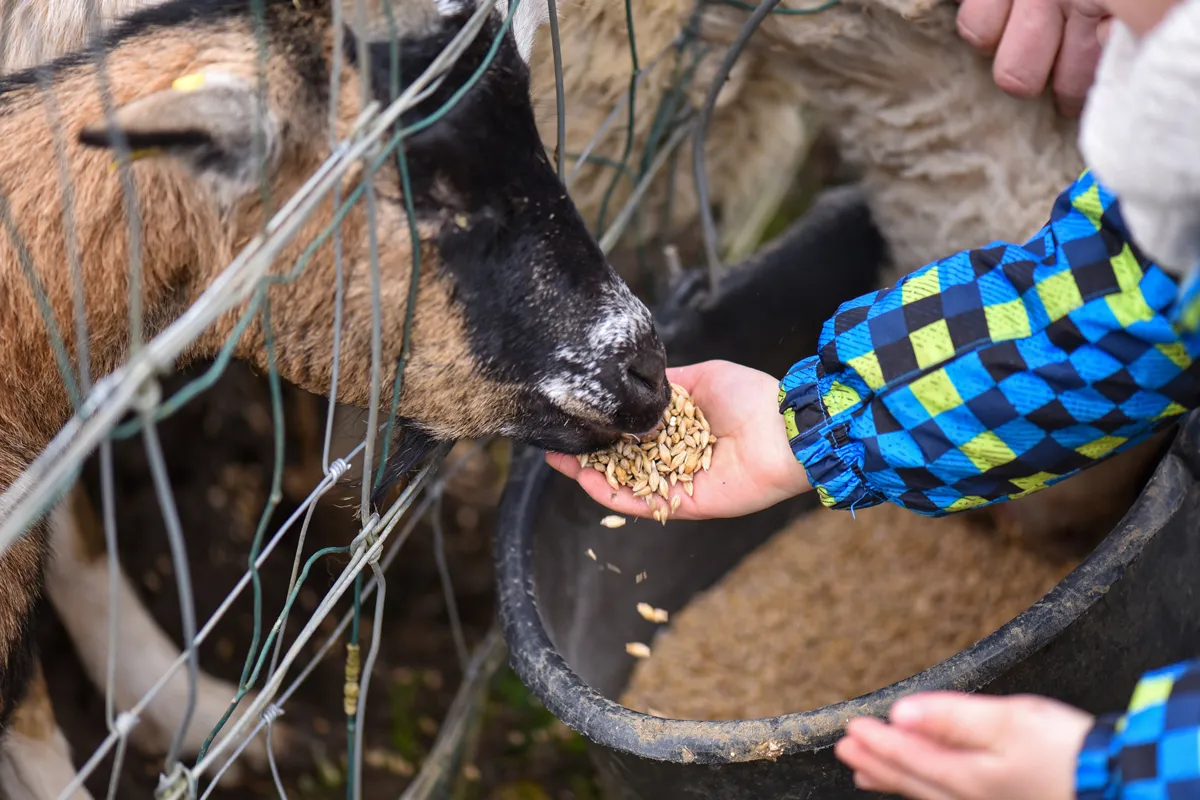
Grain is one of the most misunderstood parts of feeding goats, especially for beginners. The reality is that not all goats need grain, and in many cases, they can do very well on forage alone.
Goats that are at maintenance, meaning they are not growing, pregnant, or producing milk, can often meet their nutritional needs with good quality forage. Adding grain when it is not needed can actually create problems, particularly digestive issues like acidosis, which comes from too much rapidly fermentable feed in the rumen.
There are situations where grain can be beneficial. Growing kids, lactating does, or goats that need to gain weight may require additional energy and protein that forage alone may not provide. The key is to use grain as a supplement to forage, not a replacement. Guidance from University of Kentucky Extension supports this approach, recommending that concentrate feeds be used only when forage does not meet nutritional needs.
A simple way to think about it is this, start with forage, then adjust with grain only when there is a clear need.
Minerals and Water Matter More Than You Think
Even with a strong forage base, goats still need access to proper minerals and clean water every day. Loose minerals formulated specifically for goats are usually the best option because they allow animals to consume what they need more naturally compared to blocks.
Water is just as important and often overlooked. Goats need consistent access to clean, fresh water to support digestion, nutrient absorption, and overall health. When water intake drops, feed intake usually follows, and that can quickly impact performance, growth, and milk production.
Bringing It All Together
Feeding goats does not have to be complicated, but it does need to be consistent. Start with a strong forage base, whether that comes from browse, pasture, or hay, and then adjust based on your goats' specific needs and stage of life.
In most real-world situations, pasture and browse are not perfect year-round, and that is where hay becomes such an important part of the equation. It provides a dependable way to deliver the fiber and nutrition goats need every single day, regardless of weather or grazing conditions.
If you are unsure where to start, keep it simple. Focus on high-quality forage, make sure minerals and water are always available, and only introduce grain when there is a clear reason to do so. Because at the end of the day, healthy goats start with a consistent diet, and that foundation almost always comes back to good forage you can count on day in and day out.
Frequently Asked Questions About Feeding Goats
What do goats eat daily?
Goats primarily eat forage, including hay, pasture, and browse. This should make up the majority of their daily diet.
What is the best hay for goats?
Grass hays like timothy or orchard grass work well for most goats, while alfalfa can be added for higher nutritional needs.
Do goats need grain every day?
No, many goats do not need grain. Grain is only needed for growing, pregnant, or lactating goats, or when additional nutrition is required.
Can goats survive on pasture alone?
Sometimes, but pasture quality varies. Most goats need hay to provide consistent nutrition, especially during dry or winter months.
What minerals do goats need?
Goats need access to loose minerals specifically formulated for goats, along with clean, fresh water at all times.