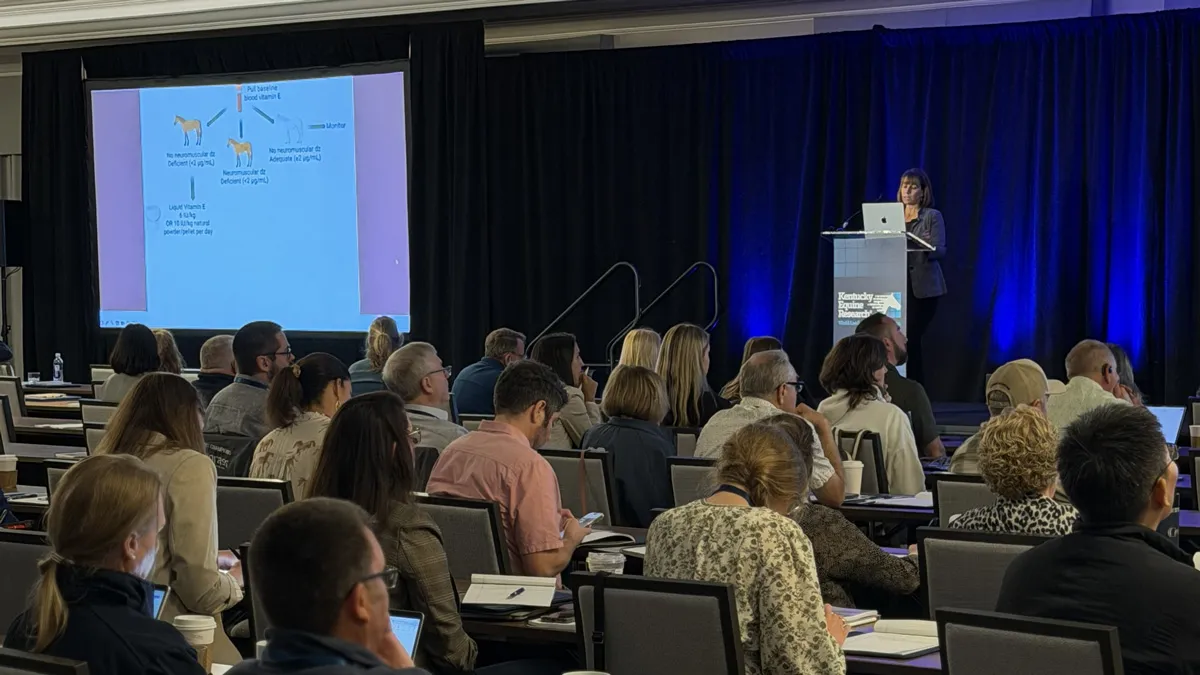
Last week, some of our team had the opportunity to attend the 28th Equine Health and Nutrition Conference hosted by Kentucky Equine Research at the beautiful World Equestrian Center in Ocala, Florida. The event brought together over 230 attendees from 22 countries, including veterinarians, nutritionists, researchers, and feed industry professionals, all focused on improving horse health and performance through better nutrition. For us, this is exactly where we want to be, right in the middle of the conversation, learning from the best in the industry and bringing that knowledge back to our customers and partners.
What the Industry is Talking About
One of the biggest highlights of the conference was the depth and range of topics covered by the speakers. The lineup included some of the top experts in their fields from around the world, each bringing a unique perspective on equine health and performance. Every session approached the horse from a different angle, but together they painted a very clear picture of how interconnected everything really is. From muscle development and performance to gut health, respiratory function, and long term growth, the common thread throughout every presentation was the importance of a strong nutritional foundation.
The conference opened with Dr. Stephanie Valberg, who shared insights on muscle atrophy and how nutrition, exercise, and underlying conditions all influence performance. That conversation carried into Dr. Carrie Finno's session on vitamin E, where she highlighted the growing importance of proper supplementation as more horses rely less on fresh pasture. Dr. Joe Pagan led several discussions throughout the week, including sessions on heat stress and performance, where research showed just how much heat horses generate during exercise and how critical proper recovery strategies are. Additional presentations explored topics like the equine gut microbiome, respiratory health, allergies, biomechanics, and even how early life nutrition can impact long term performance through epigenetics.
If you are interested in seeing the full lineup of speakers and topics covered, you can view the complete conference agenda and speaker list on the Kentucky Equine Research website.
When you step back and look at it all together, the message was consistent. Everything connects back to nutrition, and more specifically, to the quality and consistency of the forage horses are consuming.
Why This Matters for Forage
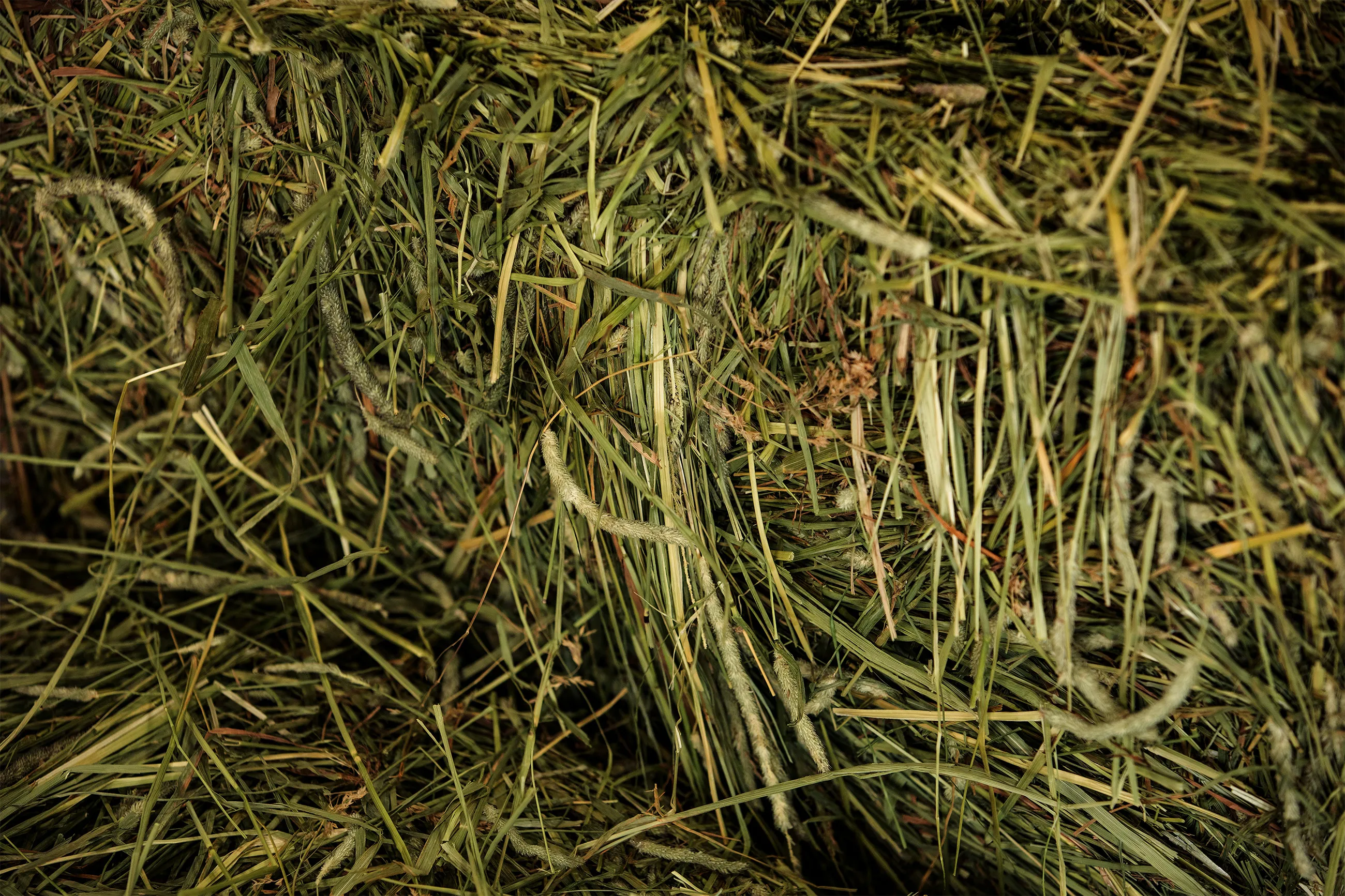
At the end of the day, everything discussed at the conference kept pointing back to one simple truth, forage is the foundation of the horse's diet. Whether it is fresh pasture or hay, it makes up the majority of what a horse consumes and plays a major role in digestion, overall health, and performance. When that foundation is strong, everything else in the feeding program works better.
That is exactly why forage quality matters so much, and why the research being done today is so important. At the conference, Kentucky Equine Research shared findings from a study conducted with Cavalor that looked at how nutrients change from fresh grass through drying, baling, and storage. Their work showed that the largest nutrient losses occur during the drying phase, with key nutrients like vitamin E and fatty acids declining rapidly as curing time increases. In that study, average field drying time was around 7.3 days, which creates a longer window for nutrient loss due to environmental exposure.
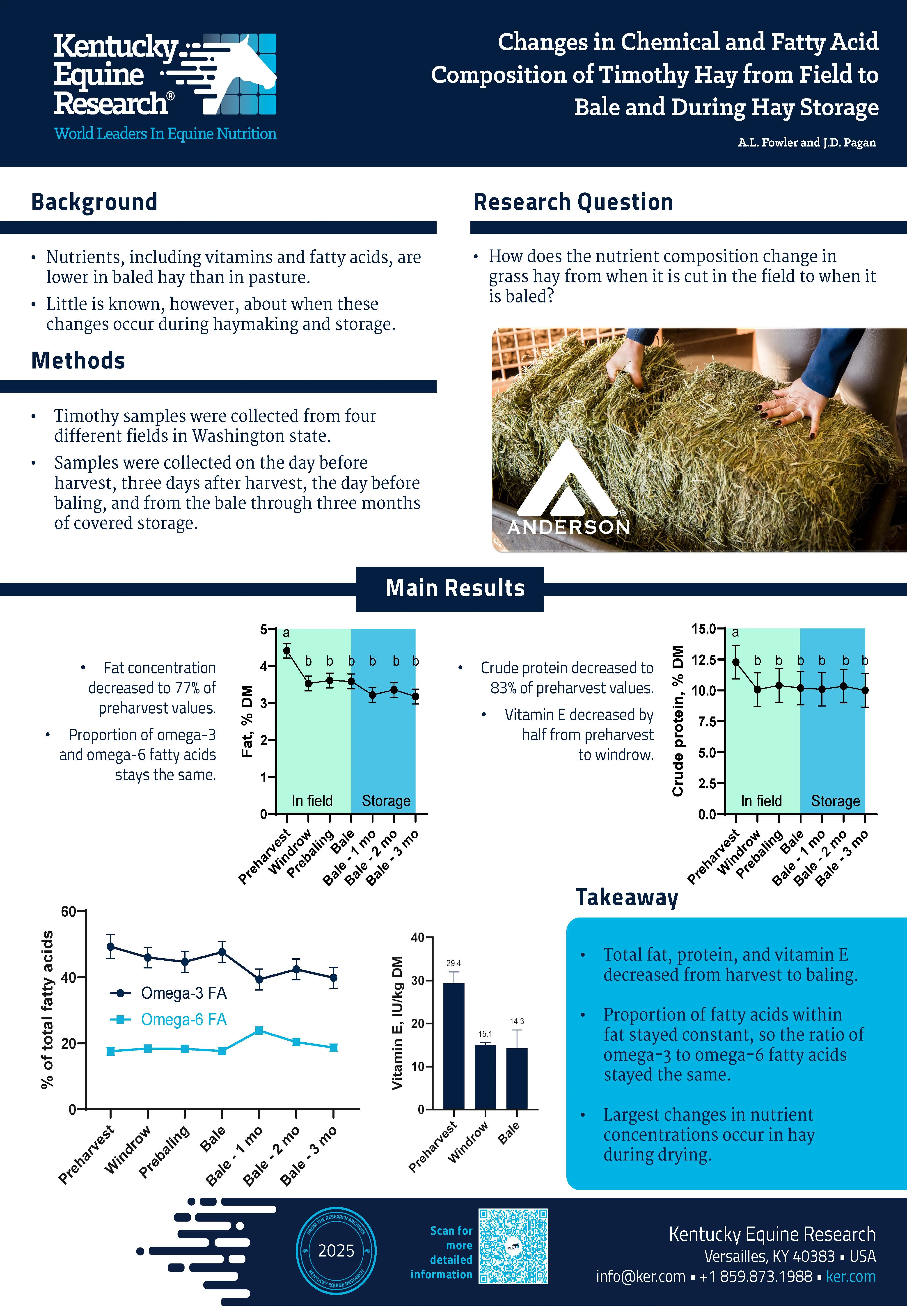
At the same time, we have been working alongside Kentucky Equine Research on a multi-year study using Anderson timothy hay that takes that concept even further. Over the course of two years, we collected and analyzed forage from the exact same fields at every stage of the process, starting with standing forage, then pre-harvest, post-harvest, each day during curing, at baling, and throughout storage at multiple intervals, including one year and two years. This gives a complete picture of how nutrition changes from start to finish, not just snapshots along the way.
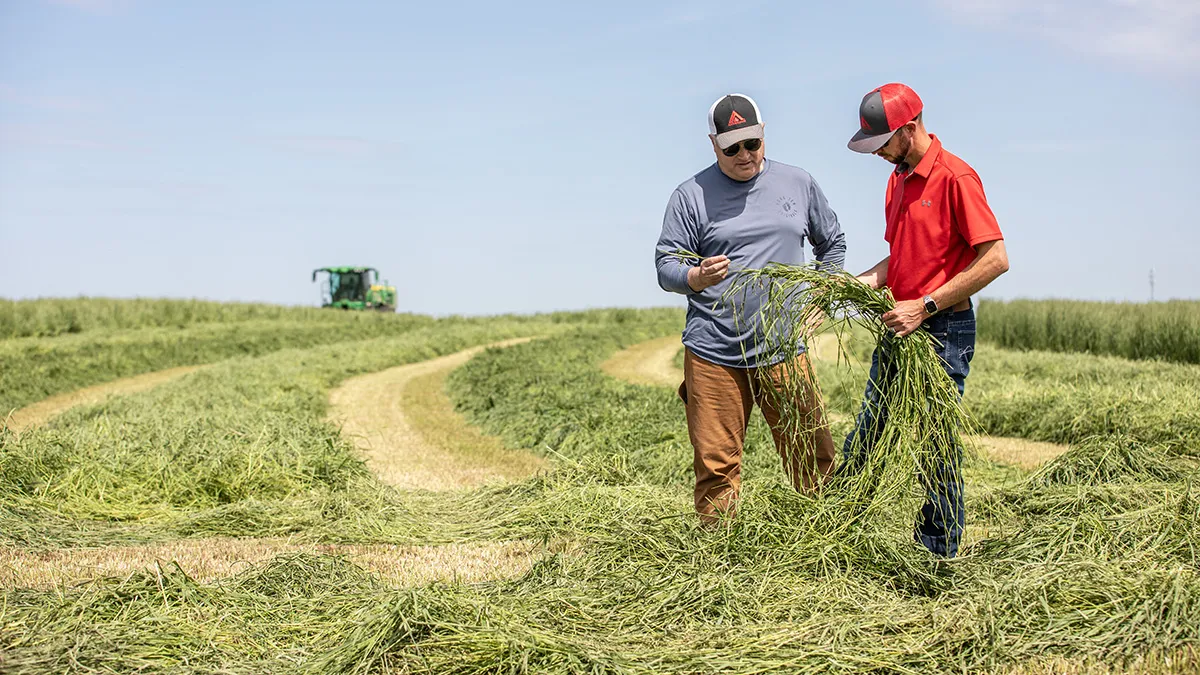
What we continue to see is that while nutrient loss during curing is unavoidable, the amount of loss is directly tied to how quickly and efficiently that hay is put up. In Eastern Washington, where Anderson Hay is grown, we are typically able to cut, dry, and bale hay in just three to four days under ideal conditions. That shorter curing window significantly reduces exposure to sunlight, respiration, and environmental stress, helping preserve more of the natural nutrients in the forage compared to longer drying periods.
Just as important, this environment allows us to produce hay without the need for drying agents or chemical additives. We are relying on consistent growing conditions and proper management to naturally cure the hay, which results in a cleaner, more nutritionally consistent product. When you compare both research efforts side by side, it becomes clear that forage quality is not just about what is grown, but how it is handled from the moment it is cut to the moment it is fed.
Bringing It Back to the Real World
What makes a conference like this valuable is not just the research itself, but how it applies to real world feeding programs. Across every session, whether the focus was performance, recovery, muscle health, or heat stress, the same themes continued to come up. Consistency matters, quality matters, and understanding exactly what you are feeding your horse matters. It was encouraging to see how closely the latest research aligns with what we experience every day working with our customers and retail partners across the country.
Looking Ahead
Being part of events like this is important to us, not just to attend, but to learn, contribute, and stay connected to the leading edge of equine nutrition. Our partnership with Kentucky Equine Research continues to play a key role in that process, allowing us to combine real world forage production with advanced research and bring better solutions back to the industry.
At the end of the day, our goal is simple. Start with good hay, and help our customers end up with good hay.
If you would like to learn more about the topics covered at the conference, including detailed session notes and speaker Q&A, you can download the full conference proceedings from the Kentucky Equine Research website.
Frequently Asked Questions About the KER Equine Nutrition Conference
What is the KER Equine Nutrition Conference?
The Kentucky Equine Research Nutrition Conference is a global event that brings together veterinarians, nutritionists, researchers, and industry professionals to share the latest research and insights on equine health, nutrition, and performance.
Where is the KER Nutrition Conference held?
The conference is held at the World Equestrian Center in Ocala, Florida, one of the premier equestrian facilities in the world, known for hosting top level events and industry gatherings.
Who attends the KER Nutrition Conference?
Attendees include equine veterinarians, nutritionists, researchers, feed companies, and industry leaders from around the world who are focused on advancing horse health and performance through better nutrition.
What topics are covered at the KER conference?
The conference covers a wide range of topics including muscle health, vitamin E, heat stress, gut health, respiratory function, and performance nutrition, with a strong focus on the role of forage in the horse's diet.
Why is forage important in horse nutrition?
Forage is the foundation of a horse's diet and typically makes up the majority of daily intake. It supports digestion, gut health, and provides essential nutrients needed for overall health and performance.