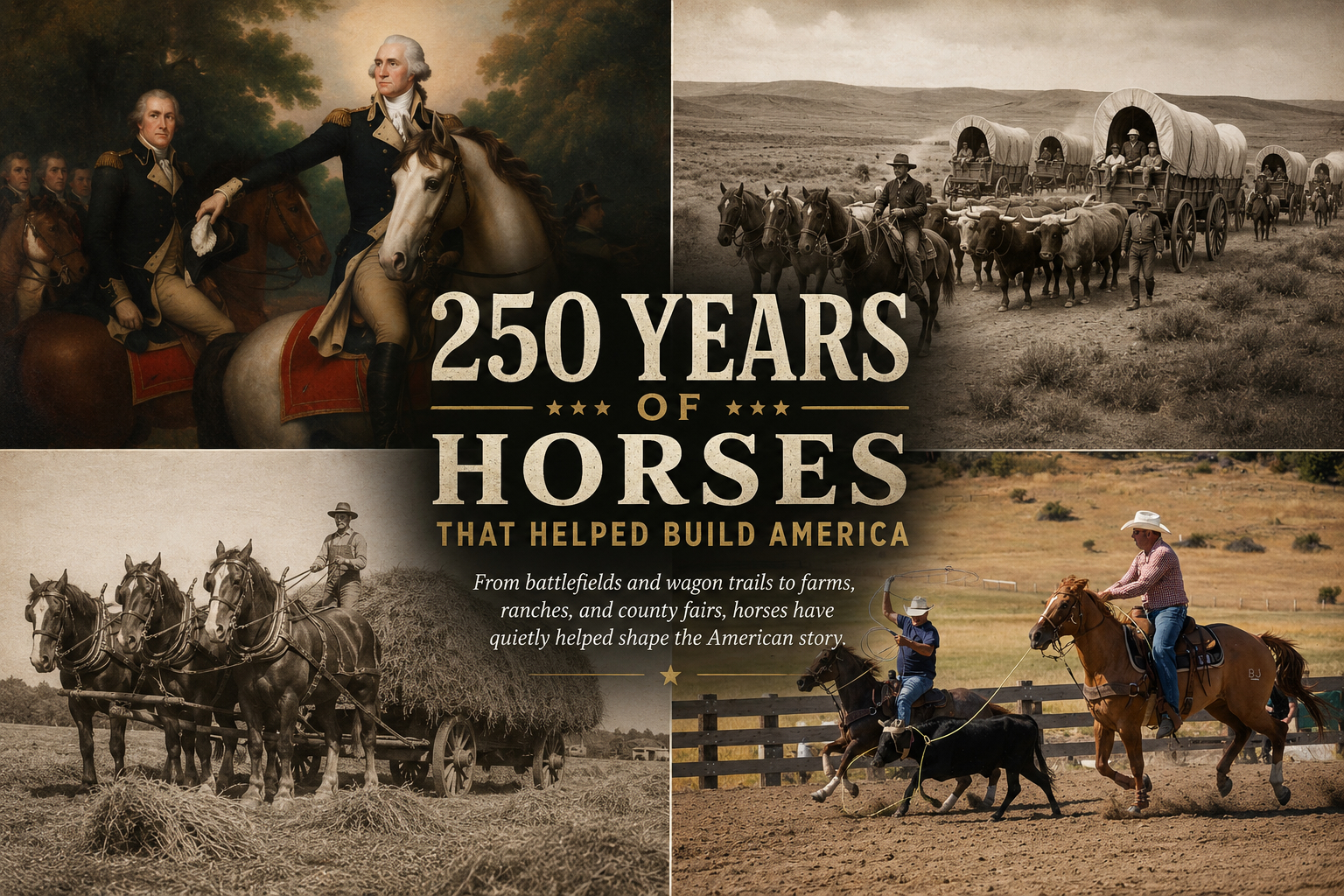
From battlefields and wagon trails to farms, ranches, and county fairs, horses have quietly helped shape the American story.
Before the sun comes up on farms and ranches across America, there are still places where time seems to slow down. Barn lights flicker on. The smell of fresh hay fills the air. A horse nickers as breakfast arrives, leather creaks as a halter is fastened, and outside the first rays of sunlight begin to spill across the pasture. Somewhere, a rancher is saddling up to gather cattle. Somewhere else, a family is loading horses for a weekend trail ride. At a county fairground, a young exhibitor gives one last brush before walking into the show ring, hoping months of hard work pay off.
Although the world around them has changed dramatically over the last 250 years, those early morning routines would feel surprisingly familiar to generations of Americans who came before us. Long before tractors, pickup trucks, railroads, and highways, horses were the horsepower that carried a young nation through war, westward expansion, agriculture, and into the modern era. They hauled artillery through the mud of the Revolutionary War, carried pioneer families toward an uncertain future, powered farms and ranches, and kept growing cities moving long before the automobile arrived.
This Fourth of July, as America celebrates 250 years of independence, it's worth remembering not only the people who built this country, but also the horses that quietly helped carry them there. We remember presidents, pioneers, inventors, soldiers, farmers, and settlers whose names fill the history books, yet woven through nearly every chapter of the American story is another partner that rarely receives the same recognition. For centuries, horses stood beside Americans through war and peace, prosperity and hardship, helping shape the nation we know today.
The Horses That Won Independence
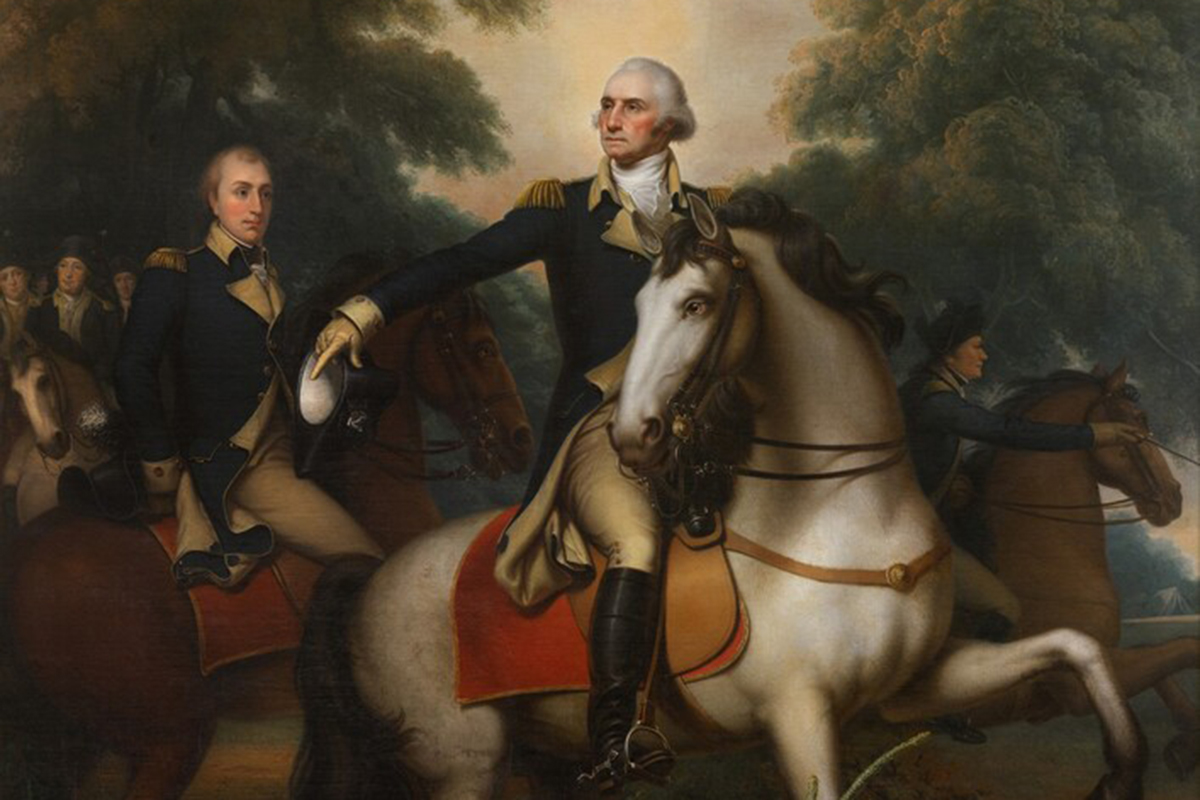
When the first shots of the American Revolution were fired in 1775, horses became as important to the Continental Army as muskets and cannon. They carried officers between battlefields, delivered messages across great distances, hauled artillery through mud and snow, and transported the food, ammunition, and supplies that kept the army moving. Every horse also required its own daily ration of forage and grain, making feed and logistics just as important as military strategy. Winning the war wasn't simply about brave soldiers or brilliant generals-it also depended on keeping hundreds of horses healthy enough to do the work that victory required.
No one understood that partnership better than General George Washington. Long before he became America's first president, Washington was recognized as one of the finest horsemen of his generation. French officer the Marquis de Chastellux, who served alongside the Continental Army, described him as "a very excellent and bold horseman," admiring both his confidence and his remarkable control in the saddle. Of the many horses Washington owned, one became forever linked with the American Revolution. According to historians at Mount Vernon, Nelson was Washington's preferred war horse because he remained calm under cannon fire and the confusion of battle. It was Nelson who carried Washington during the victory at Yorktown in 1781, the campaign that effectively secured American independence.
Nelson's name has endured because of the man who rode him, but he represented thousands of horses whose stories have largely been forgotten. Cavalry mounts carried soldiers into battle, teams of horses pulled heavy artillery across rough roads, messenger horses delivered orders that could change the course of a campaign, and countless others hauled the supplies that kept the Continental Army alive. Most were never painted into famous portraits or remembered in history books, yet their contribution was indispensable. America's fight for independence was carried not only by determined men, but also by the steady strength of the horses that served beside them.
The Horses That Carried America West
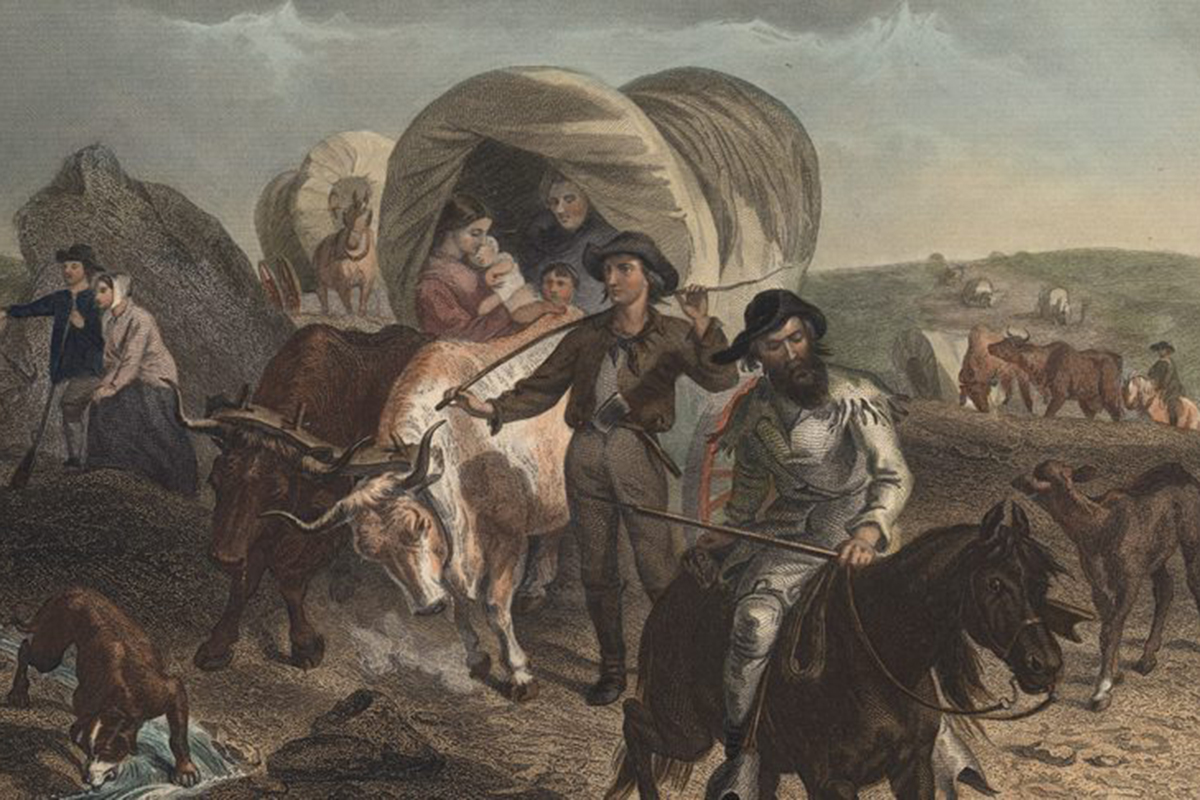
With independence secured, the nation's attention turned west. Families began looking beyond the Appalachian Mountains in search of land, opportunity, and a better life. As thousands headed toward the frontier along routes like the Oregon Trail, horses once again became trusted companions, helping carry people into an uncertain future.
Popular paintings often show horses pulling covered wagons across the prairie, but the reality was more practical. Most emigrants relied on oxen to pull the heavy wagons because they were stronger and better suited for the months-long journey. Horses, however, played an equally important role. They carried riders ahead to scout the trail, rounded up livestock that wandered from camp, made hunting trips possible, and gave families the mobility they needed when challenges arose. Alongside oxen and mules, they helped carry America west.
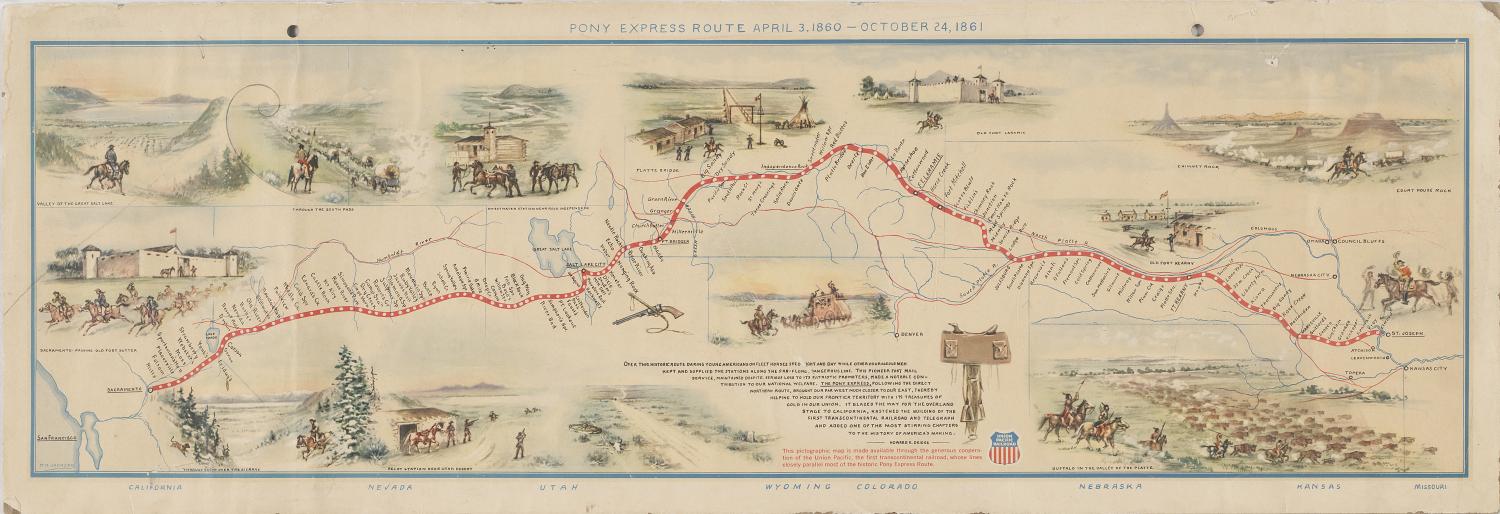
As settlements spread across the frontier, another challenge emerged. Moving people was one thing; keeping them connected was another. In 1860, the Pony Express briefly became the fastest communication system the country had ever known. Riders carried mail nearly 2,000 miles between Missouri and California in about ten days, changing horses every ten to fifteen miles along the route. Although the Pony Express lasted only eighteen months before the telegraph replaced it, its success demonstrated once again that horses were helping unite a growing nation.
Like the Revolutionary War horses before them, few of these animals were remembered by name. They crossed swollen rivers, climbed mountain passes, endured dust, heat, and exhaustion, and quietly went to work each morning alongside the families who depended on them. Their hoofprints became part of the path that carried America westward.
The Horses That Powered America
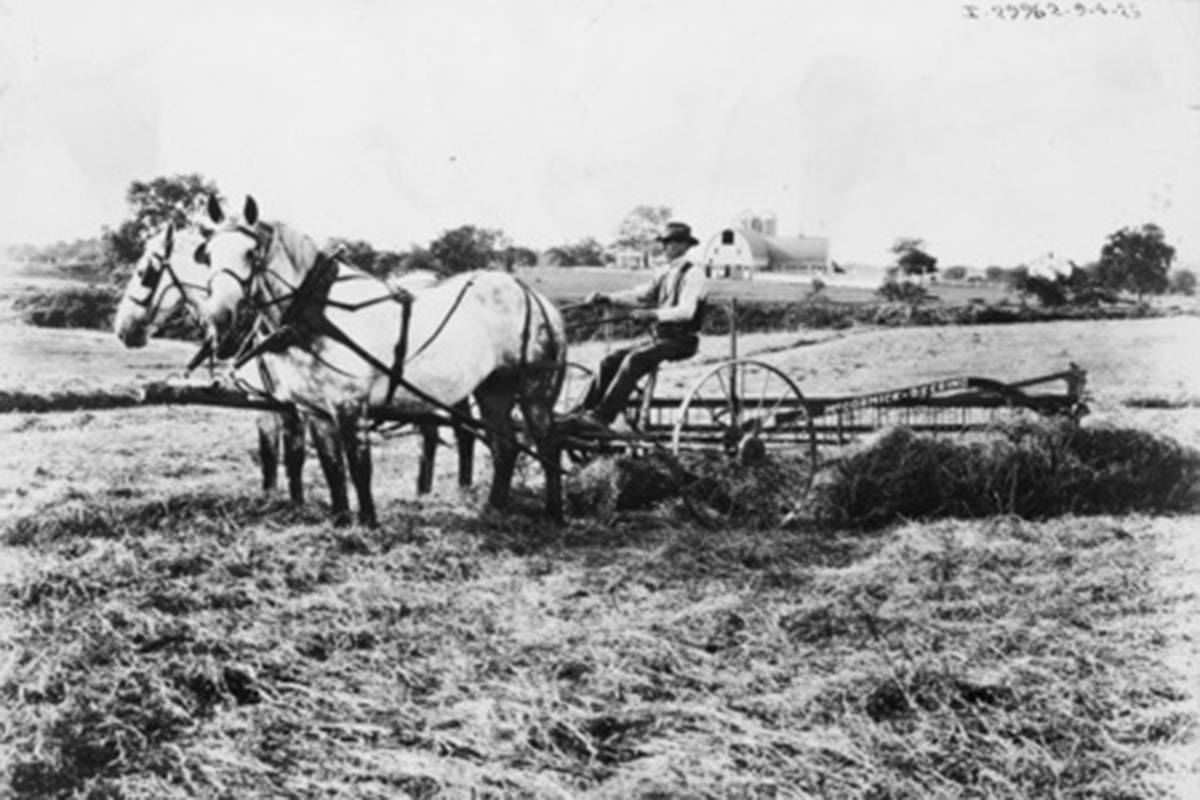
As America grew, so did the need to feed it. Long before tractors and combines transformed the countryside, horses were the engine that powered American agriculture. From New England to the Great Plains, teams of horses plowed fields, planted crops, cultivated rows, raked hay, harvested grain, hauled wagons, and carried the year's harvest to barns and markets. For generations, the rhythm of American farming was measured not by the sound of diesel engines, but by hoofbeats.
Before the farmer ever sat down for breakfast, the horses had already been fed. Every summer's hay crop represented far more than winter feed-it was the fuel that powered early American agriculture. Farmers understood that healthy horses meant productive fields, making the harvest and storage of quality forage one of the most important jobs of the year. In many ways, every hayfield became an investment in the work that lay ahead.
Not every horse that shaped American agriculture was a towering draft horse. One of the most influential was a compact bay stallion named Figure, later known as Justin Morgan. Foaled in 1789, Figure earned a reputation for doing nearly everything well. He could outpull larger horses, outtrot many of his competitors, and still serve as a dependable family horse. His strength, endurance, intelligence, and willing disposition made him exactly the kind of horse a young country needed, and those same qualities were passed on to generations of offspring. Today, every registered Morgan Horse traces its lineage back to Figure, making him the foundation sire of America's first recognized horse breed.
Before horsepower became a number printed on the side of an engine, it had a mane, a leather collar, and a daily ration of hay.
Still Helping Build America
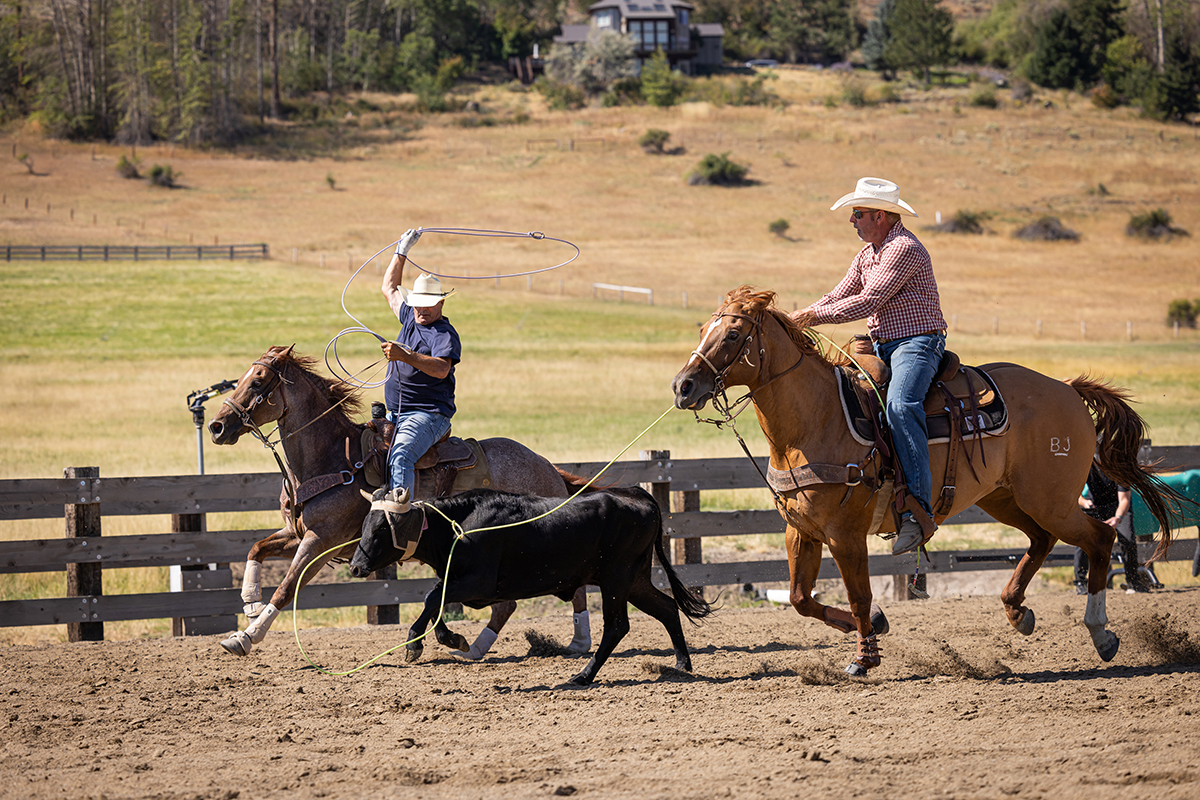
As farms spread across the country, horses found another calling on the open ranges of the American West. Cowboys, vaqueros, Native horsemen, and ranch families depended on them to gather cattle, cross rugged country, and work livestock that simply couldn't be managed on foot. Over time, horses like the American Quarter Horse became known for their athleticism, intelligence, and remarkable "cow sense," making them trusted partners on ranches that still rely on horses today. While Hollywood helped turn the cowboy into an American icon, the real story was one of partnership. Horse and rider depended on one another through long days, changing weather, and miles of unforgiving country.
The partnership wasn't limited to ranches. Before automobiles and trucks became common, horses pulled streetcars through busy cities, delivered milk and freight, carried the mail, and hauled fire equipment to emergencies. Around the turn of the twentieth century, New York City alone was home to well over 100,000 working horses, a reminder that they weren't just part of rural America-they helped power the nation's growing towns and cities as well. Whether on a cattle drive across the plains or a crowded street in Manhattan, horses kept America moving.
Eventually, tractors replaced draft horses in the field, automobiles replaced horse-drawn wagons on city streets, and modern technology transformed transportation and agriculture. Yet while machines took over many of the jobs horses once performed, they never replaced the partnership itself. Instead, that relationship simply found new purpose.
Today, horses continue to work cattle on ranches throughout the West, compete in rodeos and equestrian sports, carry riders through forests and mountains, serve in mounted law enforcement units, and help children, veterans, and individuals with disabilities through therapeutic riding programs. Across the country, organizations like 4-H and FFA introduce new generations to horsemanship, responsibility, and the values that have connected Americans to agriculture for centuries. For millions of people, horses are no longer a necessity-they're a choice. Yet perhaps that's what makes the relationship even more meaningful. In a world that moves faster than ever, horses continue to teach patience, trust, responsibility, and the rewards of hard work.
As America celebrates 250 years of independence, we naturally honor the presidents, pioneers, inventors, soldiers, farmers, ranchers, and families whose determination shaped our nation. Their accomplishments deserve to be remembered and celebrated. But perhaps this Fourth of July, it's also worth remembering the partners who worked quietly beside them. Some carried generals into battle. Others crossed rivers and mountain passes with pioneer families searching for a better life. Millions spent their days pulling plows, hauling hay, gathering cattle, delivering freight, and helping build communities that would one day become the America we know today. Most were never famous. Few had statues built in their honor. Yet together, they helped shape a nation.
Tomorrow morning, long before the first Fourth of July parade begins and well before fireworks fill the evening sky, there will once again be barns where the lights come on before sunrise. Horses will be waiting for breakfast. Somewhere, a rancher will swing a saddle onto a trusted partner before heading out to gather cattle. Somewhere else, a young exhibitor will quietly brush the last bit of dust from a show horse before walking into the county fair ring. Two hundred and fifty years after America's founding, the partnership continues-not because history demands it, but because some traditions are worth preserving.
For 250 years, horses have quietly helped carry America forward. Their names may not appear in every history book, but their legacy lives on in our fields, on our ranches, along our trails, and in the barns where another day still begins before the sun comes up.
Historical Sources & Further Reading
The story of America's horses is also the story of the people who depended on them. To ensure the historical accuracy of this feature, research was drawn from primary historical collections, museums, educational institutions, and organizations dedicated to preserving America's agricultural and equestrian heritage. If this article has inspired you to learn more, we encourage you to explore the outstanding resources below.
American Revolution & George Washington
* George Washington's Mount Vernon - Research on Washington's horsemanship, Nelson, Blueskin, and Revolutionary War history.
https://www.mountvernon.org/
* National Park Service - Revolutionary War history, cavalry operations, military logistics, and battlefield interpretation.
https://www.nps.gov/
* National Gallery of Art - Historic artwork depicting George Washington and the American Revolution.
https://www.nga.gov/
Westward Expansion & the Pony Express
* Library of Congress - Historic maps, engravings, photographs, and documents covering the Oregon Trail, westward expansion, and the Pony Express.
https://www.loc.gov/
* National Park Service - Oregon National Historic Trail
https://www.nps.gov/oreg/
* National Park Service - Pony Express National Historic Trail
https://www.nps.gov/poex/
* Smithsonian National Postal Museum - History of the Pony Express, riders, relay stations, and the famous mochila mail system.
https://postalmuseum.si.edu/
Agriculture & the Morgan Horse
* American Morgan Horse Association - History of Figure (Justin Morgan), breed development, and America's first recognized horse breed.
https://www.morganhorse.com/
* National Museum of the Morgan Horse
https://morganmuseum.org/
* USDA National Agricultural Library - Historical agricultural publications and farm history.
https://www.nal.usda.gov/
* Living History Farms - Horse-powered farming and agriculture around the turn of the twentieth century.
https://www.lhf.org/
Ranching & the American West
* National Cowboy & Western Heritage Museum - Cowboy history, ranching, working horses, and settlement of the American West.
https://nationalcowboymuseum.org/
* Texas State Historical Association - Cattle drives, ranching history, and settlement of the American West.
https://www.tshaonline.org/
Horses in American Cities & Modern America
* The Henry Ford - Horse-drawn transportation, early industry, and America's transition into the automotive age.
https://www.thehenryford.org/
* Smithsonian Institution - America on the Move
https://americanhistory.si.edu/
* American Horse Council - Modern equine industry statistics and the economic impact of horses in America today.
https://horsecouncil.org/
* Oregon State University Extension - 4-H Horse Program
https://extension.oregonstate.edu/
About This Article
This feature was written in celebration of America's 250th Anniversary and reflects the remarkable partnership between horses and the people who helped build the United States. While no single article can capture every chapter of that story, we hope it encourages readers to appreciate the generations of horses that carried soldiers into battle, pioneers across the frontier, farmers through harvest, ranchers across the range, and continue to enrich American life today.
Historical facts were verified using publicly available resources from the organizations listed above. Image copyrights remain with their respective museums, archives, and institutions. Please consult each organization for image licensing and reproduction requirements.